Chapter 24: used to, wish, had better
"Pehle main roz cricket khelta tha", "mujhe aadat hai", "kaash maine padhai ki hoti", "tum jaldi nikal jao warna…" — ye chaar baatein Hindi me hum din me das baar bolte hain. English me inke liye chhote, pakke structures hain: used to, be used to, I wish, had better, would rather. Inhe ek baar saaf samajh lo, to aapki English turant zyada natural lagne lagegi.
- 1Pehle naksha — kaunsa "aadat" kab?
- 2used to + V1 — pehle hota tha, ab nahi
- 3would — purani yaadon ki kahani
- 4be used to / get used to + -ing — Hindi speakers ki no. 1 uljhan
- 5I wish / If only — teen tarah ka "kaash"
- 6had better — salaah jisme chetaavni chhupi hai
- 7would rather — "isse achha to…"
- 8It's time — "ab to waqt ho gaya"
- 9Asli zindagi me — ek phone call
Ek line me
used to + V1 = pehle hota tha, ab nahi. be used to + -ing = aadat hai. wish + past = kaash. had better + V1 = warna mushkil hogi. Har structure ke saath verb ka roop pakka hai — wahi is chapter ka asli khel hai.
24.1 Pehle naksha — kaunsa "aadat" kab?
Hindi me "aadat" ek hi shabd hai, par English me teen alag structures hain — aur teeno ka matlab bilkul alag hai. Galti yahin hoti hai. Bolne se pehle khud se ek sawaal poochho: ye baat beete kal ki hai, ya aaj ki aadat ki, ya nayi aadat ban rahi hai?
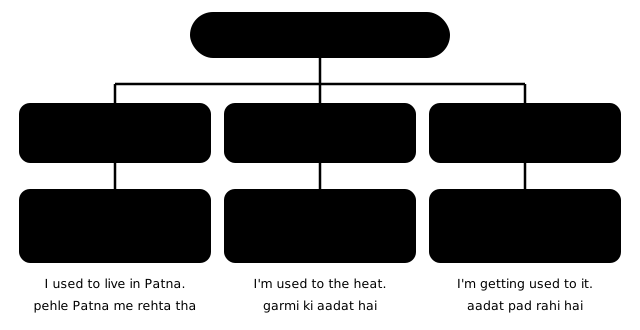
Hindi se seedha naksha
"pehle karta tha" → used to do · "aadat hai" → be used to doing · "aadat pad jaayegi" → get used to doing.
24.2 used to + V1 — pehle hota tha, ab nahi
used to beete samay ki wo aadat ya haalat batata hai jo ab khatam ho chuki hai. Iske baad hamesha verb ka pehla roop (V1) aata hai. Ye action (karna) aur state (hona, rehna, paas hona) dono ke liye chalta hai.
- I used to live in Patna. Main pehle Patna me rehta tha (ab nahi rehta).
- We used to walk to school every day. Hum roz paidal school jaate the.
- Priya used to have very long hair. Priya ke baal pehle bahut lambe the.
- There used to be a cinema hall here. Yahan pehle ek cinema hall hua karta tha.
Negative aur sawaal — "d" gayab ho jaata hai
Jab did / didn't aa jaata hai, to past wo dikha deta hai — isliye used ka "d" hat jaata hai: didn't use to, Did you use to…? Bilkul waise hi jaise didn't went nahi, didn't go hota hai.
| Roop | Formula | Example |
|---|---|---|
| Positive | used to + V1 | I used to smoke. |
| Negative | didn't use to + V1 | I didn't use to like coffee. |
| Negative (zor) | never used to + V1 | He never used to call. |
| Sawaal | Did … use to + V1? | Did you use to play cricket? |
- I didn't use to like coffee, but now I love it. Pehle mujhe coffee pasand nahi thi, ab bahut pasand hai.
- Did you use to play cricket in college? Kya tum college me cricket khelte the?
Uchchaaran: 'yoos-tuh'
used to ko "yooz-d too" mat bolo. Bolte hain /ˈjuːstə/ — "yoos-tuh", "s" ki aawaz ke saath, aur use to bhi bilkul waise hi sunai deta hai.
used to ka present nahi hota
Ye sabse aam Indian galti hai. Aaj ki aadat ke liye use to nahi — seedha present simple, aksar usually ke saath (dekho Saare 12 tenses).
✗
I use to drink tea every morning.
✓
I usually drink tea every morning.
✗
I used to go to Goa three times.
✓
I went to Goa three times.
24.3 would — purani yaadon ki kahani
Purani baatein sunate waqt (nani ke ghar ki garmiyan, school ke din) English bolne wale ek baar used to se mahaul banate hain, aur phir would + V1 se kahani aage badhate hain. Ye thoda kitaabi, yaadon wala andaaz hai.
- Every summer, we used to go to Nani's village. Har garmi hum nani ke gaon jaate the.
- We'd climb the mango trees all afternoon. Hum poori dopahar aam ke pedon par chadhte rehte the.
- In the evening, Nani would tell us ghost stories. Shaam ko nani hume bhoot ki kahaniyan sunati thi.
would = sirf baar-baar ka kaam
would purani actions ke liye (khelna, jaana, sunana), states ke liye kabhi nahi (be, have, live, like, know). States ke liye sirf used to.
✗
We would have a dog called Moti.
✓
We used to have a dog called Moti.
| Verb | used to? | would? |
|---|---|---|
| play, go, visit (action) | ✓ | ✓ |
| live, be, have (state) | ✓ | ✗ |
| like, love, know, believe | ✓ | ✗ |
| Kahani ki pehli line | ✓ (behtar) | Pehle time batao |
24.4 be used to / get used to + -ing — Hindi speakers ki no. 1 uljhan
Yahan used ek adjective jaisa hai (= aadi, accustomed) aur to ek preposition hai, infinitive wala "to" nahi. Preposition ke baad noun, pronoun ya -ing aata hai — kabhi V1 nahi. Ye wahi niyam hai jo to do ya doing? chapter me look forward to meeting ke saath dekha tha.
- I am used to waking up early. Mujhe jaldi uthne ki aadat hai.
- She isn't used to spicy food. Use teekhe khaane ki aadat nahi hai.
- Are you used to the Delhi winters yet? Kya tumhe ab tak Delhi ki sardi ki aadat padi?
- I'm getting used to my new job. Mujhe nayi naukri ki aadat pad rahi hai.
- Don't worry, you'll get used to it. Fikar mat karo, aadat pad jaayegi.
- It took me months to get used to driving in Bengaluru traffic. Bengaluru ke traffic me gaadi chalane ki aadat padne me mahine lag gaye.
be used to vs get used to
be used to = aadat hai (haalat). get used to = aadat pad rahi / padegi (badlaav). Dono ke baad -ing ya noun, aur "be/get" har tense me badal sakta hai: was used to, will get used to, have got used to.
Sabse aam galti
- Galat: I am used to wake up early.
- Sahi: I am used to waking up early.
- Kyun: Yahan "to" preposition hai, to uske baad -ing. Agar matlab "pehle uthta tha" hai, to "am" hatao: I used to wake up early.
✗
I used to living alone, so I don't mind it.
✓
I'm used to living alone, so I don't mind it.
| Structure | Matlab | Example |
|---|---|---|
| used to + V1 | pehle karta tha | I used to work nights. |
| be used to + -ing | aadat hai | I'm used to working nights. |
| get used to + -ing | aadat pad rahi hai | I'm getting used to working nights. |
Formal shabd
Likhte waqt be accustomed to + -ing bhi chalta hai: The staff are accustomed to working under pressure.
24.5 I wish / If only — teen tarah ka "kaash"
"Kaash" bolne ke liye English me I wish ya zyada bhaavuk If only aata hai. Chaal ye hai ki wish ke baad verb ek kadam peeche chala jaata hai — kyunki hum jo chahte hain wo sach nahi hai. Ye wahi backshift hai jo If wale vaakya chapter ke second aur third conditional me hota hai.
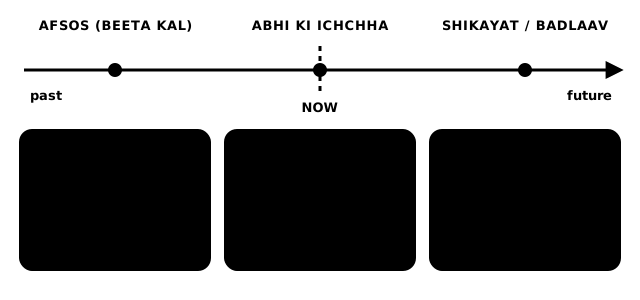
(a) Abhi ki ichchha — wish + past simple
- I wish I had a car. Kaash mere paas car hoti. (abhi nahi hai)
- I wish I knew the answer. Kaash mujhe jawaab pata hota.
- I wish I could swim. Kaash main tair paata.
- If only we lived closer to the office! Kaash hum office ke paas rehte!
- I wish I were taller. Kaash main thoda lamba hota.
were ya was?
I wish I were formal aur exam-safe hai; bolchaal me I wish I **was bhi bilkul chalta hai. Exam aur formal likhai me were likho.
(b) Beete kal ka afsos — wish + had + V3
- I wish I had studied harder for the exam. Kaash maine exam ke liye zyada mehnat ki hoti.
- I wish I hadn't said that to her. Kaash maine use wo baat na kahi hoti.
- If only we'd left ten minutes earlier! Kaash hum das minute pehle nikal gaye hote! (train chhoot gayi)
(c) Doosron se shikayat — wish + would
wish + someone + would tab, jab koi aur (ya mausam!) kuch karta rahe aur aap chahte ho ki wo badle. Isme halki chidh hoti hai.
- I wish you would stop interrupting me. Kaash tum mujhe beech me tokna band karo.
- I wish it would stop raining. Kaash baarish ruk jaaye.
✗
I wish I would speak French.
✓
I wish I could speak French.
wish ya hope?
Jo ho sakta hai uske liye hope (+ normal tense). Jo sach nahi hai uske liye wish (+ past). Aur wish + person + noun sirf shubhkaamna ke fixed phrase me: I wish you a happy birthday.
✗
I wish you will pass the exam.
✓
I hope you pass the exam.
I wish you all the best for the exam.
- I hope you get the job. Ummeed hai tumhe naukri mil jaaye.
- I wish you all the best. Tumhe dher saari shubhkaamnayein.
24.6 had better — salaah jisme chetaavni chhupi hai
had better + V1 (bolne me 'd better) ka matlab hai "kar lo, warna mushkil hogi". Naam me "had" hai, par ye abhi ya aage ki baat hai, beete kal ki nahi. Aur iske baad "to" kabhi nahi.
- You'd better leave now, or you'll miss the train. Abhi nikal jao, warna train chhoot jaayegi.
- We'd better not tell Mummy about this. Mummy ko ye baat na hi batayein to achha.
- I'd better charge my phone before the meeting. Meeting se pehle phone charge kar lena chahiye, warna dikkat hogi.
had better
'd better + V1 / 'd better not + V1 — "kar lo, warna…". "to" nahi, past ka matlab nahi, aur should se zyada sakht.
✗
You had better to submit it today.
✓
You'd better submit it today.
had better not go
Boss ko 'had better' mat bolo
"Sir, you had better check the file." dhamki jaisa sunai deta hai. Seniors ko "You might want to check the file" ya "It might be a good idea to…" bolo. Aam salaah ke liye should kaafi hai (dekho can, could, should, must).
24.7 would rather — "isse achha to…"
would rather ('d rather) pasand ya chunaav batata hai — "main to ye karna pasand karunga". Iske do pattern hain, aur doosra wala advanced learners ko bhi chaunka deta hai.
(a) Apni pasand — would rather + V1 (than + V1)
- I'd rather walk than take an auto. Auto lene se achha main paidal chal lunga.
- Would you rather have tea or coffee? Aap chai lenge ya coffee?
- I'd rather not talk about it. Main is baare me baat na karun to behtar.
(b) Doosre se chahna — would rather + someone + past
Jab aap chahte ho ki koi aur kuch kare, to naya subject aur verb past me — bilkul wish ki tarah, chahe baat abhi ki ho.
- I'd rather you didn't smoke in the car. Achha ho ki aap gaadi me cigarette na piyein.
- I'd rather you came on Monday. Main chahunga ki tum Monday ko aao.
✗
I would rather to stay at home.
✓
I'd rather stay at home. / I'd prefer to stay at home.
I prefer tea to coffee.
| Pattern | Example |
|---|---|
| would rather + V1 | I'd rather stay. |
| would rather + V1 + than + V1 | I'd rather walk than wait. |
| would rather + person + V2 | I'd rather you stayed. |
| would prefer + to + V1 | I'd prefer to stay. |
| prefer + noun/-ing + to | I prefer tea to coffee. |
24.8 It's time — "ab to waqt ho gaya"
Seedha waqt batana ho to It's time to + V1 ya It's time for + noun. Par agar matlab hai "ye to pehle hi ho jaana chahiye tha", to It's (high / about) time + subject + past simple.
- It's time to go. Chalne ka waqt ho gaya.
- It's time for lunch. Lunch ka time ho gaya.
- It's time we left — it's nearly midnight. Ab hume nikal jaana chahiye — lagbhag aadhi raat ho gayi.
- It's high time you got a proper job. Ab to tumhe dhang ki naukri le hi leni chahiye.
- It's about time the government fixed this road. Sarkar ko ab tak ye sadak theek kar deni chahiye thi.
✗
It's high time you get married.
✓
It's high time you got married.
Ek pattern, chaar jagah
I wish you came · If only you **came · I'd rather you came · It's time you **came — "jo sach nahi hai" wali baat me abhi ka matlab bhi past simple se banta hai.
24.9 Asli zindagi me — ek phone call
Meera ne naya job join kiya hai aur Pune shift hui hai. Papa ka phone aata hai. Poori baat suno, phir har line ka structure pehchano.
| Kaun | Kya kehta hai | Suno |
|---|---|---|
| Papa | So, are you used to the new place yet? | |
| Meera | Slowly. I'm still getting used to cooking for myself. | |
| Papa | At home you never used to enter the kitchen! | |
| Meera | I know. I wish I'd learnt a few recipes from Mummy. | |
| Papa | Well, you'd better not live on Maggi! | |
| Meera | Honestly, I'd rather order food than cook after work. | |
| Papa | Then it's high time you found a good tiffin service. |
| Galat | Sahi | Kyun |
|---|---|---|
| I am used to wake early. | I'm used to waking early. | to = preposition → -ing |
| I use to go to the gym. | I usually go to the gym. | used to ka present nahi |
| Did you used to…? | Did you use to…? | did ke baad "d" nahi |
| I wish you will come. | I hope you can come. | mumkin baat = hope |
| You had better to go. | You'd better go. | had better + V1 |
| I'd rather you don't. | I'd rather you didn't. | doosra subject → past |
24.10 Practice — used to, wish, had better
Exercise 1
I moved to Shimla last year. I'm still not used to ___ in the cold.
- drive
- driving
- drove
- driven
Hint: 'be used to' ke baad kya aata hai?
Jawaab
driving
be used to me 'to' preposition hai, to uske baad -ing: used to driving.
Exercise 2
When I was a child, I ___ to hate vegetables. Now I love them.
Hint: Pehle hota tha, ab nahi.
Jawaab
used
Purani aadat jo ab khatam ho gayi = used to + V1.
Exercise 3
Did you ___ to play cricket in school?
Hint: 'did' ke baad 'd' rehta hai kya?
Jawaab
use
did / didn't past dikha dete hain, isliye 'use to' — 'Did you used to' galat hai.
Exercise 4
We ___ a dog called Moti when we lived in Lucknow.
- would have
- used to have
- are used to having
- got used to have
Jawaab
used to have
'have' (paas hona) state hai. States ke saath 'would' nahi, sirf 'used to'.
Exercise 5
Tap the wrong word.
After ten years in the army, he is used to wake up at five.
Jawaab
Galat shabd: wake.
Sahi roop: After ten years in the army, he is used to waking up at five.
'is used to' = aadat hai, aur preposition 'to' ke baad -ing: waking.
Exercise 6
I wish I ___ more free time. (abhi nahi hai)
- have
- had
- will have
- am having
Jawaab
had
Abhi ki ichchha jo sach nahi: wish + past simple.
Exercise 7
I wish I ___ (not / eat) that street food last night. My stomach hurts!
Hint: Beete kal ka afsos.
Jawaab
hadn't eaten / had not eaten
Past ka afsos = wish + had (not) + V3.
Exercise 8
My neighbour plays loud music every night. I wish he ___ it.
- stops
- would stop
- will stop
- had stop
Jawaab
would stop
Doosre ke rawaiye se chidh = wish + someone + would + V1.
Exercise 9
Your friend has an interview tomorrow. You say: 'I ___ you get the job!'
- wish
- hope
- would rather
- had better
Jawaab
hope
Naukri milna mumkin hai — ummeed = hope + normal tense. 'wish' unreal ke liye hai.
Exercise 10
Tap the extra word.
You had better to leave now or you will miss the bus.
Jawaab
Galat shabd: to.
Sahi roop: You had better leave now or you will miss the bus.
had better ke baad seedha V1, 'to' nahi.
Exercise 11
I'd rather you ___ (not / smoke) inside the house.
Hint: would rather + doosra subject → past
Jawaab
didn't smoke / did not smoke
would rather + someone + past simple, chahe matlab abhi ka ho.
Exercise 12
Put the words in order.
Shabd: time / it's / we / money / high / saving / started
Jawaab
it's high time we started saving money
It's high time + subject + past simple = ye to pehle ho jaana chahiye tha.
Exercise 13
Match each structure to its meaning.
| A | B |
|---|---|
| used to + V1 | aadat pad rahi hai |
| be used to + -ing | kar lo, warna dikkat |
| get used to + -ing | pehle karta tha, ab nahi |
| had better + V1 | aadat hai |
Jawaab
used to + V1 — pehle karta tha, ab nahi; be used to + -ing — aadat hai; get used to + -ing — aadat pad rahi hai; had better + V1 — kar lo, warna dikkat
Teen 'used to' — teen alag matlab. Aur had better me chetaavni chhupi hai.
Exercise 14
What does the speaker do now?
Ise zor se padho, ya kisi se padhwao:
When I was in college, I used to take the bus everywhere. Now I drive to work, but I'm still not used to the traffic.
- drives to work
- takes the bus
- walks to work
- works from home
Jawaab
drives to work
Transcript: “When I was in college, I used to take the bus everywhere. Now I drive to work, but I'm still not used to the traffic.”
'used to take the bus' = pehle. 'Now I drive to work' = ab.
Exercise 15
How does the speaker feel about the traffic?
Ise zor se padho, ya kisi se padhwao:
When I was in college, I used to take the bus everywhere. Now I drive to work, but I'm still not used to the traffic.
- it still feels difficult
- they enjoy it
- they never notice it
- it was worse in college
Jawaab
it still feels difficult
Transcript: “When I was in college, I used to take the bus everywhere. Now I drive to work, but I'm still not used to the traffic.”
'still not used to' = abhi tak aadat nahi padi — matlab mushkil lagta hai.
Exercise 16
Write what you hear.
Dictation. Kisi se ye vaakya zor se padhwao, phir likh lo.
I wish I had listened to my mother.
Jawaab
I wish I had listened to my mother.
Beete kal ka afsos: wish + had + V3 (listened).
Exercise 17
Write what you hear.
Dictation. Kisi se ye vaakya zor se padhwao, phir likh lo.
You had better take an umbrella. It is going to rain.
Jawaab
You had better take an umbrella. It is going to rain.
had better + V1 (take) — 'warna bheeg jaoge' wala bhaav.
Exercise 18
Say it aloud — 'used' me 's' ki aawaz.
I'm getting used to my new job
Jawaab
Bolo: I'm getting used to my new job
get used to + noun = aadat pad rahi hai. 'used to' = 'yoos-tuh'.
Aage kya karein
Aaj raat paanch vaakya likho: do used to (bachpan ki aadatein), ek I'm used to, ek I wish I had… aur ek I'd rather…. Phir unhe zor se bolo. Agla chapter, Asar daar vaakya, aapke vaakyon me zor aur vazan jodega.