अध्याय 58: 50 सबसे आम गलतियाँ
50 सबसे आम गलतियाँ — एक ही जगह
यह chapter पढ़ने के लिए नहीं, ढूँढने के लिए है। छह groups हैं — articles, tenses, prepositions, word choice, word order और plurals। हर गलती तीन हिस्सों में है: गलत → सही → क्यों। जब लिखते वक़्त शक हो, इस page पर आओ, अपने group में जाओ, और आगे बढ़ो। Mobile पर bookmark कर लो।
- 1कहाँ सबसे ज़्यादा गलतियाँ होती हैं
- 2Group 1 — Articles (गलती 1 से 7)
- 3Group 2 — Tenses (8 से 16)
- 4Group 3 — Prepositions (17 से 25)
- 5Group 4 — Word choice (26 से 35)
- 6Group 5 — Word order (36 से 42)
- 7Group 6 — Plurals और countables (43 से 50)
- 8तीन rules जो 50 में से 30 बचा देते हैं
- 9पक्की जोड़ियाँ — इन्हें रट ही लेना बेहतर है
- 10छह सही वाक्य — ज़ोर से बोलो
एक लाइन में
इन 50 में से लगभग सारी गलतियाँ एक ही वजह से होती हैं — हिंदी का ढाँचा English के शब्दों में। इसलिए "क्यों" वाला हिस्सा सबसे ज़रूरी है। वजह समझ गए तो पूरा group ठीक हो जाता है।
58.1 कहाँ सबसे ज़्यादा गलतियाँ होती हैं
नीचे का chart बताता है कि Indian speakers की लिखाई और बोलचाल में कौन-सा हिस्सा सबसे ज़्यादा पकड़ा जाता है। अगर समय कम है, तो ऊपर वाले दो groups से शुरू करो — वही सबसे ज़्यादा फ़र्क लाएँगे।
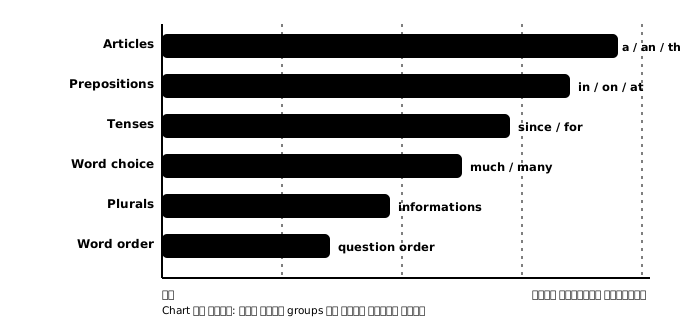
58.2 Group 1 — Articles (गलती 1 से 7)
हिंदी में a, an, the जैसा कुछ नहीं होता। इसलिए ये शब्द दिमाग में "बेकार" लगते हैं और छूट जाते हैं। पक्का rule: हर singular countable noun के आगे कुछ होना चाहिए — a, an, the, my, this, one… कुछ भी, पर खाली नहीं।
1–7 · a / an / the
- गलत: 1. I am going to market.
- सही: I'm going to the market.
-
क्यों: जो जगह दोनों जानते हैं (मोहल्ले का बाज़ार) — वहाँ "the"। Singular countable noun खाली नहीं रह सकता।
-
गलत: 2. She is doctor.
- सही: She's a doctor.
-
क्यों: पेशा बताते वक़्त हमेशा a/an लगता है: a teacher, an engineer, a driver।
-
गलत: 3. He is a honest man.
- सही: He's an honest man.
-
क्यों: a/an spelling से नहीं, आवाज़ से तय होता है। "Honest" का H चुप है, इसलिए आवाज़ "o" से शुरू — an। इसी तरह: an hour, पर a university (आवाज़ "yoo")।
-
गलत: 4. I like the music.
- सही: I like music.
-
क्यों: आम बात (general) में "the" नहीं लगता। "The music" मतलब वह खास music जो अभी बज रहा है।
-
गलत: 5. He went to the Mumbai.
- सही: He went to Mumbai.
-
क्यों: शहरों और देशों के नाम के आगे "the" नहीं। अपवाद: the US, the UK, the Netherlands, the Philippines।
-
गलत: 6. I have an university degree.
- सही: I have a university degree.
-
क्यों: "University" की आवाज़ "yoo-" से शुरू होती है — यह consonant जैसी आवाज़ है, इसलिए "a"।
-
गलत: 7. Please pass me salt.
- सही: Please pass me the salt.
- क्यों: मेज़ पर रखा वही नमक — खास चीज़, इसलिए "the"। Uncountable nouns के साथ भी "the" लगता है जब चीज़ खास हो।
58.3 Group 2 — Tenses (8 से 16)
हिंदी और English के tense का ढाँचा काफ़ी मिलता है, पर present perfect (have/has + done) हिंदी में नहीं है। इसलिए सबसे ज़्यादा गलतियाँ वही करवाता है।
8–16 · tenses
- गलत: 8. I am working here since three years.
- सही: I have been working here for three years.
-
क्यों: दो गलतियाँ एक साथ: काम जो पहले शुरू हुआ और अभी चल रहा है = have been + -ing। और duration के साथ "for", point के साथ "since"।
-
गलत: 9. I didn't went to office.
- सही: I didn't go to the office.
-
क्यों: "Did" पहले से past बता देता है, इसलिए verb अपने पहले रूप में आता है। Did + go, never did + went।
-
गलत: 10. He have finished the work.
- सही: He has finished the work.
-
क्यों: He, she, it के साथ "has"। I, we, you, they के साथ "have"।
-
गलत: 11. I am having a car.
- सही: I have a car.
-
क्यों: मालिकाना हक बताने वाला "have" continuous नहीं होता। पर खाने-पीने के मतलब में चलता है: "I'm having lunch."
-
गलत: 12. Yesterday I have gone to Delhi.
- सही: Yesterday I went to Delhi.
-
क्यों: जब past का समय बताया हो (yesterday, last week, in 2019), तो simple past आता है — present perfect कभी नहीं।
-
गलत: 13. I will tell you when he will come.
- सही: I'll tell you when he comes.
-
क्यों: "When", "if", "after", "before" के बाद future में भी present tense आता है। एक वाक्य में दो "will" नहीं।
-
गलत: 14. She is knowing the answer.
- सही: She knows the answer.
-
क्यों: सोच और एहसास वाले verbs continuous में नहीं जाते: know, understand, believe, like, want, need, mean।
-
गलत: 15. I have my breakfast at eight every day.
- सही: I have breakfast at eight every day.
-
क्यों: रोज़ की आदत के खाने के साथ "my" नहीं लगता: have breakfast, have lunch, have dinner।
-
गलत: 16. By the time I reached, the train left.
- सही: By the time I reached, the train had left.
- क्यों: Past में दो काम हों, तो जो पहले हुआ उसके साथ "had" लगता है। इसी को past perfect कहते हैं।
58.4 Group 3 — Prepositions (17 से 25)
हिंदी का एक शब्द English में तीन prepositions बन जाता है (में → in/on/at), और कई English verbs के बाद कोई preposition लगता ही नहीं। दोनों वजहों से गलती होती है।
17–25 · prepositions
- गलत: 17. Let's discuss about the plan.
- सही: Let's discuss the plan.
-
क्यों: Discuss के अंदर ही "about" का मतलब है। इसी family में: enter the room, reach Delhi, order two teas, request a copy, consider my application।
-
गलत: 18. He is good in maths.
- सही: He's good at maths.
-
क्यों: किसी काम में माहिर होना = good at। Good with = चीज़ें सँभालने में अच्छा (good with kids, good with numbers)।
-
गलत: 19. I am afraid from dogs.
- सही: I'm afraid of dogs.
-
क्यों: डर हमेशा "of"। इसी तरह: tired of, proud of, ashamed of, capable of।
-
गलत: 20. She is married with an engineer.
- सही: She's married to an engineer.
-
क्यों: शादी हमेशा "married to"। "Married with" का मतलब बन जाता है "बच्चों के साथ शादीशुदा"।
-
गलत: 21. Please explain me the process.
- सही: Please explain the process to me.
-
क्यों: Explain, describe, suggest और mention के बाद पहले चीज़, फिर "to" + इंसान।
-
गलत: 22. I will reach at the station by six.
- सही: I'll reach the station by six. / I'll arrive at the station by six.
-
क्यों: Reach के बाद सीधा जगह। Arrive के साथ preposition लगता है: arrive at (छोटी जगह), arrive in (शहर, देश)।
-
गलत: 23. He died from cancer.
- सही: He died of cancer.
-
क्यों: बीमारी से मौत = died of। हादसे या चोट से = died from injuries।
-
गलत: 24. I have been waiting since two hours.
- सही: I've been waiting for two hours.
-
क्यों: For = कितनी देर (duration)। Since = कब से (point)। "Since 4 o'clock" सही, "since two hours" गलत।
-
गलत: 25. He is angry on me.
- सही: He's angry with me.
- क्यों: इंसान पर गुस्सा = angry with। चीज़ या हालात पर = angry about the delay।
58.5 Group 4 — Word choice (26 से 35)
यहाँ गलती grammar की नहीं, शब्द चुनने की है। अक्सर दो शब्द एक जैसे लगते हैं पर काम अलग करते हैं।
26–35 · शब्द का चुनाव
- गलत: 26. I will give the exam next month.
- सही: I'll take the exam next month.
-
क्यों: Student exam take करता है; teacher exam gives/sets करता है। हिंदी का "देना" सीधा उल्टा बैठ जाता है।
-
गलत: 27. There is too much traffic — it's very bad.
- सही: There's a lot of traffic.
-
क्यों: "Too much" का मतलब है "ज़रूरत से ज़्यादा", सिर्फ़ "बहुत" नहीं। बहुत के लिए "a lot of" या "a great deal of"।
-
गलत: 28. How much peoples came?
- सही: How many people came?
-
क्यों: दो गलतियाँ: गिन सकते हो तो "many" (not much), और "people" खुद plural है।
-
गलत: 29. I am boring in this class.
- सही: I'm bored in this class.
-
क्यों: -ing = चीज़ कैसी है (the class is boring)। -ed = आप कैसा महसूस कर रहे हो (I am bored)। इसी तरह: interesting/interested, confusing/confused, tiring/tired।
-
गलत: 30. Myself Ravi.
- सही: I'm Ravi.
-
क्यों: "Myself" reflexive pronoun है (I hurt myself) — subject नहीं बन सकता।
-
गलत: 31. Please revert back at the earliest.
- सही: Please get back to me by Thursday.
-
क्यों: Revert में "वापस" पहले से है, इसलिए "back" बेकार। और "at the earliest" की जगह असली तारीख़ लिखो।
-
गलत: 32. He has less friends than me.
- सही: He has fewer friends than me.
-
क्यों: गिन सकते हो तो "fewer" (fewer friends, fewer errors)। गिन नहीं सकते तो "less" (less water, less time)।
-
गलत: 33. Its raining outside.
- सही: It's raining outside.
-
क्यों: It's = it is। Its = उसका (The dog wagged its tail)। Apostrophe यहाँ possession नहीं, shortcut बताता है।
-
गलत: 34. I can able to finish it today.
- सही: I can finish it today. / I'm able to finish it today.
-
क्यों: दोनों एक ही काम करते हैं — एक ही चुनो। "Can able to" दोनों को जोड़ देता है, जो गलत है।
-
गलत: 35. Open the light.
- सही: Turn on the light. / Switch on the light.
- क्यों: हिंदी का "खोलना" English में दो काम करता है। दरवाज़ा open होता है; light, fan और TV turn on/off होते हैं।
58.6 Group 5 — Word order (36 से 42)
हिंदी का क्रम है Subject – Object – Verb (मैं खाना खाता हूँ)। English का है Subject – Verb – Object (I eat food)। सवाल में और adjectives में यह फ़र्क सबसे ज़्यादा दिखता है।
36–42 · शब्दों का क्रम
- गलत: 36. What you are doing?
- सही: What are you doing?
-
क्यों: सवाल में helping verb subject से पहले आता है: What are you… / Where did he… / Why has she…
-
गलत: 37. Tell me where is the station.
- सही: Tell me where the station is.
-
क्यों: जब सवाल किसी बड़े वाक्य के अंदर आ जाए, तो क्रम सीधा हो जाता है — verb पीछे चला जाता है।
-
गलत: 38. I yesterday went to the bank.
- सही: I went to the bank yesterday.
-
क्यों: समय का शब्द आखिर में (या शुरू में) आता है — subject और verb के बीच में नहीं।
-
गलत: 39. She speaks very well English.
- सही: She speaks English very well.
-
क्यों: पहले object (English), फिर adverb (very well)। Verb और उसके object के बीच कुछ नहीं आता।
-
गलत: 40. He gave to me the keys.
- सही: He gave me the keys. / He gave the keys to me.
-
क्यों: दो ही क्रम सही हैं: verb + इंसान + चीज़, या verb + चीज़ + to + इंसान। बीच वाला रूप गलत है।
-
गलत: 41. A red big plastic box.
- सही: A big red plastic box.
-
क्यों: Adjectives का क्रम तय है: राय → आकार → उम्र → रंग → कहाँ का → किस चीज़ का। "Big" (आकार) "red" (रंग) से पहले।
-
गलत: 42. Only I have one question.
- सही: I have only one question.
- क्यों: "Only" जिस शब्द पर ज़ोर देना है, उसके बिल्कुल पहले आता है। जगह बदलो, मतलब बदल जाता है।
58.7 Group 6 — Plurals और countables (43 से 50)
English में कुछ चीज़ें गिनी नहीं जा सकतीं, और हिंदी में वही चीज़ें आराम से गिनी जाती हैं। यही तकरार इन आठ गलतियों की जड़ है।
43–50 · plural और गिनती
- गलत: 43. I need some informations.
- सही: I need some information. / I need a few details.
-
क्यों: Information uncountable है — "s" कभी नहीं लगता। गिनती करनी हो तो: two pieces of information।
-
गलत: 44. He gave me good advices.
- सही: He gave me good advice. / He gave me a piece of advice.
-
क्यों: Advice uncountable है। इसी list में: furniture, luggage, equipment, machinery, traffic, homework, research, feedback, knowledge।
-
गलत: 45. My hairs are wet.
- सही: My hair is wet.
-
क्यों: सिर के सारे बाल मिलकर "hair" (uncountable) होते हैं। "Hairs" का मतलब एक-एक बाल — जो खाने में मिलते हैं!
-
गलत: 46. There are many equipments in the lab.
- सही: There's a lot of equipment in the lab.
-
क्यों: Equipment uncountable है, इसलिए "many" भी बदलकर "a lot of" करना पड़ता है और verb singular हो जाता है।
-
गलत: 47. Peoples are waiting outside.
- सही: People are waiting outside.
-
क्यों: "People" खुद plural है (person का plural)। "Peoples" का मतलब है "कई कौमें" — बिल्कुल अलग बात।
-
गलत: 48. I bought two pant and three shirt.
- सही: I bought two pairs of trousers and three shirts.
-
क्यों: Shirt countable है, इसलिए "shirts"। Trousers/pants हमेशा plural होते हैं, और गिनती "pairs" से होती है — जैसे scissors और glasses।
-
गलत: 49. Each of the students have a laptop.
- सही: Each of the students has a laptop.
-
क्यों: Each, every, everyone, nobody — ये सब singular हैं, चाहे बाद में plural दिखे। इसी तरह: "Everyone is here."
-
गलत: 50. The news are not good.
- सही: The news is not good.
- क्यों: "News" के आखिर में "s" है पर वह singular है। इसी तरह: mathematics, physics, economics, politics — सब singular verb लेते हैं।
58.8 तीन rules जो 50 में से 30 बचा देते हैं
रटने लायक तीन चीज़ें
1. हर singular countable noun के आगे कुछ होना चाहिए — a, an, the, my, this। खाली कभी नहीं।
2. एक वाक्य में tense एक ही बार बताओ — did + go, will + come, has + finished। दो जगह past मत लगाओ।
3. English में verb सीधा object को पकड़ता है — बीच में समय, adverb या "to me" नहीं घुसता।
58.9 पक्की जोड़ियाँ — इन्हें रट ही लेना बेहतर है
कुछ adjectives और verbs के साथ preposition fix होता है। इनमें logic ढूँढने का फ़ायदा नहीं — ये जोड़ियाँ हैं, इन्हें जोड़ी की तरह याद करो। Group 3 और 4 की आधी गलतियाँ यही table रोक देती है।
| जोड़ी | Example | जो लोग गलती से बोलते हैं |
|---|---|---|
| good at | good at cricket | good in |
| afraid of | afraid of heights | afraid from |
| married to | married to a teacher | married with |
| angry with (इंसान) | angry with me | angry on me |
| angry about (चीज़) | angry about the delay | angry for the delay |
| die of (बीमारी) | died of a heart attack | died from a heart attack |
| depend on | it depends on you | depends from you |
| listen to | listen to me | listen me |
| explain to | explain it to me | explain me |
| agree with (इंसान) | I agree with you | I am agree with you |
| interested in | interested in design | interested for design |
| responsible for | responsible for payroll | responsible of payroll |
| congratulate on | congratulate her on the win | congratulate her for the win |
| apologise for | apologise for the delay | apologise of the delay |
| no preposition | discuss · enter · reach · order · request · consider · marry | discuss about, enter into, reach at… |
58.10 छह सही वाक्य — ज़ोर से बोलो
हर group से एक सुधरा हुआ वाक्य। इन्हें सुनने और बोलने से rule रटने से ज़्यादा जल्दी बैठता है — क्योंकि कान गलती पकड़ना सीख जाता है।
- She's a doctor at the hospital near the market. Articles — पेशे के साथ "a", जानी-पहचानी जगह के साथ "the"।
- I've been working here for three years. Tenses — काम पहले शुरू हुआ, अभी चल रहा है; duration के साथ "for"।
- He's good at maths but he's afraid of exams. Prepositions — good at, afraid of। ये जोड़ियाँ fix हैं।
- I'll take the exam next month, so please get back to me by Friday. Word choice — exam "take" करते हैं, और "revert back" की जगह "get back to me"।
- Could you tell me where the station is? Word order — सवाल बड़े वाक्य के अंदर आया, तो verb पीछे चला गया।
- The news is good, and each of the teams has its own budget. Plurals — "news" और "each" दोनों singular verb लेते हैं।
इस page को कैसे use करो
एक बार पूरा पढ़ो — सिर्फ़ एक बार। फिर इसे सिर्फ़ ज़रूरत पर खोलो। जब एक गलती तीन बार पकड़ो, तो वह अपने आप ठीक हो जाती है। पूरी list रटने की कोशिश करने से कुछ नहीं होता।
58.11 Practice — 50 गलतियाँ
अभ्यास 1
कौन-सा वाक्य सही है?
- He is an honest man with a university degree.
- He is a honest man with an university degree.
- He is an honest man with an university degree.
- He is a honest man with a university degree.
संकेत: a/an आवाज़ से तय होता है, spelling से नहीं।
उत्तर
He is an honest man with a university degree.
Honest का H चुप है, आवाज़ 'o' से शुरू — an। University की आवाज़ 'yoo' से शुरू होती है, जो consonant जैसी है — a।
अभ्यास 2
'मैं तीन साल से यहाँ काम कर रहा हूँ' का सही रूप?
- I have been working here for three years.
- I am working here since three years.
- I work here since three years.
- I am working here for three years only.
उत्तर
I have been working here for three years.
जो काम पहले शुरू हुआ और अभी चल रहा है = have been + -ing। और duration के साथ 'for', point के साथ 'since'।
अभ्यास 3
कौन-सा वाक्य गलत है?
- She is married with an engineer.
- She is married to an engineer.
- He is afraid of dogs.
- He is angry with me.
उत्तर
She is married with an engineer.
शादी हमेशा 'married to'। 'Married with' का मतलब बन जाता है बच्चों के साथ शादीशुदा।
अभ्यास 4
Student के exam के साथ कौन-सा verb लगता है?
- take the exam
- give the exam
- do the exam paper only
- put the exam
उत्तर
take the exam
Student exam take करता है; teacher exam gives या sets करता है। हिंदी का 'देना' सीधा उल्टा बैठ जाता है।
अभ्यास 5
Adjectives का सही क्रम कौन-सा है?
- a big red plastic box
- a red big plastic box
- a plastic big red box
- a red plastic big box
संकेत: आकार पहले, रंग बाद में।
उत्तर
a big red plastic box
क्रम तय है: राय → आकार → उम्र → रंग → कहाँ का → किस चीज़ का। इसलिए big (आकार) red (रंग) से पहले।
अभ्यास 6
I have been waiting ___ two hours.
संकेत: Duration है या point?
उत्तर
for
For = कितनी देर। Since = कब से। 'Since 4 o'clock' सही है, 'since two hours' गलत।
अभ्यास 7
He has ___ friends than me, but they are good ones.
संकेत: दोस्त गिने जा सकते हैं।
उत्तर
fewer
गिन सकते हो तो fewer (fewer friends, fewer errors)। गिन नहीं सकते तो less (less water, less time)।
अभ्यास 8
Each of the students ___ a laptop.
संकेत: Each singular है या plural?
उत्तर
has
Each, every, everyone, nobody — सब singular हैं, चाहे बाद में plural दिखे।
अभ्यास 9
Please ___ on the light, it's getting dark.
संकेत: Light 'open' नहीं होती।
उत्तर
turn / switch
हिंदी का 'खोलना' दो काम करता है। दरवाज़ा open होता है; light, fan और TV turn on/off होते हैं।
अभ्यास 10
गलत शब्द ढूँढो।
I didn't went to the office yesterday.
उत्तर
गलत शब्द: went.
सही रूप: I didn't go to the office yesterday.
'Did' पहले से past बता देता है, इसलिए verb अपने पहले रूप में आता है — did + go।
अभ्यास 11
एक शब्द में 's' बेकार है — उस पर tap करो।
He gave me some very useful advices.
उत्तर
गलत शब्द: advices.
सही रूप: He gave me some very useful advice.
Advice uncountable है। इसी list में: information, furniture, luggage, equipment, feedback, homework।
अभ्यास 12
क्रम गलत है — गलत जगह वाले शब्द पर tap करो।
Tell me where is the station please.
उत्तर
गलत शब्द: is.
सही रूप: Tell me where the station is, please.
जब सवाल बड़े वाक्य के अंदर आ जाए, तो क्रम सीधा हो जाता है — verb पीछे चला जाता है।
अभ्यास 13
एक शब्द गलत है — उसे ढूँढो।
My hairs are wet because of the rain.
उत्तर
गलत शब्द: hairs.
सही रूप: My hair is wet because of the rain.
सिर के सारे बाल मिलकर 'hair' (uncountable) होते हैं, इसलिए verb भी 'is' हो जाता है।
अभ्यास 14
गलत रूप को उसके सही रूप से जोड़ो।
| A | B |
|---|---|
| discuss about the plan | good at maths |
| explain me this | afraid of dogs |
| good in maths | discuss the plan |
| afraid from dogs | explain this to me |
उत्तर
discuss about the plan — discuss the plan; explain me this — explain this to me; good in maths — good at maths; afraid from dogs — afraid of dogs
कुछ verbs के बाद preposition नहीं लगता, और कुछ adjectives की अपनी fix जोड़ी होती है।
अभ्यास 15
शब्द को उसकी किस्म से जोड़ो।
| A | B |
|---|---|
| information | 's' है पर singular |
| people | हमेशा plural, pairs में गिने जाते हैं |
| news | uncountable — 's' नहीं |
| trousers | खुद plural है |
उत्तर
information — uncountable — 's' नहीं; people — खुद plural है; news — 's' है पर singular; trousers — हमेशा plural, pairs में गिने जाते हैं
गिनती वाले rules याद रखने से Group 6 की लगभग सारी गलतियाँ अपने आप खत्म हो जाती हैं।
अभ्यास 16
सही क्रम बनाओ।
शब्द: very / She / English / speaks / well
उत्तर
She speaks English very well
पहले object (English), फिर adverb (very well)। Verb और object के बीच कुछ नहीं आता।
अभ्यास 17
सवाल सही क्रम में बनाओ।
शब्द: What / this / are / evening / you / doing
उत्तर
What are you doing this evening
सवाल में helping verb (are) subject (you) से पहले आता है।
अभ्यास 18
यह लाइन बोलो — इसमें तीन group के सुधार एक साथ हैं।
I have been working here for three years and I am good at my job
उत्तर
बोलो: I have been working here for three years and I am good at my job
Tense (have been working), preposition (for, good at), और word order — तीनों एक ही लाइन में ठीक बैठे हैं।