अध्याय 13: Conjunction — जोड़ने वाले शब्द
Conjunction (समुच्चयबोधक) — जोड़ने वाले शब्द
Conjunction वो शब्द है जो दो शब्द, दो phrase या दो पूरे वाक्य को जोड़ देता है। इनके बिना English छोटी-छोटी टूटी लाइनें बनकर रह जाती है — "I was tired. I went to work." Conjunction लगाओ, और वही बात बड़ी लगती है — "I was tired, but I went to work." तीन परिवार हैं, और तीनों इस chapter में।
- 1तीन परिवार — एक नक्शा
- 2Coordinating conjunctions — FANBOYS
- 3Subordinating conjunctions — टिकाने वाले
- 4Correlative conjunctions — जोड़ी में आने वाले
- 5Conjunctive adverbs — जो conjunction लगते हैं पर हैं नहीं
- 6वो ग़लतियाँ जो हम सच में करते हैं
- 7छोटा नक्शा
एक लाइन में
A conjunction joins words, phrases, or clauses together. जो दो हिस्सों को जोड़े — वो conjunction। हिंदी में "और, पर, क्योंकि, अगर, जब" यही काम करते हैं।
- Tea and biscuits. दो शब्द जुड़े।
- I called her, but she did not pick up. दो पूरे वाक्य जुड़े — बराबरी में।
- Because it was raining, we stayed home. एक हिस्सा दूसरे पर टिक गया — ये अलग परिवार है।
13.1 तीन परिवार — एक नक्शा
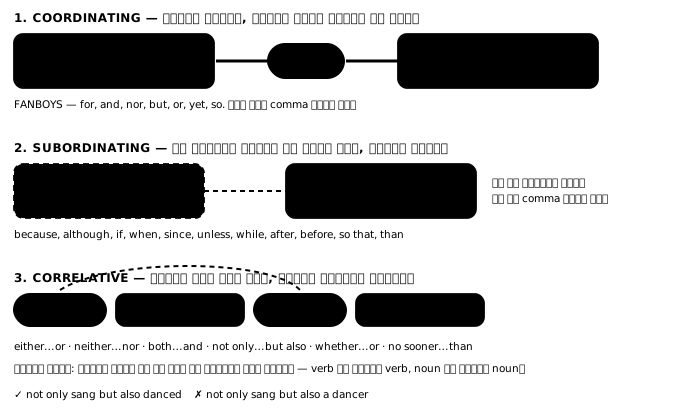
13.2 Coordinating conjunctions — FANBOYS
ये सात शब्द दो बराबर हिस्सों को जोड़ते हैं। दोनों हिस्से अपने आप में पूरे होते हैं। याद रखने का तरीक़ा: FANBOYS — पहले अक्षरों से बना शब्द।
| शब्द | मतलब | Example |
|---|---|---|
| F — for | क्योंकि (formal) | He stayed in, for it was raining. |
| A — and | और (जोड़ना) | She cooked and he cleaned. |
| N — nor | न ही | He did not call, nor did he write. |
| B — but | पर (उलटा) | It is small but comfortable. |
| O — or | या (विकल्प) | Tea or coffee? |
| Y — yet | फिर भी | She was tired, yet she kept working. |
| S — so | इसलिए (नतीजा) | It was late, so we left. |
Comma कब लगेगा
दो पूरे वाक्य जोड़ रहे हो तो conjunction से पहले comma — I called her, but she was busy.
सिर्फ़ दो शब्द या छोटे हिस्से जोड़ रहे हो तो comma नहीं — I called her but got no reply. Test: conjunction के बाद नया subject आ रहा है? हाँ तो comma।
'nor' के बाद शब्दों का क्रम पलट जाता है
✓ He did not call, nor did he write.
✗ He did not call, nor he wrote. "nor" के बाद सवाल जैसा क्रम आता है — helping verb पहले, subject बाद में।
13.3 Subordinating conjunctions — टिकाने वाले
ये वो शब्द हैं जो एक हिस्से को दूसरे पर निर्भर बना देते हैं। जिस हिस्से के आगे ये लगता है, वो अकेला खड़ा नहीं रह सकता — उसे पूरा करने के लिए दूसरा हिस्सा चाहिए।
- Although he was ill, he came to class. "Although he was ill" अकेले बोलो तो बात अधूरी लगती है — कुछ और सुनने का मन करता है। यही निर्भरता है।
| क्या बता रहा है | शब्द | Example |
|---|---|---|
| कारण (क्योंकि) | because, since, as | I left early because I was tired. |
| विरोध (फिर भी) | although, though, even though, whereas, while | Though she is young, she is wise. |
| शर्त (अगर) | if, unless, provided that, in case | Unless you study, you will fail. |
| समय (कब) | when, while, before, after, until, as soon as, since | Call me when you reach. |
| मक़सद (ताकि) | so that, in order that, lest | He ran fast so that he could catch the bus. |
| तुलना | than, as…as | He is taller than his brother. |
| जगह | where, wherever | Sit where you like. |
जगह बदली जा सकती है — बस comma का ध्यान रखो
Because she was late, we started without her. (पहले आया → comma लगता है)
We started without her because she was late. (बाद में आया → comma नहीं)
13.4 Correlative conjunctions — जोड़ी में आने वाले
ये जोड़ी में आते हैं — एक हिस्सा आगे, दूसरा बीच में। इनका एक पक्का नियम है: दोनों तरफ़ एक ही तरह का हिस्सा आना चाहिए। इसे "parallel structure" कहते हैं।
| जोड़ी | मतलब | Example |
|---|---|---|
| either … or | या ये, या वो | Either you come or I go. |
| neither … nor | न ये, न वो | Neither Ram nor Shyam came. |
| both … and | दोनों | She is both clever and kind. |
| not only … but also | सिर्फ़ नहीं, बल्कि | He not only sang but also danced. |
| whether … or | चाहे ये, चाहे वो | I don't know whether he will come or not. |
| no sooner … than | जैसे ही | No sooner did he arrive than it started raining. |
| as … as | जितना … उतना | She is as tall as her mother. |
Verb किसके साथ मिलेगा — पास वाले के साथ
either…or और neither…nor में verb उस subject से मिलता है जो verb के सबसे पास हो:
✓ Neither the boys nor the teacher was present. (teacher पास है → was)
✓ Neither the teacher nor the boys were present. (boys पास हैं → were)
Parallel structure टूटने की ग़लती
- गलत: She not only plays the piano but also a good singer.
- सही: She not only plays the piano but also sings beautifully.
-
क्यों: "not only" के बाद verb आया था, तो "but also" के बाद भी verb आना चाहिए। एक तरफ़ verb और दूसरी तरफ़ noun — ये वाक्य को लंगड़ा कर देता है।
-
गलत: He is interested in reading and to write.
- सही: He is interested in reading and writing.
- क्यों: "and" के दोनों तरफ़ एक ही रूप — दोनों gerund, या दोनों infinitive। मिला-जुला नहीं।
13.5 Conjunctive adverbs — जो conjunction लगते हैं पर हैं नहीं
however, therefore, moreover, nevertheless, otherwise, hence, besides, meanwhile — ये adverb हैं, conjunction नहीं। इसलिए ये दो वाक्यों को comma से नहीं जोड़ सकते। इनके साथ semicolon या full stop चाहिए।
Comma splice — 'however' के साथ सबसे आम ग़लती
- गलत: I was tired, however I finished the work.
- सही: I was tired; however, I finished the work.
- क्यों: "however" conjunction नहीं है, इसलिए वो अकेला दो वाक्य नहीं जोड़ सकता। दो रास्ते हैं: semicolon लगाओ, या सीधा "but" use करो। दूसरा रास्ता आसान भी है और साफ़ भी।
13.6 वो ग़लतियाँ जो हम सच में करते हैं
Conjunction की आम Indian-English ग़लतियाँ
- गलत: Although he was ill, but he came to work.
- सही: Although he was ill, he came to work.
-
क्यों: एक मतलब के लिए एक ही conjunction। हिंदी में "हालाँकि… लेकिन" दोनों आते हैं, इसलिए English में भी दोनों लग जाते हैं। English में एक चुनो: या "although", या "but"। इसी तरह ✗ "Because he was late, so we left" भी ग़लत है।
-
गलत: As she was busy, so she didn't attend.
- सही: As she was busy, she didn't attend.
-
क्यों: वही दोहराव — "as" पहले से कारण बता चुका है, "so" की ज़रूरत नहीं। हिंदी के "क्योंकि… इसलिए" का सीधा असर।
-
गलत: Unless you don't study, you will fail.
- सही: Unless you study, you will fail.
-
क्यों: "Unless" का मतलब ही है "अगर नहीं" — उसमें negative पहले से है। दूसरा "don't" लगाने से मतलब उलटा हो जाता है।
-
गलत: Neither he or his brother came.
- सही: Neither he nor his brother came.
-
क्यों: जोड़ी टूटती नहीं — "neither" के साथ "nor", और "either" के साथ "or"। Partner बदलना ग़लत है।
-
गलत: I don't know that she will come or not.
- सही: I don't know whether she will come or not.
-
क्यों: "or not" के साथ "whether" आता है, "that" नहीं। "if" भी चलता है पर "whether…or not" ज़्यादा साफ़ है।
-
गलत: She is more taller than her sister, but still she plays well.
- सही: She is taller than her sister, but she plays well.
-
क्यों: दो ग़लतियाँ: "more taller" में double comparison, और "but still" में दोहराव — "but" या "still", दोनों नहीं।
-
गलत: She is my cousin brother and also my neighbour.
- सही: He is my cousin and also my neighbour.
-
क्यों: "Cousin" अपने आप में पूरा शब्द है — brother जोड़ने की ज़रूरत नहीं। बाक़ी वाक्य ठीक था; "and also" चलता है, हालाँकि सिर्फ़ "and" से भी काम हो जाता।
-
गलत: He don't have money and time.
- सही: He doesn't have money or time.
- क्यों: दो ग़लतियाँ: "he" के साथ doesn't, और negative वाक्य में "and" की जगह "or" आता है। Negative में "and" दोनों चीज़ों को एक साथ जोड़ देता है, जो मतलब बदल देता है।
13.7 छोटा नक्शा
| परिवार | दोनों हिस्से | शब्द | Comma |
|---|---|---|---|
| Coordinating | बराबर | for, and, nor, but, or, yet, so | दो पूरे वाक्य हों तो हाँ |
| Subordinating | एक-दूसरे पर टिका | because, although, if, when, unless, since | निर्भर हिस्सा पहले आए तो हाँ |
| Correlative | जोड़ी में, parallel | either…or, neither…nor, both…and, not only…but also | अक्सर नहीं |
तीन पक्के नियम
1. एक मतलब के लिए एक ही conjunction — although या but, दोनों नहीं।
2. Correlative जोड़ी के दोनों तरफ़ एक ही तरह का हिस्सा।
3. however, therefore, moreover conjunction नहीं हैं — उनसे पहले semicolon या full stop।
13.8 Practice — Conjunctions
अभ्यास 1
कौन सा वाक्य सही है?
- Although he was tired, he kept working.
- Although he was tired, but he kept working.
- Although he was tired, so he kept working.
- Although he was tired but so he kept working.
संकेत: एक मतलब के लिए कितने conjunction?
उत्तर
Although he was tired, he kept working.
'Although' पहले ही विरोध बता चुका है, इसलिए 'but' लगाना दोहराव है। हिंदी में 'हालाँकि… लेकिन' दोनों आते हैं, इसलिए English में भी दोनों लग जाते हैं।
अभ्यास 2
Neither Ravi ___ his friends were invited.
- nor
- or
- and
- but
संकेत: जोड़ी तोड़नी नहीं है।
उत्तर
nor
'Neither' का partner हमेशा 'nor' होता है, जैसे 'either' का 'or'। जोड़ी बदलने से वाक्य ग़लत हो जाता है।
अभ्यास 3
___ you apologise, she will not talk to you.
- Unless
- If
- Although
- Because
संकेत: इस शब्द में negative पहले से छिपा है।
उत्तर
Unless
'Unless' का मतलब है 'अगर नहीं' — उसमें negative पहले से है। इसीलिए 'unless you don't apologise' लिखना मतलब उलटा कर देता है।
अभ्यास 4
FANBOYS में कौन सा शब्द नहीं आता?
- because
- but
- yet
- nor
संकेत: FANBOYS coordinating conjunctions हैं।
उत्तर
because
'because' subordinating है — वो एक हिस्से को दूसरे पर टिकाता है। FANBOYS (for, and, nor, but, or, yet, so) बराबर हिस्सों को जोड़ते हैं।
अभ्यास 5
I was very tired, ___ I finished the report. (उलटा बताने वाला शब्द)
संकेत: दो बराबर वाक्य हैं, और बात उलटी जा रही है।
उत्तर
but
दो पूरे वाक्य बराबरी में जुड़ रहे हैं और मतलब उलटा जा रहा है, इसलिए 'but'। 'however' भी मतलब वही देता पर उसके पहले semicolon चाहिए होता।
अभ्यास 6
She studied hard ___ she could clear the exam. (ताकि)
संकेत: मक़सद बताना है।
उत्तर
so that
मक़सद बताने के लिए 'so that' आता है। सिर्फ़ 'so' लगाने से वो नतीजा बन जाता है, मक़सद नहीं — दो अलग बातें हैं।
अभ्यास 7
इस वाक्य में एक शब्द extra है — उस पर tap करो।
Because it was raining so we cancelled the match.
उत्तर
गलत शब्द: so.
सही रूप: Because it was raining, we cancelled the match.
'Because' पहले ही कारण बता चुका है, इसलिए 'so' extra हो गया। हिंदी के 'क्योंकि… इसलिए' का सीधा असर है ये।
अभ्यास 8
ग़लत शब्द ढूँढो।
Unless you don't hurry you will miss the train.
उत्तर
गलत शब्द: don't.
सही रूप: Unless you hurry, you will miss the train.
'Unless' में negative पहले से है, इसलिए 'don't' लगाने से दो negative हो गए और मतलब उलट गया।
अभ्यास 9
एक शब्द ग़लत है।
I was tired, however I completed the task.
उत्तर
गलत शब्द: however.
सही रूप: I was tired; however, I completed the task.
'however' conjunction नहीं, adverb है — वो अकेले comma से दो वाक्य नहीं जोड़ सकता। Semicolon लगाओ, या सीधा 'but' use करो।
अभ्यास 10
Conjunction को उसके काम से जोड़ो।
| A | B |
|---|---|
| because | शर्त बताता है |
| although | मक़सद बताता है |
| unless | समय बताता है |
| so that | कारण बताता है |
| as soon as | विरोध बताता है |
उत्तर
because — कारण बताता है; although — विरोध बताता है; unless — शर्त बताता है; so that — मक़सद बताता है; as soon as — समय बताता है
Subordinating conjunction का चुनाव उसके मतलब से होता है — कारण, विरोध, शर्त, मक़सद या समय। ग़लत चुनने से पूरा मतलब बदल जाता है।
अभ्यास 11
सही क्रम में वाक्य बनाओ — correlative जोड़ी का इस्तेमाल है।
शब्द: but / guitar / plays / only / sings / the / not / She / also
उत्तर
She not only sings but also plays the guitar
'not only' के बाद verb आया है, तो 'but also' के बाद भी verb आना चाहिए — यही parallel structure है। एक तरफ़ verb और दूसरी तरफ़ noun वाक्य को लंगड़ा कर देता है।
अभ्यास 12
ये लाइन बोल के देखो — 'although' के बाद 'but' नहीं बोलना है।
Although it was raining we went out
उत्तर
बोलो: Although it was raining we went out
बोलते वक़्त हिंदी की आदत से 'but' निकल जाता है। जान-बूझकर बिना 'but' बोलने की practice से ये आदत टूटती है।
आगे क्या करो
आज अपने पाँच छोटे वाक्य लो और उन्हें conjunction से जोड़ो। फिर पढ़कर देखो — कितना बेहतर लगता है। इस हिस्से का आख़िरी chapter: Interjection।