अध्याय 10: Verb — काम वाले शब्द
Verb (क्रिया) — वाक्य का दिल
Verb वो शब्द है जो काम, होना या हालत बताता है। अगर पूरी English grammar में एक ही चीज़ ठीक करनी हो, तो verb करो — क्योंकि tense, voice, agreement, सवाल बनाना, सब verb पर टिका है। ये chapter थोड़ा लंबा है, पर इसके बाद बहुत सारे chapters अपने आप आसान लगने लगेंगे।
- 1Verb के प्रकार — पूरा पेड़
- 2Main verb और Helping verb
- 3Modal verbs — जो कभी बदलते नहीं
- 4Transitive और Intransitive — object लेता है या नहीं
- 5Linking verbs — पुल बनाने वाले verb
- 6Verb के पाँच रूप
- 7Finite और Non-finite verb
- 8Stative verbs — जो continuous में नहीं जाते
- 9वो ग़लतियाँ जो हम सच में करते हैं
- 10याद रखने का छोटा नक्शा
एक लाइन में
A verb shows an action, a state, an occurrence or possession. काम (action), हालत (state), कोई घटना (occurrence), या किसी चीज़ का होना / पास होना (possession) — ये चारों verb बताता है। बिना verb कोई वाक्य पूरा नहीं होता।
- She writes a letter. Action — काम हो रहा है: वो चिट्ठी लिखती है।
- He is happy. State — कोई काम नहीं, सिर्फ़ हालत: वो ख़ुश है।
- It rained yesterday. Occurrence — कुछ घटा, किसी ने किया नहीं: कल बारिश हुई।
- They have a car. Possession — किसी के पास कुछ है: उनके पास गाड़ी है।
10.1 Verb के प्रकार — पूरा पेड़
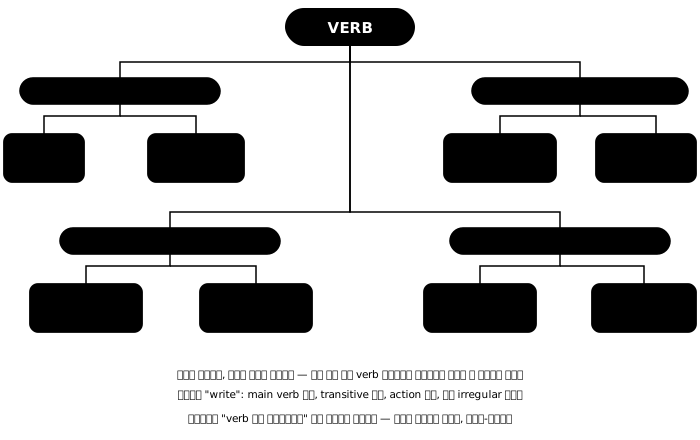
Verb को कई तरह से बाँटा जाता है, और ये बँटवारे एक-दूसरे के ऊपर चलते हैं। एक ही verb एक साथ "main verb", "transitive" और "irregular" हो सकता है — जैसे write। इसलिए पेड़ को मुक़ाबला न समझो, चार अलग सवाल समझो।
10.2 Main verb और Helping verb
एक वाक्य में असली मतलब main verb देता है। उसके साथ आने वाले छोटे verb — is, am, are, has, have, will, do — tense, सवाल और negative बनाने में मदद करते हैं। इन्हें auxiliary या helping verb कहते हैं।
- She is writing a letter. "writing" असली काम है; "is" सिर्फ़ बता रहा है कि अभी चल रहा है।
- Do you know him? सवाल बनाने के लिए "do" आगे आया; मतलब "know" में ही है।
| Helping verb | रूप | काम |
|---|---|---|
| be | is, am, are, was, were, been, being | continuous और passive बनाना |
| have | have, has, had | perfect tense बनाना |
| do | do, does, did | सवाल, negative, और ज़ोर देना |
तीनों ख़ुद भी main verb बन सकते हैं
I have a bike. — यहाँ "have" ख़ुद main verb है।
I have finished my work. — यहाँ "have" helping है, "finished" main। देखो कि उसके बाद दूसरा verb आ रहा है या नहीं — वही फ़ैसला करता है।
10.3 Modal verbs — जो कभी बदलते नहीं
Modals वो helping verbs हैं जो संभावना, क्षमता, इजाज़त या मजबूरी बताते हैं। इनके दो पक्के नियम हैं, और दोनों याद रखना काफ़ी है।
Modal के दो पक्के नियम
1. Modal के बाद verb हमेशा पहले रूप में — बिना -s, बिना -ing, बिना to।
2. Modal ख़ुद कभी नहीं बदलता — न -s लगता है, न -ed। ✓ She can swim. ✗ She cans swim. ✗ She can swims.
| Modal | क्या बताता है | Example |
|---|---|---|
| can | क्षमता, आम इजाज़त | I can drive. |
| could | पहले की क्षमता, politeness | Could you help me? |
| may | formal इजाज़त, संभावना | May I come in? |
| might | कम संभावना | It might rain today. |
| will | भविष्य, वादा | I will call you. |
| would | politeness, कल्पना | I would like tea. |
| shall | सुझाव (formal) | Shall we start? |
| should | सलाह | You should rest. |
| must | पक्की मजबूरी | You must wear a helmet. |
| ought to | नैतिक ज़िम्मेदारी | We ought to help them. |
can और could — इजाज़त माँगने में फ़र्क
Can I borrow your pen? — दोस्ती में ठीक।
Could I borrow your pen? — ज़्यादा विनम्र, किसी बड़े के साथ।
May I borrow your pen? — सबसे formal, ऑफिस या interview में।
10.4 Transitive और Intransitive — object लेता है या नहीं
Verb के बाद पूछो "क्या?" या "किसको?"। अगर जवाब मिलता है, तो verb transitive है। अगर जवाब का कोई मतलब नहीं बनता, तो verb intransitive है।
| Verb | सवाल | जवाब | प्रकार |
|---|---|---|---|
| She wrote a poem. | क्या लिखा? | a poem ✓ | Transitive |
| He slept early. | क्या सोया? | कोई जवाब नहीं ✗ | Intransitive |
| They helped us. | किसको? | us ✓ | Transitive |
| The baby laughed. | क्या हँसा? | जवाब नहीं ✗ | Intransitive |
कई verb दोनों होते हैं
The bell rang. (intransitive) / She rang the bell. (transitive)
The window broke. / He broke the window. इसलिए verb को लिस्ट में नहीं, वाक्य में देखो।
Intransitive verb के बाद preposition चाहिए होता है
- गलत: We will reach at Delhi at 9.
- सही: We will reach Delhi at 9.
-
क्यों: "Reach" transitive है — सीधा object लेता है। पर "arrive" intransitive है, इसलिए उसके साथ preposition ज़रूरी: arrive in Delhi, arrive at the airport.
-
गलत: Let us discuss about the plan.
- सही: Let us discuss the plan.
- क्यों: "Discuss" transitive है, इसलिए object सीधा आता है। हिंदी में "के बारे में" होता है, इसलिए "about" घुस जाता है। इसी तरह: enter the room (not enter into), marry her (not marry with her)।
10.5 Linking verbs — पुल बनाने वाले verb
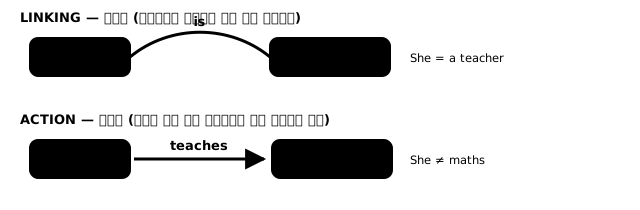
Linking verb कोई काम नहीं बताता। वो subject को उसकी पहचान या हालत से जोड़ देता है — जैसे एक पुल।
| Linking verb | Example | ध्यान दो |
|---|---|---|
| be (is, am, are, was, were) | He is busy. | सबसे आम |
| seem, appear | She seems tired. | लगता है |
| become, get, turn, grow | The sky turned dark. | बदलना |
| feel, look, smell, sound, taste | This tastes sweet. | इंद्रियों वाले |
| remain, stay | He remained calm. | बने रहना |
Linking verb के बाद adjective, adverb नहीं
✓ The food tastes good. ✗ The food tastes well.
✓ She looks beautiful. ✗ She looks beautifully. क्योंकि ये verb subject के बारे में बता रहे हैं, काम के बारे में नहीं। Subject noun है → noun को adjective चाहिए।
10.6 Verb के पाँच रूप
हर English verb के पाँच रूप होते हैं। Dictionary में अक्सर तीन लिखे जाते हैं — V1, V2, V3 — और यही तीन tense बनाने में काम आते हैं।
| रूप | नाम | walk (regular) | write (irregular) | कहाँ लगता है |
|---|---|---|---|---|
| V1 | base | walk | write | present, modal के बाद, to के साथ |
| V1-s | third person | walks | writes | he / she / it के साथ |
| V2 | past simple | walked | wrote | simple past |
| V3 | past participle | walked | written | have/has/had के बाद, passive में |
| V-ing | present participle | walking | writing | continuous tenses |
Regular और Irregular का फ़र्क
Regular: V2 और V3 दोनों में सिर्फ़ -ed लगता है — play → played → played।
Irregular: शब्द अंदर से बदल जाता है — go → went → gone। English में लगभग 200 irregular verbs हैं, पर रोज़ के काम के लिए 60-70 काफ़ी हैं।
रोज़ काम आने वाले irregular verbs
| V1 | V2 | V3 | V1 | V2 | V3 |
|---|---|---|---|---|---|
| go | went | gone | eat | ate | eaten |
| see | saw | seen | take | took | taken |
| do | did | done | give | gave | given |
| come | came | come | run | ran | run |
| buy | bought | bought | bring | brought | brought |
| think | thought | thought | teach | taught | taught |
| speak | spoke | spoken | break | broke | broken |
| write | wrote | written | drive | drove | driven |
| begin | began | begun | drink | drank | drunk |
| put | put | put | cut | cut | cut |
V2 और V3 की जगह बदल जाना
- गलत: I have saw that movie.
- सही: I have seen that movie.
-
क्यों: "have / has / had" के बाद हमेशा V3 आता है — seen, gone, done, written। V2 (saw) सिर्फ़ अकेला past बनाने के लिए है: I saw that movie.
-
गलत: He did not went to school.
- सही: He did not go to school.
- क्यों: "did" ने पहले से past बता दिया — अब main verb पहले रूप में ही रहेगा। एक वाक्य में past दो बार नहीं बताते।
10.7 Finite और Non-finite verb
Finite verb वो है जो subject और tense के हिसाब से बदलता है — यही वाक्य का असली verb होता है। Non-finite verb बदलता नहीं; वो noun या adjective जैसा काम करता है।
| प्रकार | रूप | Example | काम |
|---|---|---|---|
| Finite | subject + tense के साथ बदलता है | She plays. / They played. | असली verb |
| Infinitive | to + V1 | I want to sleep. | noun जैसा |
| Gerund | V-ing, noun की तरह | Swimming is good exercise. | noun जैसा |
| Participle | V-ing या V3, adjective की तरह | a broken glass / a running train | adjective जैसा |
एक वाक्य में एक ही finite verb
I want to go home. — "want" finite है, "to go" non-finite। इसलिए tense सिर्फ़ "want" पर लगता है: I wanted to go home. "to goed" कभी नहीं होता — अब वजह समझ आ गई?
Preposition के बाद gerund, infinitive नहीं
✓ She is good at singing. ✗ good at to sing
✓ I look forward to meeting you. ✗ to meet you
यहाँ "to" infinitive का नहीं, preposition है — इसलिए -ing।
10.8 Stative verbs — जो continuous में नहीं जाते
कुछ verb काम नहीं, हालत बताते हैं। हालत चलती नहीं, होती है — इसलिए इन्हें -ing में नहीं डालते।
| श्रेणी | Verbs |
|---|---|
| सोच | know, think (मानना), believe, understand, remember, forget, mean |
| भाव | like, love, hate, want, need, prefer |
| इंद्रियाँ | see, hear, smell, taste (लगना) |
| मालिकाना | have (रखना), own, belong, possess |
| होना | be, seem, appear, cost, weigh, contain |
10.9 वो ग़लतियाँ जो हम सच में करते हैं
Verb की सबसे आम Indian-English ग़लतियाँ
- गलत: I am having a car.
- सही: I have a car.
-
क्यों: जब "have" का मतलब मालिकाना हो, वो stative verb है — continuous में नहीं जाता। "I am having" सिर्फ़ तब ठीक है जब काम हो रहा हो: I am having lunch (खाना खा रहा हूँ), I am having a bath।
-
गलत: He don't know the answer.
- सही: He doesn't know the answer.
-
क्यों: He / she / it third person singular हैं, और उनका helping verb "does" होता है। और ध्यान दो — "does" के बाद main verb पहले रूप में: doesn't know, न कि doesn't knows।
-
गलत: I am agree with you.
- सही: I agree with you.
-
क्यों: "Agree" ख़ुद एक पूरा verb है — उससे पहले "am" लगाने की ज़रूरत नहीं। हिंदी में "मैं सहमत हूँ" में "हूँ" आता है, इसलिए "am" घुस जाता है।
-
गलत: She is knowing the answer.
- सही: She knows the answer.
-
क्यों: "Know" stative है — जानना एक हालत है, काम नहीं। इसीलिए "I am knowing", "I am understanding", "I am liking" तीनों ग़लत हैं।
-
गलत: We discussed about the project yesterday.
- सही: We discussed the project yesterday.
-
क्यों: "Discuss" transitive है — object सीधा लेता है, preposition की ज़रूरत नहीं। इसी लिस्ट में: enter the hall, attend the meeting, answer the question, reach home।
-
गलत: One of my friend don't like coffee.
- सही: One of my friends doesn't like coffee.
-
क्यों: दो ग़लतियाँ एक साथ: "one of" के बाद plural noun (friends), पर असली subject "one" है — singular — इसलिए verb भी singular: doesn't।
-
गलत: Please revert back to me soon.
- सही: Please reply to me soon.
-
क्यों: "Revert" का मतलब है पुरानी हालत में लौट जाना, जवाब देना नहीं। और "back" दोहराव है। ऑफिस ईमेल में "please reply" या "please get back to me" लिखो।
-
गलत: He can plays the guitar very well.
- सही: He can play the guitar very well.
- क्यों: Modal के बाद verb हमेशा पहले रूप में। Modal ने ख़ुद ही काम सँभाल लिया, अब verb को -s की ज़रूरत नहीं।
10.10 याद रखने का छोटा नक्शा
| इसके बाद | Verb का रूप | Example |
|---|---|---|
| he / she / it (present) | V1 + s | She goes. |
| do / does / did | V1 | She didn't go. |
| modal (can, will, must…) | V1 | She can go. |
| have / has / had | V3 | She has gone. |
| is / am / are / was / were | V-ing (या passive में V3) | She is going. |
| to | V1 | She wants to go. |
| preposition (at, of, in, for…) | V-ing | She is tired of waiting. |
10.11 Practice — Verbs
अभ्यास 1
She ___ the answer to this question.
- knows
- is knowing
- knowing
- are knowing
संकेत: ये verb stative है या action?
उत्तर
knows
'Know' stative verb है — जानना एक हालत है, चालू काम नहीं। इसलिए उसे continuous में नहीं डालते, चाहे अभी की बात हो।
अभ्यास 2
He ___ live in Mumbai anymore.
- doesn't
- don't
- isn't
- didn't
संकेत: Third person singular का negative।
उत्तर
doesn't
'He' third person singular है, इसलिए helping verb 'does' लगता है। 'don't' सिर्फ़ I, you, we, they के साथ आता है।
अभ्यास 3
I have ___ that film twice already.
- seen
- saw
- see
- seeing
संकेत: 'have' के बाद कौन सा रूप?
उत्तर
seen
have / has / had के बाद हमेशा V3 (past participle) आता है — seen। 'saw' V2 है, वो अकेला past बनाने के लिए है: I saw that film.
अभ्यास 4
कौन सा वाक्य सही है?
- She can play the sitar.
- She can plays the sitar.
- She cans play the sitar.
- She can to play the sitar.
उत्तर
She can play the sitar.
Modal के बाद verb पहले रूप में आता है, और modal ख़ुद कभी नहीं बदलता। इसलिए न 'cans', न 'plays', न 'to play'।
अभ्यास 5
'The soup tastes ___.' — ख़ाली जगह में क्या आएगा?
- delicious
- deliciously
- deliciousness
- tastily
संकेत: 'taste' यहाँ linking verb है।
उत्तर
delicious
Linking verb के बाद adjective आता है, क्योंकि वो subject के बारे में बता रहा है — soup कैसा है। Adverb तब आता जब काम का तरीक़ा बताना होता।
अभ्यास 6
I am looking forward to ___ you next week. (meet)
संकेत: 'to' यहाँ preposition है, infinitive नहीं।
उत्तर
meeting
'look forward to' में 'to' preposition है, और preposition के बाद gerund (-ing) आता है। इसीलिए 'to meet' यहाँ ग़लत लगता है।
अभ्यास 7
He did not ___ to the office yesterday. (go)
संकेत: 'did' ने past पहले ही बता दिया।
उत्तर
go
'did' के बाद verb पहले रूप में रहता है, क्योंकि past 'did' में ही आ गया। एक वाक्य में past दो बार नहीं बताते।
अभ्यास 8
इस वाक्य में ग़लत शब्द पर tap करो।
I am having two brothers and one sister.
उत्तर
गलत शब्द: having.
सही रूप: I have two brothers and one sister.
जब 'have' का मतलब रिश्ता या मालिकाना हो, वो stative है — continuous में नहीं जाता। 'I am having' सिर्फ़ खाने-पीने जैसे काम में चलता है।
अभ्यास 9
ग़लत शब्द ढूँढो।
We discussed about the new policy in the meeting.
उत्तर
गलत शब्द: about.
सही रूप: We discussed the new policy in the meeting.
'Discuss' transitive verb है — object सीधा लेता है। हिंदी के 'के बारे में' से 'about' आ जाता है, पर English में वो फ़ालतू है।
अभ्यास 10
'It rained heavily last night.' — यहाँ verb क्या बता रहा है?
- occurrence
- possession
- state
- action
संकेत: किसी ने कुछ किया नहीं, बस हो गया।
उत्तर
occurrence
बारिश किसी का किया हुआ काम नहीं, एक घटना है — इसलिए occurrence। 'She writes' action होता, 'He is happy' state, और 'They have a car' possession।
अभ्यास 11
वाक्य को उस चीज़ से जोड़ो जो उसका verb बता रहा है।
| A | B |
|---|---|
| She writes a letter. | occurrence |
| He is happy. | possession |
| It rained yesterday. | action |
| They have a car. | state |
उत्तर
She writes a letter. — action; He is happy. — state; It rained yesterday. — occurrence; They have a car. — possession
Verb चार चीज़ें बताता है — काम (action), हालत (state), घटना (occurrence), और किसी के पास होना (possession)।
अभ्यास 12
We ___ a big house in the village. (possession, present)
संकेत: किसी के पास कुछ है।
उत्तर
have
Possession के लिए 'have / has' — We have, She has। Possession वाला 'have' stative है, इसलिए 'We are having a house' नहीं बोलते।
अभ्यास 13
Verb के रूप को उसकी जगह से जोड़ो।
| A | B |
|---|---|
| have / has के बाद | V-ing — going, writing |
| modal के बाद | V1 + s — goes, writes |
| is / am / are के बाद | V3 — gone, written |
| he / she के साथ present में | V1 — go, write |
उत्तर
have / has के बाद — V3 — gone, written; modal के बाद — V1 — go, write; is / am / are के बाद — V-ing — going, writing; he / she के साथ present में — V1 + s — goes, writes
Verb का रूप उसके आगे वाले शब्द से तय होता है। ये चार जोड़ियाँ याद हो गईं तो आधा tense का काम हो गया।
अभ्यास 14
सही क्रम में वाक्य बनाओ — modal का इस्तेमाल है।
शब्द: wear / must / helmet / riding / while / You / a
उत्तर
You must wear a helmet while riding
क्रम है: subject + modal + V1 + बाक़ी। 'must' के बाद 'wear' पहले रूप में रहता है — 'wears' कभी नहीं।
अभ्यास 15
ये लाइन बोल के देखो — 'doesn't' को एक ही साँस में बोलना है।
He doesn't know the answer
उत्तर
बोलो: He doesn't know the answer
बोलते वक़्त हम 'does not' को अलग-अलग बोलते हैं तो 'he don't' की आदत नहीं टूटती। 'doesn't' को एक शब्द की तरह बोलने से सही रूप अपने आप आता है।
आगे क्या करो
रोज़ पाँच irregular verbs लो और उनके तीनों रूप ज़ोर से बोलो — go went gone, see saw seen। दो हफ़्ते में सारी लिस्ट ज़ुबान पर आ जाएगी, और फिर tenses का chapter आधा पहले से पता होगा।