अध्याय 18: सवाल पूछना (Questions & tags)
सवाल पूछना — क्रम बदलता है, शब्द नहीं
हिंदी में सवाल पूछना बहुत आसान है: "तुम जा रहे हो।" और "तुम जा रहे हो?" — शब्द वही हैं, बस सुर (tone) बदला। English में यह नहीं चलता। English में सवाल बनाते वक़्त शब्दों का क्रम बदलना पड़ता है — helping verb subject से आगे आ जाता है। इसीलिए "Where you are going?" कान को खराब लगता है, और "Where are you going?" बिल्कुल ठीक।
- 1सवाल की मशीन — एक तस्वीर में
- 2Yes/No सवाल — तीन हालात
- 3WH-words — जब "हाँ/ना" से काम नहीं चलता
- 4Question tags — "है ना?"
- 5शिष्ट सवाल — क्रम वापस सीधा हो जाता है
- 6वो गलतियाँ जो हम सच में करते हैं
- 7छोटा नक्शा
एक लाइन में
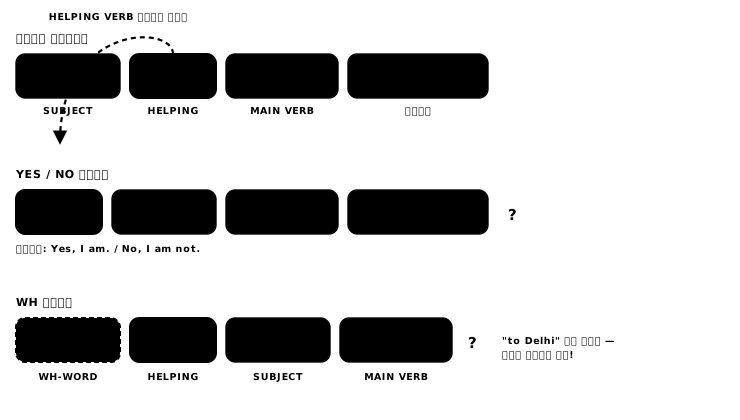
In an English question, the helping verb comes before the subject. Helping verb (am/is/are/was/were/do/does/did/have/has/will/can…) subject से पहले चला जाता है। बस यही पूरा rule है।
18.1 सवाल की मशीन — एक तस्वीर में
नीचे देखो: एक सीधा वाक्य है, और उससे दो तरह के सवाल बनाए गए हैं। ध्यान दो कि helping verb कैसे छलाँग लगाकर subject के आगे आ जाता है।
18.2 Yes/No सवाल — तीन हालात
(a) जब वाक्य में पहले से helping verb है
बस उसको आगे ले आओ। कुछ जोड़ना नहीं पड़ता।
| सीधा वाक्य | सवाल |
|---|---|
| She is ready. | Is she ready? |
| They were late. | Were they late? |
| He has finished. | Has he finished? |
| You can swim. | Can you swim? |
| It will rain. | Will it rain? |
(b) जब कोई helping verb नहीं है — do / does / did बुलाओ
Present Simple और Past Simple में helping verb छिपा हुआ होता है। सवाल बनाते वक़्त वह बाहर आ जाता है — और तब main verb V1 में वापस चला जाता है।
| सीधा वाक्य | सवाल | ध्यान दो |
|---|---|---|
| You play cricket. | Do you play cricket? | I/you/we/they → do |
| She plays cricket. | Does she play cricket? | -s "does" में चला गया |
| He went home. | Did he go home? | past "did" में चला गया, verb V1 |
एक ही जगह tense दिखेगा
Does she plays? ✗ · Does she play? ✓
Did you went? ✗ · Did you go? ✓ Tense का काम do/does/did कर चुका — main verb अब सादा रहता है।
(c) "am / is / are" खुद ही helping verb है
- Are you free tomorrow? कल ख़ाली हो? — "Do you are free" ऐसा कभी नहीं होता।
- Is this seat taken? यह seat ली हुई है?
18.3 WH-words — जब "हाँ/ना" से काम नहीं चलता
WH-word हमेशा सबसे आगे आता है, और उसके बाद वही क्रम चलता है जो yes/no सवाल में था: WH + helping + subject + verb।
| WH-word | क्या पूछता है | Example |
|---|---|---|
| What | चीज़ / काम | What do you want? |
| Who | इंसान (subject) | Who called you? |
| Whom | इंसान (object) | Whom did you call? |
| Whose | किसका | Whose bag is this? |
| Which | दिए गए options में से कौन सा | Which shirt do you like? |
| When | समय | When does the bus leave? |
| Where | जगह | Where are you going? |
| Why | वजह | Why did she leave early? |
| How | तरीका / हाल | How did you come? |
| How much | कितना (uncountable) | How much sugar do we need? |
| How many | कितने (countable) | How many brothers do you have? |
| How long | कितनी देर / कितना लंबा | How long have you worked here? |
| How often | कितनी बार | How often do you exercise? |
| How far | कितनी दूरी | How far is the station? |
Subject वाला सवाल — यहाँ do/does/did नहीं लगता
अगर WH-word ही subject है (किसने? क्या हुआ?), तो क्रम बदलने की ज़रूरत ही नहीं — क्योंकि subject पहले से ही सबसे आगे है।
Who broke the window? "Who did break the window?" गलत है। काँच किसने तोड़ा — "Who broke"।
What happened yesterday?
18.4 Question tags — "है ना?"
हिंदी में हम वाक्य के आख़िर में "ना?", "है ना?", "ठीक है?" जोड़ देते हैं। English में भी यही होता है, पर tag वाक्य का उल्टा होता है: positive वाक्य के बाद negative tag, negative वाक्य के बाद positive tag।
| वाक्य | Tag | पूरा रूप |
|---|---|---|
| Positive | negative | You are tired, aren't you? |
| Negative | positive | She doesn't smoke, does she? |
| Positive, past | negative | He came late, didn't he? |
| Positive, perfect | negative | They have left, haven't they? |
| Positive, modal | negative | You can drive, can't you? |
Tag बनाने के तीन कदम
1. Helping verb उठाओ (न हो तो do/does/did लाओ)।
2. उल्टा कर दो — positive → negative, negative → positive।
3. Subject को pronoun बना दो — Ravi → he, my sisters → they, this book → it।
चार ख़ास tags जो याद रखने पड़ते हैं
| वाक्य | Tag | क्यों |
|---|---|---|
| I am late, … | aren't I? | "amn't" अंग्रेज़ी में नहीं होता |
| Let's go, … | shall we? | Let's = suggestion |
| Open the door, … | will you? | Order / request के साथ |
| Nobody came, … | did they? | nobody / everybody का pronoun "they" होता है |
| There is a problem, … | isn't there? | "there" ही subject की जगह लेगा |
'isn't it?' हर जगह नहीं चलता
- गलत: You are coming tomorrow, isn't it?
- सही: You are coming tomorrow, aren't you?
-
क्यों: Tag का helping verb और pronoun वाक्य से उठाना पड़ता है। "isn't it" सिर्फ़ तब ठीक है जब subject ही "it" हो — It is cold, isn't it?
-
गलत: He finished the work, no?
- सही: He finished the work, didn't he?
- क्यों: हिंदी का "ना?" सीधा "no?" नहीं बनता — पूरा tag बनाना पड़ता है।
18.5 शिष्ट सवाल — क्रम वापस सीधा हो जाता है
जब सवाल के अंदर सवाल आता है (polite या indirect question), तो अंदर वाला हिस्सा सीधे वाक्य की तरह लिखा जाता है। यह बहुत लोग गलत करते हैं।
| सीधा सवाल | शिष्ट रूप |
|---|---|
| Where is the station? | Could you tell me where the station is? |
| What time does it start? | Do you know what time it starts? |
| Why did he leave? | I wonder why he left. |
| Can I sit here? | Would you mind if I sat here? |
- Could you please tell me where the ticket counter is? ध्यान दो — "where is the ticket counter" नहीं, "where the ticket counter is"।
18.6 वो गलतियाँ जो हम सच में करते हैं
सवाल की टॉप गलतियाँ
- गलत: Where you are going?
- सही: Where are you going?
-
क्यों: Helping verb "are" subject "you" के पहले आएगा। हिंदी का क्रम सीधा उठा लेना यहाँ सबसे आम गलती है।
-
गलत: Why you did not come yesterday?
- सही: Why didn't you come yesterday?
-
क्यों: WH + helping + subject + verb। "didn't" पहले, "you" बाद में।
-
गलत: What is your good name?
- सही: May I know your name? / What's your name?
-
क्यों: "Good name" हिंदी के "शुभ नाम" का सीधा अनुवाद है — English में ऐसा नहीं बोलते। शिष्ट लगना हो तो "May I know your name?" सबसे अच्छा है।
-
गलत: Does she knows the answer?
- सही: Does she know the answer?
-
क्यों: "does" ने -s ले लिया, इसलिए main verb बिना -s रहेगा।
-
गलत: Tell me where is the office.
- सही: Tell me where the office is.
-
क्यों: Indirect question के अंदर क्रम सीधा रहता है — helping verb पीछे जाता है।
-
गलत: He is your brother, isn't it?
- सही: He is your brother, isn't he?
-
क्यों: Pronoun वाक्य से उठाना है। Subject "he" है, इसलिए tag में भी "he"।
-
गलत: What you do?
- सही: What do you do?
- क्यों: काम-धंधा पूछने का यह standard सवाल है, और इसमें "do" दो बार आता है — एक helping, एक main verb।
18.7 छोटा नक्शा
| सवाल की किस्म | क्रम |
|---|---|
| Yes / No | HELPING + subject + verb + बाकी? |
| WH (object वाला) | WH + HELPING + subject + verb? |
| WH (subject वाला) | WH + verb + बाकी? (do/does/did नहीं) |
| Question tag | वाक्य + उल्टा helping + pronoun? |
| Indirect / polite | Polite शुरुआत + WH + subject + verb |
18.8 Practice — सवाल और question tags
अभ्यास 1
कौन सा सही है?
- Where you are going?
- Where are you going?
- Where you going are?
- Where going you are?
संकेत: Helping verb कहाँ बैठता है?
उत्तर
Where are you going?
क्रम है WH + helping + subject + verb। 'are' को 'you' से पहले आना होगा।
अभ्यास 2
___ she live in Delhi?
- Do
- Does
- Did
- Is
संकेत: Present Simple, subject 'she'।
उत्तर
Does
He/she/it के साथ 'Does'। और ध्यान रखो — इसके बाद verb बिना -s रहेगा: 'Does she live', not 'lives'।
अभ्यास 3
You have finished the project, ___ ?
- isn't it
- haven't you
- have you
- didn't you
संकेत: वाक्य positive है, तो tag कैसा होगा?
उत्तर
haven't you
Positive वाक्य → negative tag। Helping verb 'have' है और subject 'you' है, इसलिए 'haven't you'।
अभ्यास 4
___ broke this glass?
- Who did
- Whom did
- Who
- Who does
संकेत: यहाँ WH-word खुद subject है।
उत्तर
Who
जब WH-word ही subject हो तो do/does/did नहीं लगता — 'Who broke this glass?' सीधा verb आता है।
अभ्यास 5
___ you like some tea?
संकेत: शिष्ट तरीके से offer करने वाला शब्द।
उत्तर
Would / would
'Would you like…?' कुछ offer करने का शिष्ट तरीका है। 'Do you want' से ज़्यादा polite लगता है।
अभ्यास 6
How ___ brothers do you have?
संकेत: भाई गिनने लायक हैं या नहीं?
उत्तर
many
Countable चीज़ों के लिए 'how many', uncountable के लिए 'how much'। Brothers गिने जा सकते हैं।
अभ्यास 7
Let's start the meeting, ___ we?
संकेत: यह ख़ास tag है।
उत्तर
shall
'Let's' के साथ हमेशा 'shall we?' tag आता है — यह याद रखने वाली चीज़ है।
अभ्यास 8
इस सवाल में एक गलती है — गलत शब्द पर tap करो।
Does your sister knows my address?
उत्तर
गलत शब्द: knows.
सही रूप: Does your sister know my address?
'Does' ने -s अपने अंदर ले लिया है, इसलिए main verb सादा रहता है — 'know', not 'knows'।
अभ्यास 9
गलत शब्द ढूँढो।
Please tell me where is the railway station.
उत्तर
गलत शब्द: is.
सही रूप: Please tell me where the railway station is.
Indirect question के अंदर क्रम सीधा रहता है। 'is' को subject के बाद भेजना पड़ेगा।
अभ्यास 10
Tag में एक गलती है — उसे पकड़ो।
She writes poems, isn't she?
उत्तर
गलत शब्द: isn't.
सही रूप: She writes poems, doesn't she?
वाक्य Present Simple में है, उसमें छिपा helping verb 'does' है — इसलिए tag 'doesn't she' बनेगा। 'isn't' तब आता जब वाक्य में 'is' होता।
अभ्यास 11
सही क्रम में सवाल बनाओ।
शब्द: been / city / in / have / you / this / long / How / living
उत्तर
How long have you been living in this city
How long + helping verbs (have been) + subject (you) + main verb (living)। 'How long you are living' गलत क्रम है।
अभ्यास 12
सवाल को सही WH-word से जोड़ो।
| A | B |
|---|---|
| कितनी दूरी है? | Whose |
| कितनी बार? | Which |
| किसका है? | How much |
| दिए गए options में से कौन सा? | How far |
| कितनी चीनी? | How often |
उत्तर
कितनी दूरी है? — How far; कितनी बार? — How often; किसका है? — Whose; दिए गए options में से कौन सा? — Which; कितनी चीनी? — How much
How far = दूरी, how often = बार, whose = किसका, which = options में से चुनना, how much = uncountable की मात्रा।
अभ्यास 13
अब यह सवाल बोलकर देखो — आख़िर में आवाज़ उठानी है।
Could you please tell me where the bus stop is
उत्तर
बोलो: Could you please tell me where the bus stop is
यह station, दुकान, कहीं भी काम आने वाला सबसे काम का वाक्य है। याद रखो — 'where the bus stop is', 'where is the bus stop' नहीं, क्योंकि यह indirect सवाल है।
आगे क्या करो
आज से जब भी कोई सवाल पूछना हो, बोलने से पहले मन में एक सेकंड रुककर helping verb ढूँढो और उसे आगे रखो। शुरू में यह धीमा लगेगा — पर यही एक आदत आपकी English को तुरंत साफ़ कर देती है।