अध्याय 43: Basic से Native
Basic से Native — वही बात, नया अंदाज़
आपकी English गलत नहीं है। I am very tired पूरी तरह सही वाक्य है — grammar perfect, मतलब साफ़। फिर भी एक native speaker शायद ये नहीं बोलेगा। वो बोलेगा I'm running on fumes। इस chapter में हम वही फ़र्क सीखेंगे: सही English से natural English तक का छोटा सफ़र। और सबसे ज़रूरी बात — कौनसा phrase कहाँ बोलना है, क्योंकि गलत जगह पर बोला गया natural phrase basic phrase से ज़्यादा खराब लगता है।
- 1चार जोड़ियाँ जो आज से काम आएँगी
- 2रोज़ काम आने वाली upgrade table
- 3जज़्बात वाले upgrades — गुस्सा, डर, खुशी, थकान
- 4काम और रोज़ की बात — 12 और upgrades
- 5Register — phrase की जगह का नक्शा
- 6छोटी आदतें जो तुरंत फ़र्क लाती हैं
- 7जो गलतियाँ native phrases के साथ होती हैं
- 8एक छोटा script — यही रोज़ बोलना है
एक लाइन में
Native लगना मुश्किल शब्द से नहीं आता — सही phrase सही माहौल में रखने से आता है। बड़े शब्द रटने की ज़रूरत नहीं; थोड़े phrases, पर उनका सही इस्तेमाल।
43.1 चार जोड़ियाँ जो आज से काम आएँगी
पहले इन चार को ठीक से समझ लो। हर एक के साथ तस्वीर बनाओ दिमाग़ में — phrase का असली मतलब तभी बैठता है।
I'm very tired → I'm running on fumes
"Fumes" मतलब पेट्रोल की भाप — गाड़ी में पेट्रोल खत्म, बस धुआँ बचा है, और वो फिर भी चल रही है। यही तस्वीर है: energy खत्म हो चुकी है पर काम जारी है। इसलिए ये phrase सिर्फ़ "नींद आ रही है" के लिए नहीं है; ये तब है जब आप तीन दिन की deadline के बाद भी laptop खोले बैठे हो।
- Honestly, I'm running on fumes — can we finish this tomorrow morning? सच कहूँ तो मेरी energy बिल्कुल खत्म है — कल सुबह निपटा लो?
और भी options, हल्के से भारी की तरफ़: I'm beat (casual, दोस्ती में), I'm wiped out (थोड़ा ज़्यादा थका), I'm exhausted (हर जगह safe — office, interview, doctor)।
I don't understand → I'm not following
I don't understand सुनने वाले को लगता है "मुझे समझ नहीं आता, मैं कमज़ोर हूँ"। I'm not following का मतलब है "आपकी बात का धागा मेरे हाथ से छूट गया" — इल्ज़ाम न आप पर, न सामने वाले पर। Office और meeting के लिए यही best है।
- Sorry, I'm not following — could you walk me through that part again? माफ़ करो, मैं समझ नहीं पाया — वो हिस्सा दोबारा समझा देंगे?
- You've lost me. What happens after the payment fails? मैं पीछे छूट गया। Payment fail होने के बाद क्या होता है?
I need to leave → I should get going
I need to leave में मजबूरी है, जैसे कोई emergency हो। I should get going नरम है, polite है, और जाना अपनी मर्ज़ी लगता है। किसी के घर से निकलते वक़्त, call खत्म करते वक़्त — यही लाइन है।
- This was lovely, but I should get going — it's a long drive back. बहुत अच्छा लगा, पर अब मुझे निकलना चाहिए — वापसी का रास्ता लंबा है।
- I'd better head out before the traffic starts. Traffic शुरू होने से पहले निकल जाता हूँ।
I made a mistake → I dropped the ball
यहाँ ध्यान दो, क्योंकि ये जोड़ी बराबर नहीं है। I dropped the ball हर गलती के लिए नहीं है — ये तब है जब काम आपके ज़िम्मे था और आपसे छूट गया। Typo के लिए ये phrase बोलना over-dramatic लगेगा। Client को follow-up email भेजना भूल गए — अब ठीक है।
- I dropped the ball on the vendor follow-up. I'm fixing it today. Vendor का follow-up मेरे हाथ से छूट गया। आज ठीक कर देता हूँ।
- That one's on me — I misread the deadline. वो गलती मेरी है — मैंने deadline गलत पढ़ ली।
गलती मानने का native formula
मानो + ठीक करने का plan, सफ़ाई नहीं। "I dropped the ball on this. Here's what I'm doing about it." Native English में गलती के बाद "sorry sorry" नहीं, आगे का plan आता है। यही professional लगता है।
43.2 रोज़ काम आने वाली upgrade table
बाएँ तरफ़ वो जो हम बोलते हैं, दाएँ तरफ़ वो जो कान को natural लगता है। तीसरा column सबसे ज़रूरी है — कब।
| Plain | Native | कब बोलना ठीक है |
|---|---|---|
| I am very busy | I'm swamped | Office, colleagues, WhatsApp। Boss को भी ठीक है। Client के पहले email में नहीं। |
| I will think about it | Let me sleep on it | जब फ़ैसला कल तक टल सकता हो। Meeting और दोस्ती दोनों में चलता है। |
| Tell me about it later | Fill me in later | Casual और office। "Fill me in" = छूटी हुई बात बता देना। |
| I agree completely | Couldn't agree more | हर जगह safe — meeting, interview, दोस्त। |
| It is not a problem | No worries | Casual और normal office। Formal email में "That's absolutely fine" लिखो। |
| I am confused | I'm a bit lost here | Meeting और class — honest लगता है, कमज़ोर नहीं। |
| Please wait a little | Bear with me | जब आप screen share कर रहे हो या कुछ ढूँढ रहे हो। बहुत natural। |
| I did it very fast, so it is rough | It's a first pass | Office। काम भेजते वक़्त expectation set करने के लिए। |
| We have very little time | We're cutting it close | Team के साथ। Client को "the timeline is tight" कहना बेहतर। |
| I understood | Got it / Makes sense | हर रोज़, हर जगह। "Noted with thanks" से बहुत बेहतर। |
| Let us start | Let's dive in | Presentation और meeting की शुरुआत। |
| I will do it later | I'll circle back on this | सिर्फ़ office। दोस्तों में ये corporate लगता है और हँसी आती है। |
43.3 जज़्बात वाले upgrades — गुस्सा, डर, खुशी, थकान
Feelings बताते वक़्त I'm very ___ सबसे आम आदत है। Native speaker "very" की जगह एक तस्वीर वाला phrase उठाता है। हर लाइन पर 🔊 दबाओ और rhythm सुनो — ये phrases एक साँस में बोले जाते हैं।
| Basic | Native | मतलब | कब use करो |
|---|---|---|---|
| I'm very angry | I'm seeing red right now | गुस्से से आँखों के आगे लाल-लाल दिख रहा है। | Casual, दोस्त और family। बहुत तेज़ गुस्सा है — office में बोलोगे तो लोग घबरा जाएँगे। वहाँ I'm really frustrated। |
| I'm very scared | I'm freaking out right now | डर या घबराहट से हालत खराब है। | सिर्फ़ casual। डर के साथ-साथ "panic" भी इसी में आता है। Formal में I'm really worried। |
| I'm very confused | I'm totally thrown off | कुछ अचानक बदला और मैं पटरी से उतर गया। | Casual और office दोनों। ख़ास कर जब plan या जवाब अचानक बदल जाए। |
| I'm very nervous | I'm a little worked up | अंदर से बेचैनी और tension चल रही है। | Casual। ध्यान दो — worked up में थोड़ा गुस्सा या भड़काव भी हो सकता है। सिर्फ़ घबराहट के लिए I've got butterflies भी बोलते हैं। |
| I'm very surprised | I'm completely caught off guard | बिल्कुल तैयार नहीं था, बात ने चौंका दिया। | हर जगह safe — meeting में भी। अच्छी या बुरी, दोनों तरह की surprise के लिए। |
| I'm very happy | I'm feeling great about it | इस बात को लेकर मन बहुत खुश और भरोसेमंद है। | हर जगह safe। किसी फ़ैसले, result या plan के बारे में खुशी — सिर्फ़ mood के लिए I'm in a great mood। |
| I'm very tired | I'm running on fumes | Energy खत्म, फिर भी काम चल रहा है। | Casual और team। पूरी कहानी ऊपर Section 1 में — doctor के सामने नहीं। |
तीन phrases जो गलत जगह अजीब लगते हैं
seeing red = बहुत तेज़ गुस्सा, छोटी चिढ़ के लिए नहीं · freaking out = slang, interview या client के सामने नहीं · worked up = घबराहट या भड़काव — context से साफ़ करो। जज़्बात वाले idioms दोस्त के साथ सबसे natural हैं; office में neutral रूप उठाओ।
43.4 काम और रोज़ की बात — 12 और upgrades
ये वो लाइनें हैं जो दिन में दस बार आती हैं — पैसे, काम, plan और मना करना। इनमें से ज़्यादातर neutral zone के हैं, यानी office और दोस्ती दोनों में चलते हैं।
| Basic | Native | मतलब | कब use करो |
|---|---|---|---|
| I need to leave | I need to get going | अब मुझे निकलना है। | हर जगह safe। I should get going (Section 1) और नरम है; need to में थोड़ी जल्दी है। |
| I don't understand | I'm not catching your drift | आप कहना क्या चाहते हो, वो पकड़ नहीं पा रहा। | Casual, थोड़ा पुराना अंदाज़। इशारे वाली बात के लिए। Meeting में I'm not following बेहतर। |
| That's expensive | That's gonna cost me big time | इसमें मेरी जेब का बड़ा नुकसान होगा। | सिर्फ़ बोलचाल। Gonna कभी लिखना नहीं। Client को: That's above our budget. |
| I'm very busy | I've got a lot on my plate | मेरी थाली में पहले से बहुत काम पड़ा है। | हर जगह safe — boss को भी। I'm swamped से थोड़ा नरम। |
| I don't want it | I think I'll pass on that | शुक्रिया, पर इस बार रहने दो। | Polite मना — खाना, offer, invitation। I don't want it रूखा लगता है। |
| That's very difficult | That's a tough nut to crack | सख़्त अखरोट — तोड़ना मुश्किल। | Office और casual। Problem, सवाल या मुश्किल इंसान के लिए। Idiom fix है — crack ही आएगा। |
| I don't know yet | I haven't figured it out yet | अभी तक समझ या तय नहीं कर पाया। | हर जगह safe। इसमें "कोशिश जारी है" का भाव है। |
| I made a mistake | I dropped the ball on that | वो काम मेरे ज़िम्मे था और छूट गया। | Team और manager। छोटी typo के लिए नहीं — Section 1 देखो। |
| Let's talk later | Let's touch base later | बाद में थोड़ी देर के लिए बात कर लेते हैं। | Office की भाषा। दोस्तों में corporate लगेगा — वहाँ Let's catch up later। |
| I'm ready to start | I'm ready to get started | मैं शुरू करने के लिए तैयार हूँ। | हर जगह safe — meeting, class, interview। |
| That's very annoying | That's getting on my nerves | ये चीज़ दिमाग़ खराब कर रही है। | Casual। Nerves हमेशा plural। किसी इंसान के मुँह पर बोलना rude लगेगा। |
| I'll handle it | I'll take care of it | आप चिंता मत करो, मैं सँभाल लूँगा। | हर जगह safe — client को भी। I'll handle it भी सही है, बस थोड़ा रूखा। |
तीन जो हर जगह चल जाते हैं
अगर इस table में से सिर्फ़ तीन उठाने हैं तो ये उठाओ: I've got a lot on my plate, I'll take care of it, I think I'll pass on that। तीनों neutral हैं — दोस्त, manager और client, सबके साथ बिना डर के बोलो।
43.5 Register — phrase की जगह का नक्शा
English के phrases एक line पर बैठे होते हैं: एक सिरे पर बिल्कुल casual, दूसरे सिरे पर बिल्कुल formal। बीच वाला हिस्सा सबसे काम का है — वहाँ के phrases दोस्त के साथ भी चलते हैं और manager के साथ भी। अगर confusion हो, बीच से उठाओ।
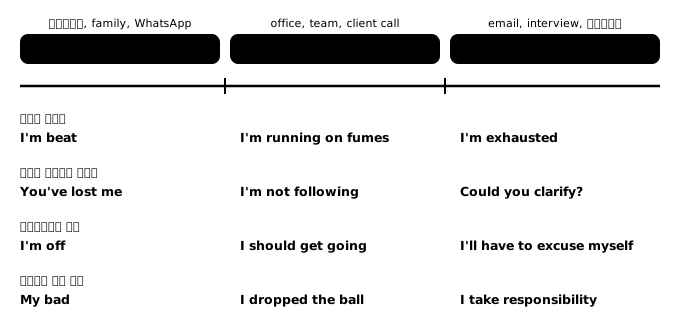
Over-correction — असली खतरा
नया phrase सीखकर उसे हर जगह ठूँस देना सबसे आम गलती है। Doctor के सामने "I'm running on fumes" बोलने से वो समझ ही नहीं पाएगा कि आपको कितनी नींद आ रही है। वहाँ सीधा "I've been sleeping badly for a week" बोलो। Natural phrase गलत जगह = basic phrase से बुरा। पहले माहौल देखो, फिर शब्द चुनो।
43.6 छोटी आदतें जो तुरंत फ़र्क लाती हैं
Phrases के अलावा तीन आदतें हैं जो आपकी English को एक ही हफ़्ते में natural बना देती हैं।
a) Contractions बोलो
Native लोग I am, do not, it is पूरा नहीं बोलते — I'm, don't, it's बोलते हैं। पूरा रूप सिर्फ़ ज़ोर देने के लिए: "I am listening!" बिना contraction वाली English किताबी लगती है, गलत नहीं — बस थोड़ी अकड़ी हुई।
b) Softener लगाओ
Native English direct होने से बचती है। एक छोटा शब्द जोड़ दो: a bit, kind of, maybe, I think, actually।
"This is wrong" → "I think there's a small issue here." Softener से बात कम हमलावर लगती है — office में ये बहुत काम आता है।
c) जवाब लंबा करो, दो लफ़्ज़ नहीं
"How was your weekend?" का जवाब "Fine" नहीं। "Pretty quiet, actually — I just caught up on sleep. You?" एक छोटी detail + वापस सवाल। यही conversation चलती रखता है।
43.7 जो गलतियाँ native phrases के साथ होती हैं
Phrase ठीक, इस्तेमाल गलत
- गलत: I am running in fumes.
- सही: I'm running on fumes.
-
क्यों: Idiom के छोटे शब्द बदलने से वो टूट जाता है। Phrase पूरा, जैसा है वैसा याद करो — on fumes, क्योंकि गाड़ी "पेट्रोल पर" चलती है।
-
गलत: I dropped the ball — I made one spelling mistake.
- सही: Sorry, typo. Fixed it.
-
क्यों: छोटी गलती के लिए बड़ा idiom बोलना drama लगता है। "Dropped the ball" तब जब ज़िम्मेदारी का काम छूट गया हो।
-
गलत: I am not following your.
- सही: I'm not following.
-
क्यों: ये phrase अपने आप में पूरा है — object की ज़रूरत नहीं। अगर जोड़ना है तो: I'm not following your point.
-
गलत: I should get going now itself.
- सही: I should get going right now.
-
क्यों: "Now itself" Indian English की आदत है — बाहर समझ नहीं आती। सही रूप: right now या right away।
-
गलत: Let me sleep over it.
- सही: Let me sleep on it.
- क्यों: "Sleep over" बच्चों का रात रुक जाना है। फ़ैसला टालने के लिए sleep on it।
43.8 एक छोटा script — यही रोज़ बोलना है
नीचे एक standard office exchange है, दोनों रूप में। ज़ोर से दो बार पढ़ो — पहले बाएँ, फिर दाएँ। फ़र्क कान से समझ आएगा।
| Textbook English | जो लोग असल में बोलते हैं |
|---|---|
| Good morning. How are you? | Morning! How's it going? |
| I have completed the report. | I've wrapped up the report. |
| I did not understand the second point. | I'm not following the second point. |
| Please give me some time. | Bear with me for a minute. |
| I will inform you afterwards. | I'll let you know. |
| I am very tired today. | I'm running on fumes today. |
| I have to go now. | I should get going. |
43.9 Practice — Basic से native
अभ्यास 1
Office meeting में किसी की बात समझ नहीं आई। सबसे natural लाइन कौनसी है?
- Sorry, I'm not following.
- I am not understanding.
- I have a doubt in your talk.
- Please repeat it again.
संकेत: इल्ज़ाम किसी पर न आए।
उत्तर
Sorry, I'm not following.
'I'm not following' neutral है — न आप कमज़ोर लगते हो, न सामने वाला गलत। 'I am not understanding' grammar से भी गलत है, और 'repeat it again' में 'again' बेकार है।
अभ्यास 2
आप एक बड़े client का follow-up email भेजना भूल गए। Manager को क्या बोलोगे?
- I dropped the ball on the client follow-up.
- I am running on fumes.
- Let me sleep on it.
- I'm swamped so it is not my fault.
उत्तर
I dropped the ball on the client follow-up.
ज़िम्मेदारी का काम छूट गया = dropped the ball। बाकी phrases का मतलब यहाँ fit नहीं बैठता, और आखिरी लाइन सफ़ाई दे रही है — जो कभी अच्छा नहीं लगता।
अभ्यास 3
Doctor के सामने अपनी थकान बतानी है। क्या बोलना चाहिए?
- I've been exhausted for two weeks and sleeping badly.
- I'm running on fumes, doc.
- I'm beat.
- I'm totally wiped.
संकेत: यहाँ साफ़ जानकारी चाहिए, style नहीं।
उत्तर
I've been exhausted for two weeks and sleeping badly.
Doctor को detail चाहिए, idiom नहीं। यही over-correction का खतरा है — natural phrase गलत जगह पर उल्टा नुकसान करता है।
अभ्यास 4
This was fun, but I should get ___ — it's getting late.
संकेत: निकलने का नरम तरीका।
उत्तर
going
'I should get going' = मुझे अब निकलना चाहिए। 'I need to leave' से ज़्यादा polite और ज़्यादा natural है।
अभ्यास 5
Give me a minute to find the file — please ___ with me.
संकेत: जानवर नहीं, phrase है: ___ with me।
उत्तर
bear
'Bear with me' = थोड़ा सब्र करो। Screen share करते वक़्त या कुछ ढूँढते वक़्त native लोग यही बोलते हैं।
अभ्यास 6
इस वाक्य में idiom टूट गया है — गलत शब्द पर टैप करो।
After three night shifts I am running in fumes.
उत्तर
गलत शब्द: in.
सही रूप: After three night shifts I'm running on fumes.
Idiom के छोटे शब्द fix होते हैं — 'on fumes', 'in' नहीं। Idiom के अंदर का एक शब्द बदला तो पूरा phrase अजनबी लगता है।
अभ्यास 7
एक शब्द Indian English की आदत है और बाहर समझ नहीं आता — उसे ढूँढो।
I should get going now itself.
उत्तर
गलत शब्द: itself.
सही रूप: I should get going right now.
'Now itself' सिर्फ़ भारत में चलता है। International call में 'right now' या 'right away' बोलो।
अभ्यास 8
Plain लाइन को उसके natural रूप से जोड़ो।
| A | B |
|---|---|
| I am very busy | Got it |
| I will think about it | Couldn't agree more |
| I understood | I'm swamped |
| I agree completely | Let me sleep on it |
उत्तर
I am very busy — I'm swamped; I will think about it — Let me sleep on it; I understood — Got it; I agree completely — Couldn't agree more
चारों दाएँ वाले रूप neutral zone के हैं — office और दोस्ती, दोनों में चलते हैं।
अभ्यास 9
Phrase को उसकी सही जगह से जोड़ो।
| A | B |
|---|---|
| My bad | लिखित, formal email |
| I dropped the ball | सिर्फ़ office की भाषा |
| I take full responsibility | दोस्त के साथ, बिल्कुल casual |
| I'll circle back on this | team या manager के साथ |
उत्तर
My bad — दोस्त के साथ, बिल्कुल casual; I dropped the ball — team या manager के साथ; I take full responsibility — लिखित, formal email; I'll circle back on this — सिर्फ़ office की भाषा
Register का नक्शा याद रखो: एक ही बात के तीन रूप, और उनकी जगह अलग।
अभ्यास 10
सही क्रम में लगाओ — manager को गलती बताने वाली लाइन।
शब्द: the / today / it / am / this / and / on / I / I / ball / fixing / dropped
उत्तर
I dropped the ball on this and I am fixing it today
Native formula: पहले गलती मानो, फिर आगे का plan बताओ। सफ़ाई बीच में नहीं आती।
अभ्यास 11
कौनसी आदत आपकी English को तुरंत natural बनाती है?
- Contractions बोलना — I'm, don't, it's
- हर वाक्य में एक बड़ा शब्द डालना
- हमेशा पूरा रूप बोलना — I am, do not
- हर जवाब दो शब्द में देना
उत्तर
Contractions बोलना — I'm, don't, it's
Contractions rhythm ठीक करते हैं। पूरा रूप किताबी लगता है, और दो-शब्द के जवाब conversation मार देते हैं।
अभ्यास 12
Manager ने नया काम दिया, पर आपके पास पहले से बहुत काम है। सबसे natural और polite लाइन?
- I've got a lot on my plate right now.
- I am having many works today.
- I'm seeing red right now.
- That's gonna cost me big time.
उत्तर
I've got a lot on my plate right now.
'A lot on my plate' = थाली में पहले से बहुत काम। ये manager के साथ भी safe है। 'Seeing red' गुस्सा है और 'cost me big time' पैसों की बात।
अभ्यास 13
Client को formal email लिख रहे हो। कौनसी लाइन यहाँ NAHI लिखनी चाहिए?
- That's gonna cost me big time.
- I'll take care of it.
- I'm ready to get started.
- I haven't figured it out yet.
संकेत: एक लाइन सिर्फ़ बोलचाल की है।
उत्तर
That's gonna cost me big time.
'Gonna' और 'big time' सिर्फ़ बोलने की भाषा है। Client को 'That's above our budget' लिखो। बाकी तीनों लाइनें हर जगह safe हैं।
अभ्यास 14
This bug has taken three days — it's a tough nut to ___.
संकेत: अखरोट के साथ कौनसा verb आता है?
उत्तर
crack
'A tough nut to crack' = मुश्किल मसला। Idiom fix है — 'break' या 'open' लगाने से टूट जाता है।
अभ्यास 15
Idiom में एक शब्द गलत रूप में है — उसे ढूँढो।
The drilling next door is getting on my nerve.
उत्तर
गलत शब्द: nerve.
सही रूप: The drilling next door is getting on my nerves.
'Getting on my nerves' में 'nerves' हमेशा plural है। 'Nerve' अकेला मतलब बदल देता है (हिम्मत)।
अभ्यास 16
Basic feeling को उसके native रूप से जोड़ो।
| A | B |
|---|---|
| I'm very angry | I'm caught off guard |
| I'm very scared | I'm totally thrown off |
| I'm very surprised | I'm seeing red |
| I'm very confused | I'm freaking out |
उत्तर
I'm very angry — I'm seeing red; I'm very scared — I'm freaking out; I'm very surprised — I'm caught off guard; I'm very confused — I'm totally thrown off
चारों phrases तस्वीर वाले हैं — लाल रंग, घबराहट, बिना तैयारी, पटरी से उतरना। पहले तीन ज़्यादातर casual हैं।
अभ्यास 17
अब ये लाइन बोलकर देखो। 'I'm' एक ही आवाज़ में, और 'not following' में ज़ोर 'foll' पर।
Sorry I'm not following could you walk me through that again
उत्तर
बोलो: Sorry I'm not following could you walk me through that again
बोलते वक़्त 'I'm not following' में pause नहीं आता — एक साथ बह जाता है। यही rhythm native लगता है।
आगे क्या करो
पूरी table रटने की कोशिश मत करो। इस हफ़्ते सिर्फ़ तीन phrases चुनो — I'm not following, I should get going, bear with me — और उन्हें रोज़ बोलो। तीन phrases जो आपके मुँह में बैठ गए, तीस रटे phrases से ज़्यादा काम के हैं।