अध्याय 23: If वाले वाक्य (Conditionals)
If वाले वाक्य — शर्त और नतीजा
Conditional वाक्य का मतलब है: अगर यह, तो वो। हिंदी में हम रोज़ बोलते हैं — "अगर बारिश होगी तो मैच नहीं होगा"। English में चार तरह के "if" वाक्य होते हैं, और उनमें फ़र्क़ सिर्फ़ एक चीज़ का है: बात कितनी संभव है। पक्की बात, हो सकने वाली बात, मुश्किल बात, और वो बात जो अब कभी नहीं हो सकती। चार तरह की संभावना, चार formula। और एक सुनहरा rule जो सबसे ज़्यादा टूटता है: "if" के बाद "will" कभी नहीं।
- 1चार शाखाएँ — संभावना के साथ
- 2Zero conditional — जो हमेशा होता है
- 3First conditional — असली संभावना
- 4Second conditional — कल्पना और सलाह
- 5Third conditional — जो हो ही नहीं सका
- 6Mixed conditional — दो वक़्त एक वाक्य में
- 7"if" के दूसरे रूप
- 8वो गलतियाँ जो हम सच में करते हैं
एक लाइन में
A conditional sentence has two parts: the if-clause (शर्त) and the main clause (नतीजा)। क्रम बदला जा सकता है। अगर "if" वाला हिस्सा पहले आए तो बीच में comma लगता है; बाद में आए तो comma नहीं।
- If it rains, we will stay home. If पहले आया — comma लगा।
- We will stay home if it rains. If बाद में आया — comma नहीं। मतलब बिल्कुल वही है।
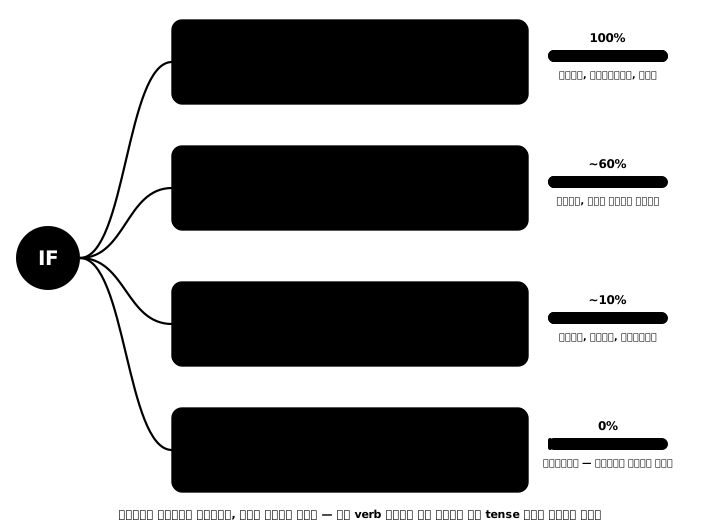
23.1 चार शाखाएँ — संभावना के साथ
नीचे वाली तस्वीर हर तरह के "if" वाक्य को उसकी संभावना के साथ दिखाती है। पट्टी (bar) जितनी भरी हुई है, उतनी ही बात हो सकने वाली है।
23.2 Zero conditional — जो हमेशा होता है
यहाँ "if" का मतलब लगभग "when" होता है। नियम, विज्ञान, मशीन, आदत — इन सब के लिए यह रूप है। दोनों तरफ़ present simple।
- If you heat water to 100 °C, it boils. हमेशा होता है — कोई शक नहीं।
- If the light turns red, the traffic stops. नियम है। यहाँ "when" भी चलेगा।
23.3 First conditional — असली संभावना
आने वाले वक़्त की असली बात। हो सकता है, हो भी सकता है नहीं। यह सबसे ज़्यादा बोला जाने वाला रूप है — plan, वादा, धमकी, चेतावनी, सब इसमें आते हैं।
| काम | Example |
|---|---|
| Plan | If the train is on time, we will reach by eight. |
| वादा | If you help me today, I will help you tomorrow. |
| चेतावनी | If you touch that wire, you will get a shock. |
| शर्त / सौदा | If you finish the work, you can go early. |
सुनहरा rule — 'if' के बाद 'will' नहीं
- गलत: If it will rain, we will cancel the match.
- सही: If it rains, we will cancel the match.
- क्यों: "will" एक वाक्य में एक ही बार, और वो नतीजे वाले हिस्से में। शर्त वाला हिस्सा present simple में रहता है, चाहे बात कल की हो।
यही rule when, after, before, until, as soon as, unless के साथ भी चलता है।
will की जगह दूसरे शब्द भी चलते हैं
First conditional में नतीजे वाले हिस्से में can, may, should, must और हुक्म भी आ सकता है:
If you are tired, you should rest.
If he calls, tell him I am busy.
23.4 Second conditional — कल्पना और सलाह
जब बात अब की हालत में मुश्किल या काल्पनिक है। देखो कैसे verb past में जाता है, पर बात past की नहीं है — बात अभी की है। इसलिए इसको "unreal present" भी कहते हैं।
- If I won a lottery, I would buy a house for my parents. Lottery जीतने का chance कम है — इसलिए past रूप, पर बात आज की है।
- If I were you, I would speak to the manager. सलाह देने का सबसे शिष्ट और natural तरीका।
'If I were' — यहाँ 'was' नहीं
Second conditional में "be" का रूप were होता है — हर subject के साथ।
If I were rich… · If he were here… · If she were in charge… "If I was you" बोलचाल में सुन लेते हैं, पर सही और सुनने में अच्छा रूप "If I were you" ही है — और यह पूरी दुनिया में सलाह देने का standard वाक्य है।
23.5 Third conditional — जो हो ही नहीं सका
गुज़रा हुआ वक़्त, जो बदल नहीं सकता। इसमें पछतावा, इल्ज़ाम, या "काश ऐसा होता" वाली बात होती है। दोनों तरफ़ एक-एक कदम और पीछे: had + V3 और would have + V3।
- If I had left earlier, I would not have missed the train. मैं जल्दी नहीं निकला, और train छूट गई। अब कुछ नहीं हो सकता।
- If she had told me, I could have helped her. "would" की जगह could / might भी चलता है — संभावना का रंग बदल जाता है।
23.6 Mixed conditional — दो वक़्त एक वाक्य में
कभी शर्त past की होती है और नतीजा आज का, या उल्टा। तब दोनों तरफ़ के रूप मिला दिए जाते हैं। यह advanced है, पर बहुत काम का — क्योंकि ज़िंदगी में बातें ऐसे ही होती हैं।
| किस्म | Formula | Example | मतलब |
|---|---|---|---|
| Past शर्त → आज का नतीजा | If + had + V3 , would + V1 | If I had studied engineering, I would be an engineer today. | पढ़ा नहीं था, इसलिए आज engineer नहीं हूँ। |
| आज की हालत → past का नतीजा | If + past simple , would have + V3 | If I were braver, I would have told him the truth. | मैं हिम्मत वाला नहीं हूँ, इसलिए उस वक़्त सच नहीं बोला। |
23.7 "if" के दूसरे रूप
| शब्द | मतलब | Example |
|---|---|---|
| unless | अगर नहीं (= if not) | You will fail unless you work hard. |
| as long as | जब तक | You can stay as long as you keep quiet. |
| provided that | इस शर्त पर कि | I will sign it provided that you read it first. |
| in case | कहीं ऐसा न हो कि | Take an umbrella in case it rains. |
| even if | चाहे | Even if you apologise, he will not forgive you. |
| otherwise | वरना | Hurry up, otherwise we will be late. |
'unless' में 'not' दोबारा नहीं
- गलत: Unless you do not hurry, you will miss the bus.
- सही: Unless you hurry, you will miss the bus.
- क्यों: "Unless" के अंदर ही "not" छिपा हुआ है (= if you do not hurry)। दोबारा "not" लगाने से मतलब उल्टा हो जाता है।
23.8 वो गलतियाँ जो हम सच में करते हैं
Conditional की टॉप गलतियाँ
- गलत: If I will go to Delhi, I will meet you.
- सही: If I go to Delhi, I will meet you.
-
क्यों: शर्त वाले हिस्से में will नहीं — present simple। एक वाक्य में will एक ही बार।
-
गलत: If he would come, I would be happy.
- सही: If he came, I would be happy.
-
क्यों: Second conditional में "if" वाले हिस्से में past simple आता है, would नहीं। Would सिर्फ़ नतीजे में।
-
गलत: If I was you, I would not accept that offer.
- सही: If I were you, I would not accept that offer.
-
क्यों: काल्पनिक बात में "were" आता है, हर subject के साथ। यह सलाह देने का standard वाक्य है।
-
गलत: If she would have told me, I would have helped.
- सही: If she had told me, I would have helped.
-
क्यों: Third conditional में शर्त "had + V3" होती है। "would have" सिर्फ़ नतीजे वाले हिस्से में।
-
गलत: If you would study hard, you will pass.
- सही: If you study hard, you will pass.
-
क्यों: दो modal मिला देने से वाक्य उलझ जाता है। एक सादे formula पर टिको।
-
गलत: I will tell you if he will come.
- सही: I will tell you if he comes.
- क्यों: चाहे "if" बाद में आए, rule वही — if के बाद present।
चार formula, एक लाइन में
Zero: if + present, present
First: if + present, will + V1
Second: if + past, would + V1
Third: if + had + V3, would have + V3 देखो — "if" वाले हिस्से में कभी will/would नहीं आता। यही एक बात 90% गलतियाँ बचा लेती है।
23.9 Practice — Conditionals
अभ्यास 1
If it ___ tomorrow, we will cancel the picnic.
- will rain
- rains
- would rain
- rained
संकेत: If के बाद कौन सा रूप आता है?
उत्तर
rains
First conditional है — if वाले हिस्से में present simple (rains) और नतीजे में will। 'If it will rain' सबसे आम गलती है।
अभ्यास 2
If I ___ a bird, I would fly to the mountains.
- am
- was
- were
- will be
संकेत: काल्पनिक बात है — be का कौन सा रूप?
उत्तर
were
Second conditional में 'be' का रूप हमेशा 'were' होता है — चाहे subject I, he या she हो। 'If I were a bird' सही है।
अभ्यास 3
If you had called me, I ___ at the station.
- will come
- would come
- would have come
- came
संकेत: Third conditional का नतीजा कैसा होता है?
उत्तर
would have come
Third conditional — गुज़री बात। शर्त 'had called' है, इसलिए नतीजा 'would have come'। अब यह हो नहीं सकता, सिर्फ़ पछतावा है।
अभ्यास 4
कौन सा वाक्य zero conditional है?
- If I get time, I will call you.
- If you mix blue and yellow, you get green.
- If I were rich, I would travel.
- If he had tried, he would have won.
संकेत: कौन सी बात हमेशा सच है?
उत्तर
If you mix blue and yellow, you get green.
Zero conditional में दोनों तरफ़ present simple होता है और बात हमेशा सच होती है — रंग मिलाने का नतीजा कभी नहीं बदलता।
अभ्यास 5
If I ___ (have) more time, I would learn the guitar.
संकेत: Second conditional — अभी time नहीं है।
उत्तर
had
Second conditional में if के बाद past simple आता है। 'Had' लिखने का मतलब past की बात नहीं — मतलब 'अभी time नहीं है'।
अभ्यास 6
You will not pass ___ you work hard.
संकेत: 'अगर नहीं' का एक ही शब्द।
उत्तर
unless
'Unless' का मतलब है 'if not'। इसके अंदर ही 'not' छिपा है, इसलिए दोबारा 'not' नहीं लगाना।
अभ्यास 7
If water ___ (freeze), it becomes ice.
संकेत: हमेशा सच — zero conditional।
उत्तर
freezes
Zero conditional में दोनों तरफ़ present simple। 'Water' singular है, इसलिए 'freezes' — -s लगेगा।
अभ्यास 8
इस वाक्य में एक गलती है — गलत शब्द पर tap करो।
If I will get the job, I shall shift to Pune.
उत्तर
गलत शब्द: will.
सही रूप: If I get the job, I shall shift to Pune.
If वाले हिस्से में will/shall कभी नहीं आता। वहाँ present simple रहता है — 'If I get'।
अभ्यास 9
गलत शब्द ढूँढो।
If I was the captain, I would change the batting order.
उत्तर
गलत शब्द: was.
सही रूप: If I were the captain, I would change the batting order.
काल्पनिक बात (मैं captain नहीं हूँ) में 'were' आता है, 'was' नहीं।
अभ्यास 10
एक शब्द गलत है — पकड़ो।
If she would have asked me, I might have helped her.
उत्तर
गलत शब्द: would.
सही रूप: If she had asked me, I might have helped her.
Third conditional में शर्त 'had + V3' होती है। 'If she would have' गलत है — वहाँ 'If she had' आता है। Would/might have सिर्फ़ नतीजे वाले हिस्से में।
अभ्यास 11
सही क्रम में second conditional बनाओ।
शब्द: I / job / take / were / you / that / I / If / would
उत्तर
If I were you I would take that job
सलाह देने का standard रूप — 'If I were you, I would…'। याद रखो: if वाले हिस्से में 'were', नतीजे में 'would + V1'।
अभ्यास 12
Conditional की किस्म को उसके मतलब से जोड़ो।
| A | B |
|---|---|
| If you heat ice, it melts | अभी नहीं है — कल्पना |
| If I get leave, I will come | हो ही नहीं सका |
| If I had a car, I would drive | हमेशा सच |
| If I had known, I would have come | हो सकता है |
उत्तर
If you heat ice, it melts — हमेशा सच; If I get leave, I will come — हो सकता है; If I had a car, I would drive — अभी नहीं है — कल्पना; If I had known, I would have come — हो ही नहीं सका
Zero = नियम। First = असली संभावना। Second = आज की कल्पना। Third = गुज़री बात, अब नहीं बदल सकती।
अभ्यास 13
अब यह लाइन बोलकर देखो — सलाह देने वाला सबसे काम का वाक्य।
If I were you I would not worry about it
उत्तर
बोलो: If I were you I would not worry about it
बोलते वक़्त 'If I were you' को एक ही साँस में बोलो — यह लगभग एक phrase की तरह सुनाई देता है। Office और दोस्ती, दोनों में यह लाइन रोज़ काम आती है।
आगे क्या करो
एक काम आज ही करो: अपने बारे में चार वाक्य बनाओ — एक zero ("If I skip breakfast, I get a headache"), एक first, एक second, एक third। अपनी ज़िंदगी की असली बातें लिखो। जो वाक्य आपका खुद का होता है, वो formula से ज़्यादा तेज़ याद रहता है।