अध्याय 16: can, could, should, must (Modal verbs)
Modals — कर सकना, करना चाहिए, करना पड़ेगा
हिंदी में हम verb के साथ "सकना", "चाहिए", "पड़ेगा", "शायद" जोड़कर अपना mood बताते हैं। English में ये काम छोटे helping verbs करते हैं जिन्हें modals कहते हैं। ये रोज़ की बातचीत की जान हैं — विनम्रता से कुछ माँगना हो, सलाह देनी हो, या अंदाज़ा लगाना हो, modal के बिना काम नहीं चलता।
- 1Modal कैसे काम करता है — तीन पक्के नियम
- 2Ability — can, could, be able to
- 3Permission और Request — कितनी विनम्रता चाहिए?
- 4Advice और Obligation — should, must, have to
- 5Possibility — might से must तक, कितना यक़ीन?
- 6will, would, shall, need, used to
- 7Past modals — should have, could have, must have
- 8वो ग़लतियाँ जो हम सच में करते हैं
एक लाइन में
A modal verb is a helping verb that adds ability, permission, advice, obligation or possibility to the main verb. Main verb काम बताता है; modal बताता है कि काम के बारे में हम क्या सोच रहे हैं।
- I can swim. मैं तैर सकता हूँ। — क्षमता
- You should drink more water. तुम्हें ज़्यादा पानी पीना चाहिए। — सलाह
- It might rain in the evening. शाम को शायद बारिश हो। — संभावना
16.1 Modal कैसे काम करता है — तीन पक्के नियम
अच्छी बात ये है कि सारे modals एक ही तरह से चलते हैं। ये तीन नियम एक बार पक्के हो गए, तो आधी ग़लतियाँ अपने आप बंद हो जाएँगी — चाहे modal कोई भी हो।
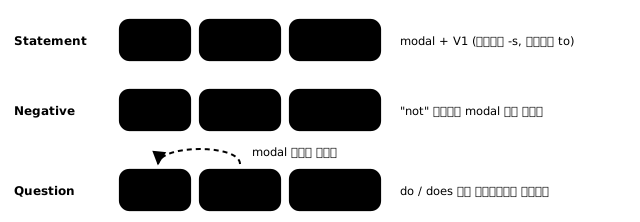
Modal के तीन नियम
1. Modal के बाद verb का पहला रूप (V1) — बिना -s, बिना -ing, बिना "to"। 2. Modal ख़ुद नहीं बदलता — "cans" या "musted" नहीं होता। 3. Negative और सवाल modal ख़ुद बनाता है: can't go, Can you go?
तीन modal 'to' के साथ आते हैं
ought to, have to, used to — इनमें "to" उनका हिस्सा है: You ought to apologise. बाक़ी किसी modal के बाद "to" नहीं: You must to go.
16.2 Ability — can, could, be able to
"मैं ये कर सकता हूँ" — ये रोज़ की बात है: नौकरी के interview में, form भरते वक़्त, दोस्तों के साथ। Time बदलने पर सही शब्द चुनना ज़रूरी है।
| समय | शब्द | Example |
|---|---|---|
| अभी (present) | can | She can speak Tamil. |
| पहले, आम तौर पर | could | I could run fast when I was young. |
| पहले, एक ख़ास मौक़े पर | was / were able to | We were able to catch the last bus. |
| आगे (future) | will be able to | You will be able to drive in a month. |
| Perfect tense में | have been able to | I haven't been able to sleep. |
क्षमता (ability)
अभी के लिए can, बीते समय के लिए could। जहाँ "can" फ़िट नहीं होता — future, perfect, या दूसरे modal के बाद — वहाँ be able to लगाओ: will be able to।
दो modal एक साथ नहीं
You will can come. ✗ → You will be able to come. ✓
एक वाक्य में एक ही modal। दूसरी ज़रूरत हो तो "be able to" या "have to" जैसा रूप लो।
16.3 Permission और Request — कितनी विनम्रता चाहिए?
कुछ माँगते वक़्त शब्द का चुनाव बताता है कि आप सामने वाले की कितनी इज़्ज़त कर रहे हो। दोस्त से "Can I…?" ठीक है, पर boss या अनजान से "Could you…?" ज़्यादा अच्छा लगता है।
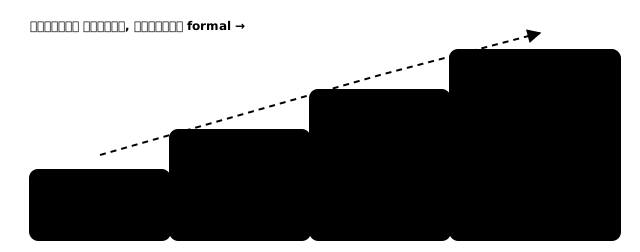
इजाज़त और request
Permission: Can I (casual) → Could I → May I (formal)। Request: Can you → Could you → Would you mind + -ing। "May" सिर्फ़ अपने लिए permission माँगने में — "May you…?" नहीं होता।
- Could you send me the file by evening? क्या आप शाम तक file भेज सकते हैं? — office में perfect।
- Would you mind closing the window? अगर बुरा न लगे तो खिड़की बंद कर देंगे? — जवाब "No, not at all" मतलब "हाँ, कर देता हूँ"।
16.4 Advice और Obligation — should, must, have to
"करना चाहिए" और "करना पड़ेगा" में बड़ा फ़र्क है — एक सलाह है, दूसरा मजबूरी। English में भी ये फ़र्क साफ़ है, और ग़लत शब्द चुनने से आपकी बात या तो बहुत कड़क लगती है या बहुत हल्की।
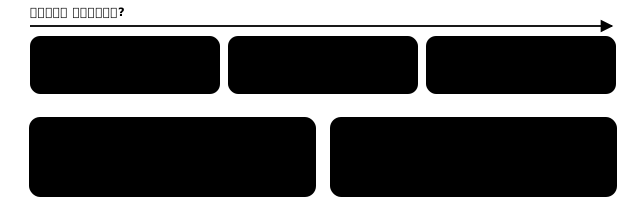
सलाह और मजबूरी
should / ought to = सलाह। have to = नियम या हालात की मजबूरी। must = पक्की ज़रूरत। ध्यान: mustn't = मना है, पर don't have to = ज़रूरी नहीं।
- You should see a doctor. Doctor को दिखाना चाहिए — सलाह है, फ़ैसला आपका।
- I have to wear a uniform at work. Company का नियम है — मजबूरी बाहर से आई।
- Past में: I had to wait for two hours. "must" का past नहीं होता — "had to" लगाओ।
16.5 Possibility — might से must तक, कितना यक़ीन?
अंदाज़ा लगाते वक़्त modal बताता है कि आपको कितना यक़ीन है। "वो शायद घर पर हो" और "वो पक्का घर पर होगा" — दोनों के लिए अलग modal है। इससे आपकी English सोची-समझी लगती है।
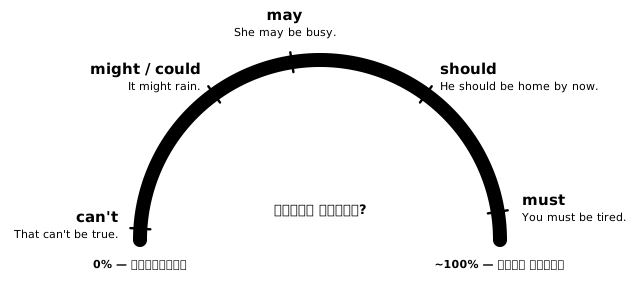
यक़ीन का meter
might / could (शायद) → may (हो सकता है) → should (होना चाहिए) → must (पक्का होगा)। उलटा पक्का अंदाज़ा: can't — He can't be at home; I just saw him at the station.
अंदाज़े वाले 'must' का उलटा 'mustn't' नहीं
She must be at work. (पक्का है कि office में है) → उलटा: She can't be at work.
"She mustn't be at work" का मतलब हो जाएगा — उसे office में होना मना है!
16.6 will, would, shall, need, used to
ये पाँच modal (या modal जैसे शब्द) रोज़ आते हैं, पर हर एक का अपना ख़ास काम है। एक जगह देख लो, तो अलग-अलग याद रखने की ज़रूरत नहीं।
| शब्द | काम | Example |
|---|---|---|
| will | future, वादा, तुरंत फ़ैसला | I will call you tonight. |
| would | विनम्र इच्छा, कल्पना | I would like a cup of tea. |
| would | पुरानी आदत (काम) | Dadi would tell us stories every night. |
| shall | I / we के साथ offer, सुझाव | Shall I open the window? |
| need | ज़रूरत | You need to sign here. / You needn't worry. |
| used to | पहले होता था, अब नहीं | I used to live in Patna. |
used to vs be used to — दो अलग चीज़ें
used to + V1 = पहले करता था: I used to wake up at 9. (अब नहीं)
be used to + -ing = आदत पड़ गई है: I am used to waking up early. दूसरे में "to" preposition है, इसलिए -ing। सवाल में: Did you use to…? (बिना -d)
16.7 Past modals — should have, could have, must have
बीती बात पर अफ़सोस, छूटा हुआ मौक़ा, या पिछली घटना का अंदाज़ा — ये सब modal + have + V3 से बोलते हैं। ये pattern सुनने में मुश्किल लगता है, पर रोज़ की बातचीत में बहुत आता है।
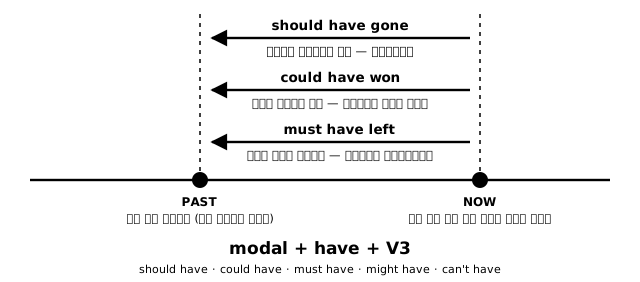
Past modals
modal + have + V3: should have done = करना चाहिए था (अफ़सोस), could have done = कर सकते थे (मौक़ा छूटा), must have done = किया होगा (पक्का अंदाज़ा)। "have" कभी "has" नहीं बनता।
- I should have studied harder. मुझे और मेहनत से पढ़ना चाहिए था। (नहीं पढ़ा — अफ़सोस)
- The roads are wet. It must have rained last night. रात को बारिश हुई होगी — सड़क गीली देखकर पक्का अंदाज़ा।
बोलने में 'should've'
बातचीत में should have "should've" (शुड-उव) सुनाई देता है। इसलिए कई लोग "should of" लिख देते हैं — वो ग़लत है। लिखते वक़्त हमेशा have।
16.8 वो ग़लतियाँ जो हम सच में करते हैं
Modal की सबसे आम Indian-English ग़लतियाँ
- गलत: Can you able to come tomorrow?
- सही: Can you come tomorrow? / Will you be able to come?
-
क्यों: "can" और "able to" का मतलब एक ही है — दोनों साथ लगाना दोहराव है। एक चुनो।
-
गलत: You must to submit the form today.
- सही: You must submit the form today.
-
क्यों: Modal के बाद सीधा V1, बीच में "to" नहीं। सिर्फ़ ought to, have to, used to में "to" होता है।
-
गलत: May you help me with this?
- सही: Could you help me with this?
-
क्यों: "May" से सिर्फ़ अपने लिए permission माँगते हैं (May I…?)। किसी से काम करवाना हो तो Could you / Would you।
-
गलत: I could not able to attend the meeting.
- सही: I couldn't attend / I wasn't able to attend the meeting.
-
क्यों: वही दोहराव — "could" और "able" साथ नहीं। एक ख़ास मौक़े की बात हो तो "wasn't able to" सबसे natural है।
-
गलत: You should have went to the doctor.
- सही: You should have gone to the doctor.
- क्यों: "have" के बाद हमेशा V3 — gone, seen, done। "went" V2 है, वो यहाँ नहीं आता।
16.9 Practice — Modals
अभ्यास 1
She ___ speak four languages.
- can
- cans
- can to
- is can
संकेत: Modal के बाद verb का कौन सा रूप?
उत्तर
can
Modal ख़ुद कभी नहीं बदलता — न -s, न 'to', न 'is' के साथ। बस 'She can speak'।
अभ्यास 2
Boss से विनम्रता से पूछना है: '___ you check my report, please?'
- Could
- May
- Must
- Shall
उत्तर
Could
किसी से काम करवाने की विनम्र request = Could you…? 'May you' ग़लत है — may सिर्फ़ अपने लिए permission के लिए है (May I…?)।
अभ्यास 3
Tomorrow is a holiday, so you ___ come to the office.
- don't have to
- mustn't
- can't
- shouldn't have
संकेत: मना नहीं है — बस ज़रूरत नहीं।
उत्तर
don't have to
छुट्टी है तो आना ज़रूरी नहीं — 'don't have to'। 'mustn't' का मतलब होता कि आना मना है, जो यहाँ मतलब नहीं।
अभ्यास 4
He has been working for 14 hours. He ___ be very tired.
- must
- might
- can't
- should have
संकेत: पक्का अंदाज़ा।
उत्तर
must
14 घंटे काम — इसके बाद थकना लगभग पक्का है। पक्के अंदाज़े के लिए 'must'।
अभ्यास 5
When I was a child, I ___ climb trees easily.
- could
- can
- am able to
- will be able to
उत्तर
could
बचपन की आम क्षमता — बीता समय — इसलिए 'can' का past 'could'।
अभ्यास 6
I missed the bus. I should have ___ earlier. (leave)
संकेत: have + V3
उत्तर
left
Past modal का formula: should + have + V3। 'leave' का V3 'left' है। मतलब: जल्दी निकलना चाहिए था (पर नहीं निकला)।
अभ्यास 7
Next year I will ___ able to vote.
संकेत: दो modal एक साथ नहीं आते।
उत्तर
be
'will can' ग़लत है, क्योंकि दो modal साथ नहीं लगते। Future की क्षमता = will be able to।
अभ्यास 8
ग़लत शब्द पर tap करो।
Can you able to send the document today?
उत्तर
गलत शब्द: able.
सही रूप: Can you send the document today?
'Can' और 'able to' दोनों का मतलब 'सकना' है — साथ में दोहराव हो जाता है। 'able to' हटा दो, या बोलो 'Will you be able to…?'
अभ्यास 9
एक extra शब्द है — ढूँढो।
You must to wear a helmet on the bike.
उत्तर
गलत शब्द: to.
सही रूप: You must wear a helmet on the bike.
'must' के बाद सीधा V1 आता है, 'to' नहीं। 'to' सिर्फ़ ought to, have to, used to में होता है।
अभ्यास 10
Modal को उसके काम से जोड़ो।
| A | B |
|---|---|
| should | शायद, कम यक़ीन |
| mustn't | पहले होता था, अब नहीं |
| might | सलाह |
| used to | मना है |
उत्तर
should — सलाह; mustn't — मना है; might — शायद, कम यक़ीन; used to — पहले होता था, अब नहीं
should = चाहिए, mustn't = मत करो, might = शायद, used to = पुरानी आदत जो अब छूट गई।
अभ्यास 11
विनम्र request बनाओ।
शब्द: mind / door / Would / the / opening / you
उत्तर
Would you mind opening the door
'Would you mind' के बाद verb -ing में आता है — opening। ये किसी से काम करवाने का सबसे विनम्र तरीक़ा है।
अभ्यास 12
ये लाइन बोलो — 'should have' को 'should've' जैसा जोड़कर।
I should have called you yesterday
उत्तर
बोलो: I should have called you yesterday
Native speakers 'should have' को 'शुड-उव' बोलते हैं। इसे जोड़कर बोलने की आदत से सुनना भी आसान हो जाता है, और formula (modal + have + V3) भी पक्का होता है।
आगे क्या करो
कल office या college में जब भी कुछ माँगो, "Can you" की जगह "Could you" बोलो। और दिन के आख़िर में एक "should have" वाला वाक्य अपने बारे में लिखो — क्या करना चाहिए था जो नहीं किया।