अध्याय 8: Pronoun — नाम की जगह
Pronoun (सर्वनाम) — नाम की जगह लेने वाले शब्द
Pronoun वह शब्द है जो noun की जगह ले लेता है, ताकि वही नाम बार-बार न बोलना पड़े। छोटे शब्द हैं — I, me, my, he, him, who, this — पर इनमें हुई गलती सबसे ज़्यादा सुनाई देती है। "Myself Ravi", "Me and my friend went", "Between you and I" — तीनों pronoun की गलतियाँ हैं, और तीनों इस चैप्टर में ठीक हो जाएँगी।
- 1Personal pronouns — पूरी टेबल एक जगह
- 2I या me? — एक सेकंड का test
- 3Possessive — my, mine का फ़र्क
- 4Reflexive pronouns — जब काम खुद पर पलट आए
- 5Demonstrative pronouns — this, that, these, those
- 6Relative pronouns — who, whom, which, that, whose
- 7बाकी प्रकार — एक-एक लाइन में
- 8Pronoun किसका है — यह साफ़ होना चाहिए
- 9वे गलतियाँ जो हम सच में करते हैं
एक लाइन में
A pronoun is a word used in place of a noun. जो noun के बदले में आए — वह pronoun। जिस noun की जगह लेता है उसे antecedent कहते हैं।
- Priya lost her keys, so she called me. "she" = Priya। एक बार नाम लेने के बाद pronoun — यही natural English है।
- This is mine, and that is yours. यह मेरा है, वह तुम्हारा। बिना किसी noun के पूरी बात हो गई।
8.1 Personal pronouns — पूरी टेबल एक जगह
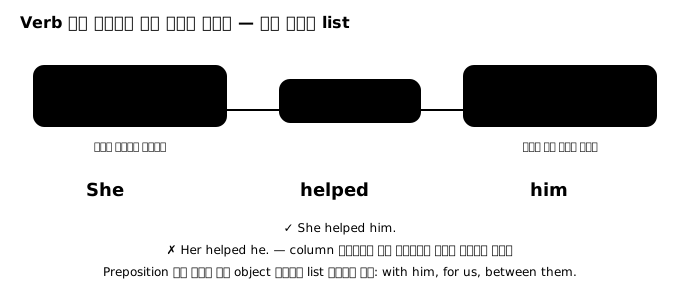
यही सबसे ज़रूरी टेबल है। एक बार इसका column समझ गए तो I/me, he/him, we/us की गड़बड़ खत्म। Column का मतलब है — pronoun वाक्य में कहाँ बैठ रहा है।
| कौन | Subject (काम करने वाला) |
Object (जिस पर काम हुआ) |
Possessive adj. (noun के साथ) |
Possessive pron. (अकेला) |
Reflexive (खुद) |
|---|---|---|---|---|---|
| मैं | I | me | my | mine | myself |
| तुम / आप | you | you | your | yours | yourself / yourselves |
| वह (लड़का) | he | him | his | his | himself |
| वह (लड़की) | she | her | her | hers | herself |
| वह (चीज़) | it | it | its | — | itself |
| हम | we | us | our | ours | ourselves |
| वे (बहुत लोग) | they | them | their | theirs | themselves |
8.2 I या me? — एक सेकंड का test
सबसे बड़ा confusion यहाँ आता है जब दो लोग हो जाते हैं: "Ravi and I" या "Ravi and me"? Rule याद करने की ज़रूरत नहीं — दूसरे इंसान को हटा दो और पढ़कर देखो।
हटाओ-और-सुन लो test
Ravi and __ went to the market. → "Ravi and" हटाओ → "I went to the market." ✓ ("Me went" गलत लगता है) → इसलिए Ravi and I।
She invited Ravi and __. → हटाओ → "She invited me." ✓ ("She invited I" गलत लगता है) → इसलिए Ravi and me। कान खुद बता देता है, बस दूसरा नाम बीच से हटा दो।
तीन गलतियाँ जो रोज़ सुनाई देती हैं
- गलत: Me and my friend went to the mall.
- सही: My friend and I went to the mall.
-
क्यों: दो बातें: subject है इसलिए "I", और politeness में दूसरे का नाम पहले आता है। Test: "Me went" — गलत लगता है।
-
गलत: Between you and I…
- सही: Between you and me…
-
क्यों: "Between" एक preposition है, और preposition के बाद हमेशा object वाली list आती है — me, him, her, us, them। लोग "I" को ज़्यादा शुद्ध समझकर गलती करते हैं।
-
गलत: He is taller than me. (बोलचाल में चलता है)
- सही: He is taller than I am. (लिखने में बेहतर)
- क्यों: पूरा वाक्य है "than I am tall" — इसलिए formal English में "than I"। बोलचाल में "than me" आम है, पर exam या email में "than I am" लिखो।
8.3 Possessive — my, mine का फ़र्क
दो list हैं: एक जो noun के साथ आती है, और एक जो अकेली खड़ी होती है।
| Noun के साथ | Example | अकेला | Example |
|---|---|---|---|
| my | This is my pen. | mine | This pen is mine. |
| your | your seat | yours | The seat is yours. |
| his | his bike | his | The bike is his. |
| her | her bag | hers | The bag is hers. |
| our | our house | ours | The house is ours. |
| their | their car | theirs | The car is theirs. |
इनमें apostrophe कभी नहीं लगता
its, hers, ours, yours, theirs — इन पाँच में apostrophe लगाना हमेशा गलत है। क्योंकि ये खुद possessive हैं, इन्हें apostrophe की मदद की ज़रूरत नहीं।
✗ her's, ✗ our's, ✗ their's, ✗ it's (possessive के लिए)
8.4 Reflexive pronouns — जब काम खुद पर पलट आए
-self / -selves वाले pronouns तब आते हैं जब काम करने वाला और जिस पर काम हुआ — वही एक इंसान हो।
- She hurt herself while cooking. चोट उसी को लगी जो काम कर रही थी — इसलिए herself।
- I made this cake myself. यहाँ "myself" ज़ोर देने के लिए है — किसी और ने नहीं, मैंने खुद। इस काम को emphatic कहते हैं (नीचे देखो)।
- The children behaved themselves at the wedding. बहुत लोग हैं, इसलिए -selves।
Emphatic pronouns — वही शब्द, अलग काम
myself, yourself, himself, herself, itself, ourselves, yourselves, themselves — यही शब्द जब सिर्फ़ ज़ोर देने के लिए आएँ, तो उन्हें emphatic pronoun कहते हैं। ये अक्सर noun/pronoun के तुरंत बाद, या वाक्य के आखिर में आते हैं। हिंदी का "खुद", "स्वयं", "अपने आप"।
- I myself saw the accident. मैंने खुद देखा — किसी से सुना नहीं।
- She herself cooked the whole dinner. उसने स्वयं बनाया — किसी cook ने नहीं।
- The Principal himself gave us the prizes. Principal ने खुद दिए — बात की अहमियत बढ़ गई।
| Reflexive | Emphatic | |
|---|---|---|
| काम | काम करने वाले पर ही पलटकर आता है (object) | सिर्फ़ ज़ोर देता है — "खुद, किसी और ने नहीं" |
| हटा दो तो? | वाक्य अधूरा / गलत हो जाता है | वाक्य पूरा रहता है, सिर्फ़ ज़ोर चला जाता है |
| जगह | verb या preposition के बाद | subject के तुरंत बाद, या आखिर में |
| Example | She hurt herself. | She herself called me. |
हटाओ-test — reflexive या emphatic?
He cut himself. → "He cut." अधूरा है → reflexive।
He himself cut the cake. → "He cut the cake." पूरा है → emphatic। दोनों में emphatic भी subject की जगह अकेला नहीं आता — "Himself cut the cake" गलत है। पहले subject, फिर ज़ोर।
'Myself Ravi' — Indian English की सबसे पहचानी गलती
- गलत: Myself Ravi Kumar, from Lucknow.
- सही: I am Ravi Kumar, from Lucknow.
-
क्यों: Reflexive pronoun कभी subject नहीं बन सकता — उसके आगे होने के लिए पहले एक normal subject (I) चाहिए। हिंदी का "मैं Ravi" सीधे उतारने से "myself" आ जाता है। Interview में यह पहले तीन सेकंड में पकड़ लिया जाता है।
-
गलत: My friend and myself attended the class.
- सही: My friend and I attended the class.
-
क्यों: यहाँ subject चाहिए — I। "Myself" तब आता जब मैंने खुद पर कुछ किया होता।
-
गलत: Please send the file to myself.
- सही: Please send the file to me.
- क्यों: Preposition के बाद object pronoun आता है — to me। Office email में "to myself" formal लगता है पर गलत है।
8.5 Demonstrative pronouns — this, that, these, those
ये चार शब्द उँगली उठाने का काम करते हैं — ये वाला, वो वाला।
| पास (near) | दूर (far) | |
|---|---|---|
| एक | this | that |
| बहुत | these | those |
- This is my seat, and those are theirs. यह मेरी seat है, और वे उनकी।
Pronoun या adjective?
अगर इसके बाद noun आ रहा है तो यह adjective है — this book। अगर अकेला खड़ा है तो pronoun — This is good. काम से पहचान, शब्द से नहीं।
8.6 Relative pronouns — who, whom, which, that, whose
ये दो वाक्यों को जोड़कर एक बना देते हैं, और बीच में एक छोटी सी जानकारी घुसा देते हैं। इनके बिना English बहुत कटी-कटी लगती है।
| शब्द | किसके लिए | Example |
|---|---|---|
| who | इंसान — subject | The man who called is my uncle. |
| whom | इंसान — object (formal) | The man whom I met is a doctor. |
| whose | किसका (possession) | The boy whose bag was lost is crying. |
| which | चीज़ / जानवर | The phone which I bought is heavy. |
| that | दोनों — ज़रूरी जानकारी में | The book that you lent me is great. |
who या whom — एक छोटी trick
जवाब में he आता है तो who, और him आता है तो whom। दोनों में "m" है — यही जोड़ी याद रखो।
__ called? → He called. → Who called?
You met __? → I met him. → Whom did you meet?
8.7 बाकी प्रकार — एक-एक लाइन में
| प्रकार | शब्द | Example |
|---|---|---|
| Interrogative (सवाल) | who, whom, whose, which, what | What is your name? |
| Indefinite (अनिश्चित) | someone, anyone, everyone, nobody, something, all, few, many | Someone is knocking. |
| Reciprocal (एक-दूसरे को) | each other, one another | They love each other. |
| Emphatic (ज़ोर) | myself, herself, themselves… (subject के बाद) | I myself checked it. |
| Distributive (अलग-अलग) | each, either, neither | Each of the boys has a bat. |
Indefinite pronouns और verb
everyone, everybody, someone, nobody, each, either, neither — ये सब दिखने में "बहुत" लगते हैं पर grammar में singular हैं।
✓ Everyone is ready. ✗ Everyone are ready.
✓ Neither of them knows the answer.
8.8 Pronoun किसका है — यह साफ़ होना चाहिए
Pronoun का काम तभी पूरा होता है जब सुनने वाले को पता हो कि वह किसकी जगह ले रहा है। अगर दो लोग हों तो pronoun confuse कर देता है:
✗
Ravi told Mohan that he had failed. (कौन fail हुआ — Ravi या Mohan?)
✓
Ravi told Mohan, "You have failed." (या) Ravi admitted to Mohan that he himself had failed.
8.9 वे गलतियाँ जो हम सच में करते हैं
Pronoun की आम Indian-English गलतियाँ
- गलत: Myself Ravi, and myself working in an IT company.
- सही: I am Ravi, and I work in an IT company.
-
क्यों: Reflexive pronoun subject नहीं बन सकता, और verb भी छूट गया था। Intro का safe formula: "My name is ___ . I am from ___ . I work as ___ ."
-
गलत: She is my cousin sister, and she don't speak Hindi.
- सही: She is my cousin, and she doesn't speak Hindi.
-
क्यों: "Cousin" अपने आप में पूरा शब्द है। और "she" third person singular है, इसलिए helping verb "does" — she doesn't।
-
गलत: I am having a car, and it's colour is red.
- सही: I have a car, and its colour is red.
-
क्यों: दो गलतियाँ: "have" को continuous में नहीं डालते जब possession की बात हो, और possessive "its" में apostrophe नहीं लगता। "it's" सिर्फ़ "it is" का छोटा रूप है।
-
गलत: Me and my brother are going to Goa.
- सही: My brother and I are going to Goa.
-
क्यों: Subject है तो "I" चाहिए — "Me am going" गलत लगता है, ना? दूसरा नाम पहले रखना politeness है।
-
गलत: Everyone have submitted their forms.
- सही: Everyone has submitted their forms.
-
क्यों: "Everyone" दिखता बहुत लोगों जैसा है, पर grammar में singular है — इसलिए "has"। आगे "their" आना आज की English में बिल्कुल ठीक है।
-
गलत: One of my friend gave I a gift.
- सही: One of my friends gave me a gift.
-
क्यों: "One of" के बाद plural noun, और verb के बाद object pronoun — me, न कि I।
-
गलत: The two brothers help themself.
- सही: The two brothers help each other.
- क्यों: "themself" शब्द ही नहीं है। और मतलब भी बदल गया — एक-दूसरे की मदद के लिए "each other" चाहिए; "themselves" का मतलब होता अपनी-अपनी मदद।
तीन पक्के rule, बस
1. Verb से पहले → I, he, she, we, they। Verb या preposition के बाद → me, him, her, us, them।
2. -self वाला शब्द कभी subject नहीं बनता।
3. its, hers, ours, yours, theirs में apostrophe कभी नहीं।
8.10 प्रैक्टिस — Pronouns
अभ्यास 1
___ and I went to the station together.
- My sister
- Me
- Myself
- Mine
संकेत: हटाओ-और-सुन लो test लगाओ।
उत्तर
My sister
Subject दो लोग हैं, और 'I' पहले से सही रूप में है। Politeness में दूसरे का नाम पहले आता है — 'My sister and I'।
अभ्यास 2
This is a secret between you and ___.
- me
- I
- myself
- mine
संकेत: 'Between' कौन सा part of speech है?
उत्तर
me
'Between' preposition है, और preposition के बाद हमेशा object pronoun आता है — me, him, her, us, them। 'I' ज़्यादा शुद्ध लगता है पर गलत है।
अभ्यास 3
Introduction का सही तरीका कौन सा है?
- I am Ravi from Patna.
- Myself Ravi from Patna.
- Myself is Ravi from Patna.
- Me Ravi from Patna.
उत्तर
I am Ravi from Patna.
Reflexive pronoun 'myself' subject नहीं बन सकता, और वाक्य में verb भी चाहिए। 'I am ___' में दोनों चीज़ें हैं।
अभ्यास 4
The girl ___ bag was stolen is in my class.
- whose
- who
- whom
- which
संकेत: किसका bag? — possession।
उत्तर
whose
'Whose' possession बताता है — किसका। 'Who' subject के लिए है और 'whom' object के लिए, पर यहाँ bag का मालिक बताना है।
अभ्यास 5
She cut ___ while chopping onions. (वह खुद)
संकेत: काम करने वाला और जिस पर काम हुआ — वही इंसान।
उत्तर
herself
चोट उसी को लगी जो काम कर रही थी, इसलिए reflexive pronoun चाहिए — herself। 'her' होता तो कोई दूसरी लड़की होती।
अभ्यास 6
The dog hurt ___ paw. (possessive)
संकेत: Apostrophe लगता है या नहीं?
उत्तर
its
Possessive 'its' में apostrophe नहीं लगता। 'it's' का मतलब 'it is' है, और 'the dog hurt it is paw' बेमानी है।
अभ्यास 7
इस वाक्य में गलत शब्द पर tap करो।
Please send the report to myself by evening.
उत्तर
गलत शब्द: myself.
सही रूप: Please send the report to me by evening.
Preposition 'to' के बाद object pronoun आता है — me। 'Myself' तब आता जब मैं खुद को कुछ भेजता, जो यहाँ हो ही नहीं रहा।
अभ्यास 8
गलत शब्द ढूँढो।
Everyone have finished their homework.
उत्तर
गलत शब्द: have.
सही रूप: Everyone has finished their homework.
'Everyone' दिखने में बहुत लोग लगता है पर grammar में singular है, इसलिए 'has'। आगे 'their' आना आज की English में ठीक है।
अभ्यास 9
एक शब्द गलत है।
Me and Rohit watched the match yesterday.
उत्तर
गलत शब्द: Me.
सही रूप: Rohit and I watched the match yesterday.
Subject के लिए 'I' चाहिए — 'Me watched' गलत लगता है। Rohit को हटाकर पढ़ो, कान खुद बता देगा।
अभ्यास 10
किस वाक्य में 'herself' EMPHATIC pronoun है?
- She herself solved the puzzle.
- She hurt herself.
- She looked at herself in the mirror.
- She introduced herself.
संकेत: हटाकर देखो — वाक्य पूरा रहता है या नहीं?
उत्तर
She herself solved the puzzle.
'She solved the puzzle' हटाने के बाद भी पूरा है — 'herself' सिर्फ़ ज़ोर दे रहा था, इसलिए emphatic। बाकी तीनों में काम उसी पर पलट रहा है — reflexive।
अभ्यास 11
The Prime Minister ___ opened the new bridge. (खुद, ज़ोर के लिए)
संकेत: Prime Minister — he।
उत्तर
himself
ज़ोर देने के लिए subject के तुरंत बाद emphatic pronoun — himself। हटा दो तो भी वाक्य पूरा है।
अभ्यास 12
Pronoun को उसके प्रकार से जोड़ो।
| A | B |
|---|---|
| himself | relative |
| those | indefinite |
| which | possessive |
| somebody | reflexive |
| theirs | demonstrative |
उत्तर
himself — reflexive; those — demonstrative; which — relative; somebody — indefinite; theirs — possessive
Reflexive में -self/-selves होता है, demonstrative उँगली उठाता है, relative दो वाक्य जोड़ता है, indefinite किसी अनजान की बात करता है, और possessive मालिकाना दिखाता है।
अभ्यास 13
सही क्रम में वाक्य बनाओ — subject और object pronoun दोनों हैं।
शब्द: notebook / She / me / gave / old / her
उत्तर
She gave me her old notebook
क्रम है: subject pronoun (She) + verb (gave) + जिसे दिया (me) + क्या दिया (her old notebook)। Object pronoun verb के बाद ही आता है।
अभ्यास 14
यह introduction बोलकर देखो — 'myself' की जगह 'I am' की आदत डालनी है।
I am Ravi and I work in Pune
उत्तर
बोलो: I am Ravi and I work in Pune
Interview में पहली लाइन ही पहचान बन जाती है। 'I am' से शुरू करने की आदत पड़ी तो 'Myself Ravi' कभी मुँह से नहीं निकलेगा।
आगे क्या करो
आज से एक काम: जब भी "myself" बोलने का मन करे, रुककर सोचो — "यहाँ I चाहिए या me?" दो दिन में आदत बदल जाएगी। अगला चैप्टर Verb है — वाक्य का दिल।