अध्याय 25: असरदार वाक्य (Causative, inversion)
असरदार वाक्य
Grammar सही हो जाने के बाद अगला क़दम है असर। "मैंने car ठीक करवाई", "ऐसा मैंने कभी नहीं देखा", "मुझे बस छुट्टी चाहिए" — इन्हें English में कहने के ख़ास तरीक़े हैं जो आपकी बात को वज़न देते हैं। इस chapter में पाँच औज़ार हैं: causative, inversion, cleft sentences, emphatic do और छोटे जवाब (so do I, I hope not)।
- 1पाँच औज़ार — एक नज़र में
- 2Causative — "करवाना" English में
- 3have someone do, get someone to do, make, let, help
- 4Inversion — "Never have I…" वाला ज़ोर
- 5if के बिना if — Should you…, Had I…, Were I…
- 6Cleft sentences — एक हिस्से पर spotlight
- 7Emphatic do और fronting — "सच में!"
- 8छोटे जवाब — so do I, neither do I, I hope not
- 9असली ज़िंदगी में — एक interview जवाब
एक लाइन में
get it done = करवाना · Never have I… = ज़ोर के लिए उलटा क्रम · What I need is… = एक हिस्से पर रोशनी · I do like it = सच में · So do I = मैं भी। मतलब वही, पर वाक्य का ढाँचा बदलकर ज़ोर पैदा करना।
25.1 पाँच औज़ार — एक नज़र में
पहले पूरा नक़्शा देख लो। हर औज़ार एक साधारण वाक्य लेता है और उसे ज़्यादा साफ़, ज़्यादा formal या ज़्यादा भावुक बना देता है।
| औज़ार | साधारण | असरदार |
|---|---|---|
| Causative | A mechanic repaired my car. | I got my car repaired. |
| Inversion | I have never seen this. | Never have I seen this. |
| Cleft | I need a holiday. | What I need is a holiday. |
| Emphatic do | I like it. | I do like it. |
| Ellipsis | I like tea too. | So do I. |
- Never have I seen such a crowd at Marine Drive. Marine Drive पर इतनी भीड़ मैंने कभी नहीं देखी।
- What I need is a long holiday. मुझे तो बस एक लंबी छुट्टी चाहिए।
25.2 Causative — "करवाना" English में
हिंदी में बनाना → बनवाना, काटना → कटवाना, ठीक करना → ठीक करवाना — एक छोटा सा "-व-" बताता है कि काम किसी और ने किया। English में इसके लिए have / get + चीज़ + V3 लगता है। ये बहुत ज़रूरी है, क्योंकि इसके बिना English बोलने वाला सोचेगा कि काम आपने ख़ुद किया।
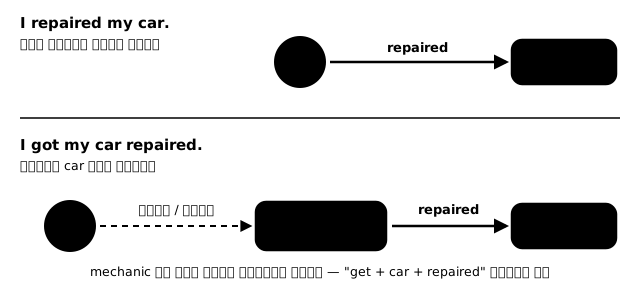
Causative का formula
have / get + object + V3 = करवाना। get बोलचाल में ज़्यादा, have थोड़ा formal। क्रम पक्का: पहले चीज़, फिर V3 — got my car repaired।
- I got my car repaired last week. पिछले हफ़्ते मैंने car ठीक करवाई।
- She had her hair cut short. उसने बाल छोटे कटवा लिए।
- We're having the house painted before Diwali. दिवाली से पहले हम घर paint करवा रहे हैं।
- Where do you get your kurtas stitched? तुम अपने कुर्ते कहाँ सिलवाते हो?
- You need to get your eyes tested. तुम्हें आँखें check करवानी चाहिए।
- Don't worry, I'll get it done by Friday. फ़िक्र मत करो, Friday तक हो जाएगा (मैं करवा दूँगा / कर दूँगा)।
✗
I cut my hair yesterday. (barber ने काटे)
✓
I got my hair cut yesterday.
✗
I got repaired my phone.
✓
I got my phone repaired.
object
जब कुछ बुरा "हो जाए"
यही ढाँचा तब भी चलता है जब आपके साथ कुछ बुरा हुआ हो — यहाँ "करवाया" का मतलब नहीं, बस "मेरे साथ हुआ":
- I had my phone stolen on the local train. Local train में मेरा phone चोरी हो गया।
25.3 have someone do, get someone to do, make, let, help
कभी आप इंसान का नाम लेना चाहते हो — "मैंने रवि से file भिजवाई", "उसने मुझे रुकवाया"। यहाँ हर verb का अपना pattern है: किसी के बाद सीधा V1, किसी के बाद to + V1। यही गलती का सबसे बड़ा अड्डा है।
| Verb | Pattern | मतलब / Example |
|---|---|---|
| have | have + person + V1 | काम सौंपना: I'll have Ravi send it. |
| get | get + person + to V1 | मनाना: I got him to sign. |
| make | make + person + V1 | मजबूर करना: She made me wait. |
| let | let + person + V1 | इजाज़त देना: Let me go. |
| help | help + person + (to) V1 | मदद: Help me (to) carry this. |
- I'll have my assistant email you the details. मैं अपने assistant से आपको details email करवा दूँगा।
- I finally got the landlord to fix the geyser. आख़िरकार मैंने मकान-मालिक को geyser ठीक करने के लिए मना लिया।
- The teacher made us rewrite the essay. Teacher ने हमसे essay दोबारा लिखवाया।
- My parents didn't let me go on the trip. मम्मी-पापा ने मुझे trip पर जाने नहीं दिया।
- Can you help me move this almirah? ये अलमारी खिसकाने में मेरी मदद करोगे?
✗
He made me to wait for an hour.
✓
He made me wait for an hour.
I was made to wait.
✗
Please let me to explain.
✓
Please let me explain. / Please allow me to explain.
to
तीन छोटे शब्द, तीन अलग ज़ोर
make = ज़बरदस्ती · let = छूट · get … to = समझा-बुझाकर। "My boss made me stay" (मजबूरी) vs "My boss let me leave early" (मेहरबानी) vs "I got my boss to approve it" (मेरी कोशिश)।
25.4 Inversion — "Never have I…" वाला ज़ोर
जब वाक्य किसी negative या सीमित शब्द से शुरू हो (never, rarely, not only, hardly, only then…), तो उसके बाद subject और helping verb जगह बदल लेते हैं — बिल्कुल सवाल की तरह। ये formal, लिखित या भाषण वाली English है; इससे बात में drama और वज़न आता है।
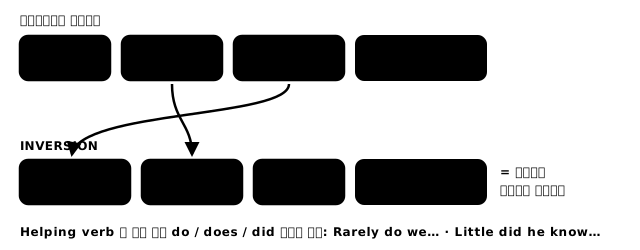
Inversion का नियम
Negative/limiting शब्द + helping verb + subject + बाकी। Helping verb नहीं है तो do / does / did लगाओ: Rarely do we eat out.
| शुरुआत | Example | सुनो |
|---|---|---|
| Never / Rarely / Seldom | Rarely do we get such rain in April. | |
| Not only … but also | Not only did she top the class, but she also won the debate. | |
| Hardly / Scarcely … when | Hardly had I sat down when the phone rang. | |
| No sooner … than | No sooner had we reached than it started pouring. | |
| Only then / Only after | Only then did I realise my mistake. | |
| Under no circumstances | Under no circumstances should you share your OTP. | |
| Little | Little did he know what was coming. |
- Not only did she top the class, but she also won the debate. उसने न सिर्फ़ class में top किया, बल्कि debate भी जीती।
- Hardly had I sat down when the phone rang. मैं बैठा ही था कि phone बज उठा।
- Only after the results came out did he start studying. Result आने के बाद ही उसने पढ़ना शुरू किया।
✗
Never I have seen such a crowd.
✓
Never have I seen such a crowd.
I have never seen such a crowd.
✗
No sooner had we reached when it started raining.
✓
No sooner had we reached than it started raining.
No sooner … than
Hardly / Scarcely … when
✗
Not only she sings, but she also dances.
✓
Not only does she sing, but she also dances.
रोज़ की बात में कम
दोस्तों के साथ "Never have I eaten such good pani puri!" थोड़ा नाटकीय लगेगा (मज़ाक में चलेगा)। Inversion की असली जगह: essay, speech, formal email, IELTS writing। बोलचाल में "I've never eaten such good pani puri!" ही काफ़ी है।
25.5 if के बिना if — Should you…, Had I…, Were I…
Formal English में if हटाकर helping verb को आगे ला देते हैं। मतलब बिल्कुल वही रहता है जो conditional का — बस ज़्यादा sophisticated (conditionals की पूरी कहानी If वाले वाक्य chapter में है)।
| if वाला रूप | Inversion |
|---|---|
| If you need any help, … | Should you need any help, … |
| If I had known, … | Had I known, … |
| If I were you, … | Were I in your place, … |
| If it had not rained, … | Had it not rained, … |
- Should you need any help, please call me. अगर कभी मदद चाहिए हो तो मुझे call करो। (email की पसंदीदा लाइन)
- Had I known about the strike, I would have taken the metro. अगर मुझे हड़ताल का पता होता, तो मैं metro ले लेता।
- Were I in your place, I would accept the offer. आपकी जगह मैं होता तो offer मान लेता।
- Had it not rained, we would have won. अगर बारिश न होती तो हम जीत जाते।
✗
Hadn't I known, I would have gone.
✓
Had I not known, I would have gone.
25.6 Cleft sentences — एक हिस्से पर spotlight
"Cleft" का मतलब है "दो टुकड़े"। एक वाक्य को तोड़कर दो हिस्सों में लिखते हैं ताकि एक ख़ास चीज़ पर रोशनी पड़े — ख़ास कर जब आप किसी ग़लतफ़हमी को सुधार रहे हो। हिंदी में ये काम "ही" करता है: रवि ने ही तोड़ा था।
(a) It is / was … who / that …
- It was Ravi who broke the glass, not Amit. गिलास रवि ने ही तोड़ा था, अमित ने नहीं।
- It's the price that worries me, not the quality. मुझे quality नहीं, दाम परेशान कर रहा है।
- It was in Jaipur that they first met. वो दोनों पहली बार जयपुर में ही मिले थे।
(b) What … is / All … is / The reason … is
- What I need is a good night's sleep. मुझे तो बस अच्छी नींद चाहिए।
- What she did was call the police immediately. उसने जो किया वो ये था — तुरंत police को phone।
- All I want is some peace and quiet. मुझे बस थोड़ा सुकून चाहिए — और कुछ नहीं।
- The reason I called is to ask about Saturday. मैंने इसलिए call किया कि Saturday के बारे में पूछ सकूँ।
Cleft = 'ही' वाला ज़ोर
It was X who/that… = X ही। What I need is X = मुझे तो X चाहिए। All I want is X = बस X, और कुछ नहीं।
✗
All what I want is a holiday.
✓
All I want is a holiday. / What I want is a holiday.
✗
It was my sister which found the keys.
✓
It was my sister who (या that) found the keys.
छोटे से बड़े वाक्य
25.7 Emphatic do और fronting — "सच में!"
Positive वाक्य में do / does / did + V1 डालकर (और उस पर ज़ोर देकर) आप कहते हो "सच में", "वाक़ई", "मैंने किया था!"। ये तब काम आता है जब कोई आपकी बात पर शक करे, या आप किसी बात को गर्मजोशी से कहना चाहते हो।
- I do like your new haircut — honestly! तुम्हारा नया haircut मुझे सच में पसंद है!
- I did call you — three times! मैंने call किया था — तीन बार!
- She does know a lot about cars. उसे cars के बारे में वाक़ई बहुत पता है।
- Do sit down, Uncle — make yourself at home. बैठो न, Uncle — अपना ही घर समझो।
✗
I did called you yesterday!
✓
I did call you yesterday!
ज़ोर आवाज़ में भी
Emphatic do लिखने से ज़्यादा बोलने की चीज़ है — "do / did" को लंबा और ज़ोर से बोलो: "I DID call you." इस ताल के लिए Rhythm और stress chapter देखो।
Fronting — जो ज़रूरी है, वो पहले
कभी object या कोई हिस्सा वाक्य के शुरू में ले आते हैं, ताकि contrast दिखे। क्रम (subject + verb) वैसा ही रहता है — ये inversion नहीं है।
- Tea I can live without. Coffee, never. चाय के बिना रह लूँगा। Coffee के बिना — कभी नहीं।
- Strange as it may seem, I enjoy Monday mornings. अजीब लगेगा, पर मुझे Monday की सुबह अच्छी लगती है।
25.8 छोटे जवाब — so do I, neither do I, I hope not
Native speaker पूरा वाक्य दोहराते नहीं। वो सिर्फ़ helping verb से जवाब देते हैं — इसे ellipsis (छोड़ देना) कहते हैं। हिंदी में "मैं भी", "मैं भी नहीं" — English में helping verb पिछले वाक्य से match करना पड़ता है।
| दूसरे ने कहा | मैं भी | मैं भी नहीं |
|---|---|---|
| I love biryani. | So do I. | — |
| I can't swim. | — | Neither can I. |
| I'm tired. | So am I. | — |
| I didn't go. | — | Neither / Nor did I. |
| I've been there. | So have I. | — |
- "I love biryani." — "So do I!" "मुझे बिरयानी पसंद है।" — "मुझे भी!"
- "I didn't sleep well." — "Neither did I." "मुझे ठीक से नींद नहीं आई।" — "मुझे भी नहीं।"
- Informal: "Me too." / "Me neither." दोस्तों में छोटा रूप बिल्कुल ठीक है।
✗
"I don't eat meat." — "Me also not." / "I also don't."
✓
"Neither do I." / "Me neither."
so / not — पूरे वाक्य की जगह
think, hope, guess, be afraid के बाद so (हाँ वाला) और not (ना वाला) पूरे clause की जगह ले लेते हैं।
| सवाल | जवाब | मतलब |
|---|---|---|
| Will it rain? | I think so. | मुझे लगता है हाँ |
| Is the shop open? | I don't think so. | शायद नहीं |
| Will we miss the flight? | I hope not. | उम्मीद है नहीं |
| Is it serious, doctor? | I'm afraid so. | अफ़सोस, हाँ |
| Can you come? | I'd love to. | ज़रूर आना चाहूँगा |
- "Will the match be cancelled?" — "I hope not." "Match cancel होगा क्या?" — "उम्मीद है नहीं होगा।"
- "Are you coming to the wedding?" — "I'd love to, but I can't." "शादी में आ रहे हो?" — "आना तो चाहता हूँ, पर नहीं आ पाऊँगा।"
✗
"Is he coming?" — "I think yes." / "I don't think."
✓
"I think so." / "I don't think so."
so
25.9 असली ज़िंदगी में — एक interview जवाब
Interviewer ने पूछा: "Tell me about a challenge you faced." देखो कैसे एक ही जवाब में कई औज़ार मिलकर बात को यादगार बना देते हैं।
| वाक्य | औज़ार | सुनो |
|---|---|---|
| Last year our biggest client threatened to leave. | — | |
| What they wanted was a working app in two weeks. | Cleft | |
| I got the whole team to work in two shifts. | get + person + to | |
| Not only did we deliver on time, but we also cut costs. | Inversion | |
| It was that project that taught me to plan backwards. | Cleft |
कितना use करो?
एक जवाब में एक-दो औज़ार काफ़ी हैं। हर वाक्य उलटा या cleft होगा तो बात बनावटी लगेगी। मसाले की तरह — थोड़ा सा, सही जगह।
25.10 Practice — असरदार वाक्य
अभ्यास 1
My scooter broke down, so I ___ at the garage near my office.
- got it repaired
- got repaired it
- repaired it
- made it repair
संकेत: Mechanic ने ठीक किया।
उत्तर
got it repaired
Causative: get + object + V3. चीज़ (it) बीच में, फिर V3.
अभ्यास 2
You should get your blood pressure ___ (check) regularly.
संकेत: get + object + V3
उत्तर
checked
get + your blood pressure + checked = check करवाना.
अभ्यास 3
The teacher made us ___ the whole chapter again.
- read
- to read
- reading
- reads
उत्तर
read
make + person + V1, बिना 'to'. (Passive में: We were made to read…)
अभ्यास 4
फ़ालतू शब्द पर tap करो।
My father did not let me to go on the school trip.
उत्तर
गलत शब्द: to.
सही रूप: My father did not let me go on the school trip.
let + person + V1. 'to' सिर्फ़ allow के साथ: allow me to go.
अभ्यास 5
Never ___ such a beautiful sunset.
- have I seen
- I have seen
- I saw
- seen I have
उत्तर
have I seen
Negative शब्द आगे = helping verb + subject (सवाल जैसा क्रम).
अभ्यास 6
No sooner had we reached the platform ___ the train left.
संकेत: 'sooner' एक comparative है।
उत्तर
than
पक्की जोड़ी: No sooner … than.
अभ्यास 7
Hardly had I opened the laptop ___ the power went off.
- when
- than
- then
- that
उत्तर
when
पक्की जोड़ी: Hardly / Scarcely … when.
अभ्यास 8
शब्दों को सही क्रम में लगाओ।
शब्द: not / she / also / only / the / record / she / did / broke / but / win
उत्तर
not only did she win but she also broke the record
Not only + did + subject + V1, but + subject + also …
अभ्यास 9
___ I known about the metro strike, I would have left earlier.
संकेत: if के बिना third conditional
उत्तर
Had
Had I known = If I had known (formal inversion).
अभ्यास 10
___ I need right now is a cup of strong chai.
- What
- That
- Which
- All what
उत्तर
What
Cleft: What I need is … = मुझे तो … चाहिए।
अभ्यास 11
गलत शब्द पर tap करो।
It was my sister which found the lost keys.
उत्तर
गलत शब्द: which.
सही रूप: It was my sister who found the lost keys.
इंसान के लिए who / that, 'which' नहीं।
अभ्यास 12
हर जवाब को उसके मतलब से मिलाओ।
| A | B |
|---|---|
| So do I. | उम्मीद है ऐसा न हो |
| Neither do I. | अफ़सोस, हाँ |
| I hope not. | मैं भी (हाँ वाली बात पर) |
| I'm afraid so. | मैं भी नहीं |
उत्तर
So do I. — मैं भी (हाँ वाली बात पर); Neither do I. — मैं भी नहीं; I hope not. — उम्मीद है ऐसा न हो; I'm afraid so. — अफ़सोस, हाँ
छोटे जवाब में helping verb या so/not पूरे वाक्य की जगह ले लेता है।
अभ्यास 13
A: I can't drive. B: Neither ___ I.
संकेत: पहले वाक्य का helping verb।
उत्तर
can
can't → Neither can I. Helping verb match करना पड़ता है।
अभ्यास 14
"Will the flight be on time?" — "I think ___."
- so
- yes
- it
- that
उत्तर
so
think / hope / guess के बाद हाँ = so. 'I think yes' गलत है।
अभ्यास 15
Who fixed the AC?
इसे ज़ोर से पढ़ो, या किसी से पढ़वाओ:
I didn't fix the AC myself. I had a technician come over on Sunday, and he got it working in ten minutes.
- a technician
- the speaker
- the speaker's father
- nobody
उत्तर
a technician
पाठ: “I didn't fix the AC myself. I had a technician come over on Sunday, and he got it working in ten minutes.”
'I had a technician come over' = have + person + V1. काम technician ने किया।
अभ्यास 16
According to the speaker, what saved the project?
इसे ज़ोर से पढ़ो, या किसी से पढ़वाओ:
Not only did Ananya finish the report early, but she also found two mistakes in the budget. It was her careful checking that saved the project.
- Ananya's careful checking
- the early deadline
- a bigger budget
- the manager's help
उत्तर
Ananya's careful checking
पाठ: “Not only did Ananya finish the report early, but she also found two mistakes in the budget. It was her careful checking that saved the project.”
Cleft 'It was her careful checking that…' इसी पर spotlight डालता है।
अभ्यास 17
जो सुनाई दे, वो लिखो।
डिक्टेशन। किसी से यह वाक्य ज़ोर से पढ़वाओ, फिर लिख लो।
Had I known you were coming, I would have cooked something special.
उत्तर
Had I known you were coming, I would have cooked something special.
Had I known = If I had known.
अभ्यास 18
जो सुनाई दे, वो लिखो।
डिक्टेशन। किसी से यह वाक्य ज़ोर से पढ़वाओ, फिर लिख लो।
What I need is a long holiday.
उत्तर
What I need is a long holiday.
Cleft: What I need is …
अभ्यास 19
'do' पर ज़ोर देकर बोलो।
I do like your new haircut
उत्तर
बोलो: I do like your new haircut
Emphatic do = 'सच में'। 'do' को लंबा और ज़ोर से बोलो।
आगे क्या करो
अपने अगले formal email में एक Should you need… और अगली बातचीत में एक What I need is… ज़रूर डालो। और जब भी salon या दर्ज़ी के पास जाओ, मन में बोलो: I'm getting my hair cut. बोलने की तरफ़ बढ़ना हो तो Rhythm और stress और Native speed English देखो।