अध्याय 28: Native speed English
किताब की English समझ आती है, पर Netflix, YouTube या विदेशी colleague की English "बहुत तेज़" लगती है? असल में वो तेज़ नहीं बोलते — वो शब्दों को जोड़ते, दबाते और घिसते हैं। "Did you eat?" बन जाता है "didja eat?"। इस chapter में हम पाँच नियम सीखेंगे जिनसे ये होता है। मक़सद: सुनते वक़्त पकड़ना, और बोलते वक़्त उतना अपनाना जितना natural लगे।
- 1तेज़ क्यों लगता है? — पाँच नियम
- 2Weak forms — छोटे शब्द, छोटी आवाज़
- 3Linking — शब्द एक-दूसरे से चिपकते हैं
- 4Elision — जो आवाज़ ग़ायब हो जाती है
- 5Assimilation — didja, doncha, gotcha
- 6gonna, wanna, gotta — कब बोलो, कब लिखो
- 7सवाल और list की धुन
- 8तेज़ English सुनने की strategy
- 9असली ज़िंदगी में — office canteen
एक लाइन में
Native speech = weak forms + contractions + linking + elision + assimilation। शब्द वही हैं, बस उनके किनारे घिस जाते हैं। इसे "तेज़" मत समझो — इसे "जुड़ा हुआ" समझो।
28.1 तेज़ क्यों लगता है? — पाँच नियम
हिंदी में हम हर अक्षर को लगभग पूरा बोलते हैं। English stress-timed है: ज़ोर वाले शब्द लंबे और साफ़, बीच के छोटे शब्द जल्दी-जल्दी और दबे हुए (इसकी बुनियाद Rhythm और stress chapter में है)। जब छोटे शब्द दबते हैं, तो वो आस-पास के शब्दों से चिपक जाते हैं। यही पाँच तरीक़े हैं:
| नियम | क्या होता है | Example |
|---|---|---|
| Weak forms | छोटे शब्द की vowel "उह" बन जाती है | for → fuh |
| Contractions | दो शब्द एक बन जाते हैं | I would → I'd |
| Linking | एक शब्द का अंत अगले से जुड़ जाता है | turn it off → tur-ni-toff |
| Elision | कोई आवाज़ ग़ायब हो जाती है | last night → las' night |
| Assimilation | दो आवाज़ें मिलकर नई बन जाती हैं | did you → didja |
- What do you want to do? तुम क्या करना चाहते हो? — सुनाई देता है: "Whaddaya wanna do?"
- I don't know. मुझे नहीं पता। — अक्सर: "I dunno."
28.2 Weak forms — छोटे शब्द, छोटी आवाज़
to, for, of, and, can, was, them जैसे function words के दो रूप होते हैं: strong (अकेले या ज़ोर के साथ) और weak (वाक्य के बीच, schwa /ə/ "उह" के साथ)। वाक्य में 90% बार weak रूप ही आता है। अगर आप हर "to" को "too" बोलोगे, तो आपकी English भारी और रुकती हुई लगेगी।
| शब्द | Weak | वाक्य में | सुनो |
|---|---|---|---|
| to | /tə/ tuh | I need to go. | |
| for | /fə/ fuh | It's for you. | |
| of | /əv/ uhv, uh | a lot of work | |
| and | /ən/ un, n | rice and dal | |
| can | /kən/ kun | I can help. | |
| was | /wəz/ wuz | It was late. | |
| them | /ðəm/, /əm/ uhm | Tell them. | |
| from | /frəm/ fruhm | She's from Kochi. | |
| her | /ə/, /hə/ | Ask her. |
Strong form कब?
तीन जगह पूरा (strong) रूप: वाक्य के अंत में (Where are you from?), ज़ोर/contrast के लिए, और अकेले बोलते वक़्त। बाकी हर जगह weak।
- Who's it for? — It's fuh my mother. ये किसके लिए है? — मेरी माँ के लिए। (पहला "for" strong, दूसरा weak)
- What are you looking at? क्या देख रहे हो? — अंत में "at" पूरा।
can या can't? — सुनने का सबसे बड़ा जाल
तेज़ बोलने में can't का "t" अक्सर सुनाई ही नहीं देता। तो फ़र्क़ कैसे पकड़ो? "t" मत ढूँढो, vowel सुनो। can weak और छोटा है (kun), और ज़ोर अगले verb पर होता है। can't strong और लंबा है (British "kaant", American "kænt"), और ज़ोर उसी पर होता है।
| वाक्य | सुनाई देता है | सुनो |
|---|---|---|
| I can come. | I kun COME. | |
| I can't come. | I KAANT come. | |
| She can drive, but she can't park. | kun DRIVE … KAANT park |
Contractions — बोलने की default English
बोलते वक़्त I am, do not, we will लगभग हमेशा जुड़ जाते हैं। पूरा रूप बोलना गलत नहीं, पर वो ज़ोर जैसा लगता है: "I do not want it" = "बिल्कुल नहीं चाहिए"।
| पूरा | Contraction | सुनो |
|---|---|---|
| I would / I had | I'd | |
| we will | we'll | |
| they are | they're | |
| should have | should've ("shuduv") | |
| it has / it is | it's |
✗
You should of told me.
✓
You should have told me. (बोला: should've)
have
28.3 Linking — शब्द एक-दूसरे से चिपकते हैं
Native speaker शब्दों के बीच रुके बिना बोलता है। जब एक शब्द consonant पर ख़त्म हो और अगला vowel से शुरू हो, तो वो consonant अगले शब्द का हिस्सा बन जाता है। दो vowel मिलें तो बीच में एक हल्की w या y आ जाती है। नीचे वाले नक़्शे में हर पुल (arc) एक जोड़ है।
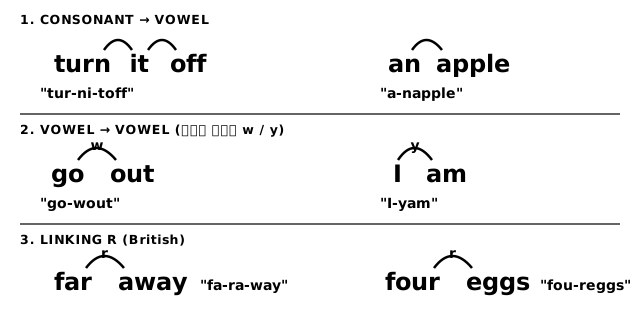
- Turn it off. बंद कर दो। — "tur-ni-toff"
- Pick it up. उठा लो। — "pi-ki-tup"
- Come on in. अंदर आ जाओ। — "ku-mo-nin"
- Check it out. देखो ज़रा। — "che-ki-tout"
- Go out and see. बाहर जाकर देखो। — "go-wou-tun see"
- The idea is good. Idea अच्छा है। — "the-yidea-ris good" (British)
बोलने में कैसे लाओ
Phrase को एक लंबा शब्द मानकर बोलो: turnitoff, pickitup। शब्दों के बीच "glottal stop" (झटका) मत दो — हवा चलती रहे। ये आपकी English को तुरंत smooth बना देता है।
28.4 Elision — जो आवाज़ ग़ायब हो जाती है
जब t या d दो consonants के बीच फँस जाए, तो बोलचाल में अक्सर ग़ायब हो जाता है। next day में "t" बोलने के लिए ज़ुबान को रुकना पड़ेगा — इसलिए लोग सीधा "nex day" बोल देते हैं। लिखते वक़्त कुछ नहीं बदलता।
| लिखा | सुनाई देता है | सुनो |
|---|---|---|
| next day | nex' day | |
| last night | las' night | |
| must be | mus' be | |
| old man | ol' man | |
| handbag | hanbag | |
| I don't know | I dunno | |
| first thing | firs' thing |
- I went to bed late last night. कल रात देर से सोया। — "las' night"
- She left the next day. वो अगले दिन चली गई। — "nex' day"
- I walked to the station. मैं पैदल station गया। — "-ed" का "t" और "to" का "t" एक हो गए: "walk-tuh"
Past tense का '-ed' ग़ायब लगता है
I walked to work और I walk to work तेज़ बोलने में लगभग एक जैसे लगते हैं। इसलिए सुनते वक़्त context से tense पकड़ो — yesterday, last week जैसे शब्द मदद करते हैं। और लिखते वक़्त "-ed" कभी मत छोड़ो। एक शब्द के अंदर की ग़ायब vowel (vegetable, comfortable) उच्चारण ठीक करो chapter में है।
28.5 Assimilation — didja, doncha, gotcha
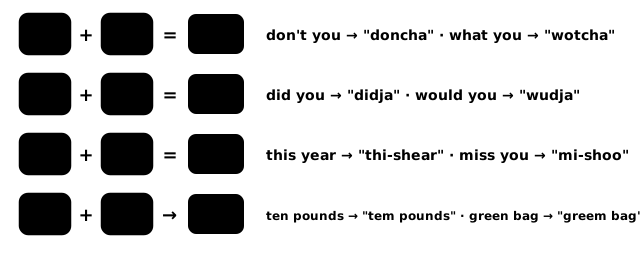
कभी दो आवाज़ें मिलकर तीसरी आवाज़ बन जाती हैं। सबसे आम: जब t, d, s, z के बाद you / your / year का "y" आता है। हिंदी बोलने वालों के लिए ये जाना-पहचाना है — हम भी "ये तो" को तेज़ में "येत्तो" बोल देते हैं।
| लिखा | सुनाई देता है | सुनो |
|---|---|---|
| Did you eat? | Didja eat? | |
| Don't you think so? | Doncha think so? | |
| What are you doing? | Wotcha doing? | |
| Would you like some tea? | Wudja like some tea? | |
| I got you. | Gotcha. | |
| Nice to meet you. | Nice tuh meechoo. | |
| See you this year. | See ya thi-shear. |
कान के लिए नियम
t + you = ch, d + you = j, s + you = sh। जब भी "-cha", "-ja", "-shoo" सुनाई दे, सोचो: पीछे कोई you छुपा है।
28.6 gonna, wanna, gotta — कब बोलो, कब लिखो
ये "slang" नहीं, बल्कि बोलचाल के असली रूप हैं — news anchor भी "gonna" बोलते हैं। पर लिखने में (email, report, exam) इनकी जगह नहीं। सीधा नियम: बोलो — चलेगा; WhatsApp पर दोस्त को — चलेगा; office में लिखो — कभी नहीं।
| बोलचाल | पूरा रूप | Example | सुनो |
|---|---|---|---|
| gonna | going to (+ verb) | I'm gonna call her. | |
| wanna | want to / want a | Do you wanna come? | |
| gotta | have got to | I gotta go. | |
| hafta | have to | We hafta wait. | |
| lemme | let me | Lemme see. | |
| gimme | give me | Gimme a minute. | |
| kinda | kind of | It's kinda cold. | |
| outta | out of | Get outta here! |
✗
I'm gonna Delhi tomorrow.
✓
I'm going to Delhi tomorrow. / I'm gonna visit Delhi tomorrow.
going to + verb
✗
Dear Sir, I wanna apply for the post.
✓
Dear Sir, I would like to apply for the post.
ईमेल लिखना
ख़ुद बोलो या नहीं?
पहले सुनना सीखो। बोलने में "gonna" और "wanna" casual बात में natural हैं — पर interview या presentation में going to और want to (weak "tuh" के साथ) सबसे safe हैं। ज़बरदस्ती "gotcha, wanna, lemme" हर लाइन में घुसाना filmy लगता है।
28.7 सवाल और list की धुन
बुनियादी नियम (statement ↘, yes/no सवाल ↗, WH-सवाल ↘) Rhythm और stress chapter में है। यहाँ दो ऐसे मौक़े जहाँ धुन से मतलब ही बदल जाता है।
Choice या yes/no?
| बोलने का तरीक़ा | मतलब | सुनो |
|---|---|---|
| Tea ↗ or coffee ↘? | दो में से एक चुनो। | |
| Tea or coffee ↗? | कुछ पीना है? (हाँ/ना) |
Question tags — पक्का या सच में सवाल?
- It's hot today, isn't it ↘ गिरती आवाज़ = "हाँ ना?" — आप सिर्फ़ हामी चाहते हो।
- The meeting is at three, isn't it ↗ चढ़ती आवाज़ = सच में confirm कर रहे हो, पक्का नहीं पता।
- I bought milk ↗, bread ↗, eggs ↗ and butter ↘. List में हर item पर आवाज़ ऊपर; आख़िरी पर नीचे = list ख़त्म।
List ख़त्म हुई या नहीं?
सुनते वक़्त अगर आख़िरी item पर आवाज़ ऊपर रहे, तो समझो बोलने वाला और जोड़ने वाला है — बीच में मत बोलो। नीचे गिरे, तो आपकी बारी।
28.8 तेज़ English सुनने की strategy
नियम जानना आधा काम है। बाकी आधा है कान की आदत। ये पाँच तरीक़े सच में काम करते हैं:
| तरीक़ा | कैसे |
|---|---|
| 1. बड़े शब्द पकड़ो | हर शब्द नहीं — सिर्फ़ ज़ोर वाले (noun, verb)। "…MEET…STAtion…SIX" से पूरी बात बन जाती है। |
| 2. पहले अंदाज़ा | Situation से सोचो क्या आने वाला है। दुकान पर "wudja like a bag?" लगभग पक्का है। |
| 3. Shadowing | Audio चलाओ और आधा second पीछे-पीछे वही बोलो, वही धुन में। |
| 4. Dictation | एक लाइन सुनो, लिखो, मिलाओ। जो गलत हुआ, वही आपका अगला नियम है। |
| 5. धीरे → तेज़ | 🐢 धीमी speed पर समझो, फिर normal पर। Subtitles पहले English में, फिर बंद। |
सुनते वक़्त अनुवाद नहीं
दिमाग़ में हिंदी अनुवाद करोगे तो अगला वाक्य छूट जाएगा। ज़ोर वाले शब्द पकड़ो, बाकी context से भरो — native speaker भी यही करते हैं।
✗
एक शब्द समझ नहीं आया → रुक गए → पूरी बात छूट गई।
✓
एक शब्द छूटा → आगे सुनो → context से भरो → ज़रूरत हो तो पूछो: "Sorry, did you say Tuesday?"
फ़ोन और video call
28.9 असली ज़िंदगी में — office canteen
पहले हर लाइन का 🔊 सुनो बिना पढ़े। फिर देखो "सुनाई देता है" वाला column — कौन से नियम लगे?
| लिखा हुआ | सुनाई देता है | सुनो |
|---|---|---|
| Hey, did you eat yet? | Hey, didja eat yet? | |
| Not yet. I've got to finish this first. | Not yet. I gotta finish this firs'. | |
| What are you working on? | Wotcha workin' on? | |
| The report for Monday. It's kind of a mess. | The report fuh Monday. It's kinda-uh mess. | |
| Do you want me to help? | Dya wan' me tuh help? | |
| Let me look at it after lunch. | Lemme look a-tit after lunch. | |
| Thanks! I'm going to get a sandwich and a cup of tea. | Thanks! I'm gonna ge-ta sandwich un-a cuppa tea. |
रोज़ की 5-minute drill
ऊपर की canteen वाली बातचीत की एक लाइन चुनो। तीन बार सुनो, फिर shadow करो, फिर बिना देखे लिखो। एक हफ़्ते में सात lines — और आपका कान "तेज़" English को "normal" सुनने लगेगा।
28.10 Practice — Native speed English
अभ्यास 1
Can the speaker stay for lunch?
इसे ज़ोर से पढ़ो, या किसी से पढ़वाओ:
I can come to the meeting, but I can't stay for lunch.
- No
- Yes
- Only on Friday
- It isn't mentioned
उत्तर
No
पाठ: “I can come to the meeting, but I can't stay for lunch.”
can (kun) छोटा और दबा हुआ; can't लंबा और ज़ोर वाला। 'can't stay' = नहीं रुक सकता।
अभ्यास 2
What is the speaker asking about?
इसे ज़ोर से पढ़ो, या किसी से पढ़वाओ:
What are you going to do this weekend?
- weekend plans
- last weekend
- work today
- a holiday booking
उत्तर
weekend plans
पाठ: “What are you going to do this weekend?”
'Wotcha gonna do' = What are you going to do — future plan.
अभ्यास 3
What is the speaker offering?
इसे ज़ोर से पढ़ो, या किसी से पढ़वाओ:
Did you eat? I've got some leftover biryani if you want it.
- leftover biryani
- a cup of tea
- a lift home
- some money
उत्तर
leftover biryani
पाठ: “Did you eat? I've got some leftover biryani if you want it.”
'Didja eat?' + 'I've got some leftover biryani' — बची हुई बिरयानी offer कर रहा है।
अभ्यास 4
What must they turn off?
इसे ज़ोर से पढ़ो, या किसी से पढ़वाओ:
We need to leave at half past six. Don't forget your ticket, and turn off the lights.
- the lights
- the fan
- the AC
- the phone
उत्तर
the lights
पाठ: “We need to leave at half past six. Don't forget your ticket, and turn off the lights.”
'tur-noff the lights' — consonant n अगले vowel से जुड़ गया।
अभ्यास 5
What are they going to do?
इसे ज़ोर से पढ़ो, या किसी से पढ़वाओ:
Let me know if you want to come with us. We're going to grab a cup of coffee.
- have coffee
- have lunch
- go shopping
- go home
उत्तर
have coffee
पाठ: “Let me know if you want to come with us. We're going to grab a cup of coffee.”
'gonna grab a cuppa coffee' = going to grab a cup of coffee.
अभ्यास 6
When will the speaker call back?
इसे ज़ोर से पढ़ो, या किसी से पढ़वाओ:
I've got to go now. I'll call you back in an hour.
- in an hour
- tonight
- tomorrow
- in ten minutes
उत्तर
in an hour
पाठ: “I've got to go now. I'll call you back in an hour.”
'i-na-nour' — तीन शब्द linking से एक हो गए: in an hour.
अभ्यास 7
जो सुनाई दे, वो लिखो (पूरी, सही spelling में)।
डिक्टेशन। किसी से यह वाक्य ज़ोर से पढ़वाओ, फिर लिख लो।
What do you want to do tonight?
उत्तर
What do you want to do tonight?
'Whaddaya wanna do' — पर लिखते हैं पूरा: What do you want to do.
अभ्यास 8
जो सुनाई दे, वो लिखो।
डिक्टेशन। किसी से यह वाक्य ज़ोर से पढ़वाओ, फिर लिख लो।
I don't know what he's going to say.
उत्तर
I don't know what he's going to say.
'I dunno what he's gonna say' — लिखाई में don't know और going to.
अभ्यास 9
जो सुनाई दे, वो लिखो।
डिक्टेशन। किसी से यह वाक्य ज़ोर से पढ़वाओ, फिर लिख लो।
Could you turn it off, please?
उत्तर
Could you turn it off, please?
'Cudja tur-ni-toff' — assimilation (could you) + linking (turn it off).
अभ्यास 10
जो सुनाई दे, वो लिखो।
डिक्टेशन। किसी से यह वाक्य ज़ोर से पढ़वाओ, फिर लिख लो।
We left the next day.
उत्तर
We left the next day.
'nex' day' — t ग़ायब सुनाई देता है, पर लिखा जाता है: next.
अभ्यास 11
जो सुनाई दे, वो लिखो।
डिक्टेशन। किसी से यह वाक्य ज़ोर से पढ़वाओ, फिर लिख लो।
Did you tell them about the party?
उत्तर
Did you tell them about the party?
'Didja tell-uhm' — did you = didja, them weak होकर 'uhm'.
अभ्यास 12
जो सुनाई दे, वो लिखो।
डिक्टेशन। किसी से यह वाक्य ज़ोर से पढ़वाओ, फिर लिख लो।
She has got to finish it by Friday.
उत्तर
She has got to finish it by Friday.
'She's gotta finish it' — लिखते वक़्त: has got to.
अभ्यास 13
Which sentence can naturally become 'gonna' in speech?
- I'm going to call you later.
- I'm going to Mumbai tomorrow.
- She's going to the office.
- We're going to the market.
उत्तर
I'm going to call you later.
gonna = going to + verb (future)। जगह पर जाने वाले 'going to' के साथ नहीं।
अभ्यास 14
तेज़ बोलचाल में 'can' और 'can't' का फ़र्क़ कैसे पकड़ो?
- can't की vowel लंबी और ज़ोर वाली होती है
- सिर्फ़ 't' की आवाज़ सुनो
- can हमेशा ज़ोर से बोला जाता है
- कोई फ़र्क़ नहीं होता
उत्तर
can't की vowel लंबी और ज़ोर वाली होती है
't' अक्सर ग़ायब हो जाता है। can = kun (weak), can't = KAANT (strong, लंबा).
अभ्यास 15
Which is right for a formal email?
- I would like to apply for the post.
- I wanna apply for the post.
- I'm gonna apply for the post.
- I gotta apply for the post.
उत्तर
I would like to apply for the post.
wanna/gonna/gotta बोलने के रूप हैं, formal लिखाई के नहीं।
अभ्यास 16
Match the spoken form to the full form.
| A | B |
|---|---|
| gonna | have got to |
| wanna | let me |
| gotta | did you |
| lemme | going to |
| didja | want to |
उत्तर
gonna — going to; wanna — want to; gotta — have got to; lemme — let me; didja — did you
सुनने में छोटा रूप, लिखने में हमेशा पूरा रूप।
अभ्यास 17
इसे एक smooth phrase की तरह बोलो — शब्दों के बीच मत रुको।
Turn it off and pick it up
उत्तर
बोलो: Turn it off and pick it up
tur-ni-toff un pi-ki-tup — consonant अगले vowel से जुड़ता है, 'and' weak 'un'.
आगे क्या करो
अपनी पसंदीदा 2-minute YouTube clip चुनो और ऊपर की 5-step strategy लगाओ। फिर Fluency chapter में अपनी बोलने की रफ़्तार पर काम करो, और सुनो और समझो वाले हिस्से की कहानियों से कान की रोज़ की कसरत करो।