अध्याय 20: छोटे से बड़े वाक्य (Clauses)
Clauses — छोटे वाक्यों से बड़े वाक्य
अगर आपकी English में हर वाक्य छोटा-छोटा है — "I have a friend. He lives in Delhi. He is a doctor." — तो गलत कुछ नहीं, पर बात बच्चों जैसी लगती है। Clauses को जोड़ना सीख लो, तो वही बात एक साफ़, पक्के वाक्य में आ जाती है। यह chapter वही जोड़ने का हुनर सिखाता है।
- 1Independent और Dependent clause
- 2चार तरह के वाक्य
- 3Compound — बराबर के दो clause जोड़ना
- 4Complex — कारण, समय, शर्त और विरोध
- 5Relative clauses — who, which, that, whose, where
- 6Defining vs Non-defining — comma का खेल
- 7छोटे वाक्यों को जोड़कर बेहतर वाक्य
- 8वो गलतियाँ जो हम सच में करते हैं
एक लाइन में
A clause is a group of words with its own subject and verb. A sentence can have one clause or many. Sentence structure वाला chapter याद है? Phrase में subject-verb की जोड़ी नहीं होती; clause में होती है।
- I have a friend who lives in Delhi. दो clause: "I have a friend" + "who lives in Delhi"।
- She was tired, so she went to bed early. दो clause, "so" से जुड़े हुए।
20.1 Independent और Dependent clause
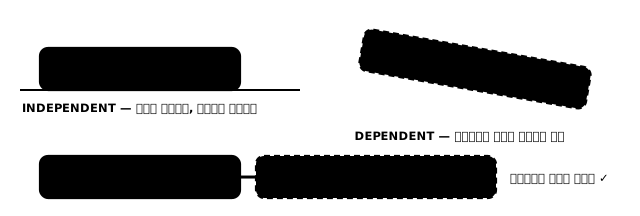
हर clause एक जैसा नहीं होता। कुछ अकेले खड़े हो सकते हैं, कुछ नहीं। यह फ़र्क़ समझना ज़रूरी है, क्योंकि अधूरे clause को पूरा वाक्य मान लेना लिखने में सबसे बड़ी गलती है।
Independent vs dependent
Independent clause अकेला पूरा वाक्य है (I stayed at home.)। Dependent clause because, when, if, although, who, which जैसे शब्द से शुरू होता है और अकेला अधूरा रहता है — उसे independent clause से जोड़ो।
| Dependent clause शुरू करने वाले | काम | Example |
|---|---|---|
| because, since, as | कारण | because he was ill |
| when, while, after, before, until | समय | when the bell rang |
| if, unless | शर्त | if you call me |
| although, though, even though | विरोध | although it was late |
| who, which, that, whose, where | noun के बारे में | who lives next door |
20.2 चार तरह के वाक्य
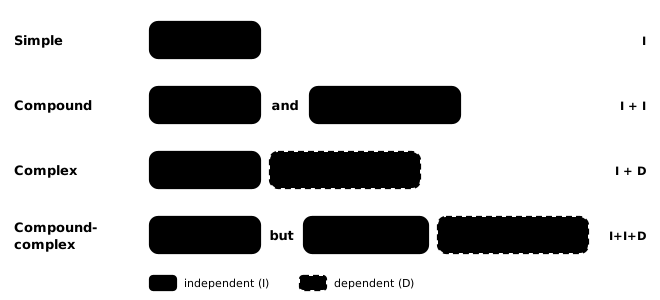
Clauses कितने हैं और कैसे जुड़े हैं — इससे वाक्य के चार प्रकार बनते हैं। अच्छी English में चारों का मेल होता है; सिर्फ़ एक तरह के वाक्य लिखने से लेख नीरस हो जाता है।
चार प्रकार
Simple = एक independent clause। Compound = दो independent (and, but, so से)। Complex = independent + dependent (because, when, who से)। Compound-complex = दो independent + कम से कम एक dependent।
20.3 Compound — बराबर के दो clause जोड़ना
जब दो बातें बराबर ज़रूरी हों, तो उन्हें compound sentence में जोड़ो। इसके लिए सात छोटे शब्द हैं जिन्हें याद करने की trick है — FANBOYS।
| शब्द | काम | Example |
|---|---|---|
| For | कारण (formal) | He left early, for he was ill. |
| And | जोड़ना | I cooked, and she cleaned. |
| Nor | न यह, न वो | He didn't call, nor did he write. |
| But | विरोध | It was cheap, but it was good. |
| Or | विकल्प | Hurry up, or we'll miss the train. |
| Yet | फिर भी | She was tired, yet she kept working. |
| So | नतीजा | It was raining, so we stayed in. |
Compound का नियम
दो independent clause जोड़ने के लिए comma + FANBOYS (for, and, nor, but, or, yet, so) लगाओ। सिर्फ़ comma से दो पूरे वाक्य नहीं जुड़ते: I was tired, I slept. ✗ → I was tired, so I slept. ✓
Comma कब छोड़ सकते हो
दोनों clause बहुत छोटे हों तो comma ज़रूरी नहीं: I cooked and she cleaned.
और अगर दूसरे हिस्से में subject ही न हो, तो वो clause नहीं — comma मत लगाओ: She opened the door and smiled.
20.4 Complex — कारण, समय, शर्त और विरोध
जब एक बात मुख्य हो और दूसरी उससे कारण, समय, शर्त या विरोध बताती हो, तो complex sentence बनता है। ये वही वाक्य हैं जो आपकी English को सोची-समझी और परिपक्व बनाते हैं।
- I took an umbrella because it looked cloudy. मुख्य बात: छाता लिया। कारण: बादल थे।
- When the guests arrived, we served lunch. Dependent clause पहले आया, इसलिए बीच में comma।
- Although the test was hard, she passed. Test मुश्किल था, फिर भी वो पास हो गई। — "but" की ज़रूरत नहीं।
Complex का नियम
Dependent clause पहले आए तो बीच में comma लगाओ (When it rained, we stayed in.); बाद में आए तो comma नहीं। एक जोड़ के लिए एक ही शब्द: although या but — दोनों नहीं।
हिंदी का 'हालाँकि… लेकिन' English में नहीं चलता
- गलत: Although he is rich, but he is not happy.
- सही: Although he is rich, he is not happy. / He is rich, but he is not happy.
- क्यों: हिंदी में "हालाँकि… लेकिन" दोनों लगते हैं, English में एक ही। इसी तरह "because… so" भी साथ नहीं आते।
20.5 Relative clauses — who, which, that, whose, where
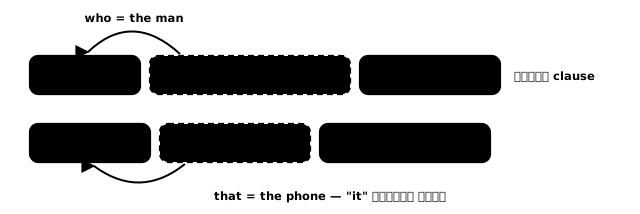
Relative clause किसी noun के बारे में और जानकारी देता है, बिल्कुल adjective की तरह — बस एक शब्द की जगह पूरा clause। इससे दो छोटे वाक्य एक हो जाते हैं: I met a man. He speaks six languages. → I met a man who speaks six languages.
Relative clause का नियम
who — लोग, which — चीज़ें, that — दोनों, whose — किसका, where — जगह। Relative शब्द noun की जगह लेता है, इसलिए वही noun या pronoun दोबारा मत लगाओ।
| शब्द | किसके लिए | Example |
|---|---|---|
| who | इंसान | the girl who won the prize |
| which | चीज़, जानवर | the bus which goes to Agra |
| that | इंसान या चीज़ (बिना comma) | the book that I lost |
| whose | मालिकाना — "जिसका" | the boy whose bike was stolen |
| where | जगह | the village where I was born |
| when | समय | the day when we met |
Object वाला relative छोड़ भी सकते हो
जब who/that clause का object हो, तो उसे हटा सकते हो: the book (that) I lost, the man (who) I met। बोलचाल में यह बहुत आम है। पर subject हो तो नहीं: the man who called — "who" ज़रूरी है।
20.6 Defining vs Non-defining — comma का खेल
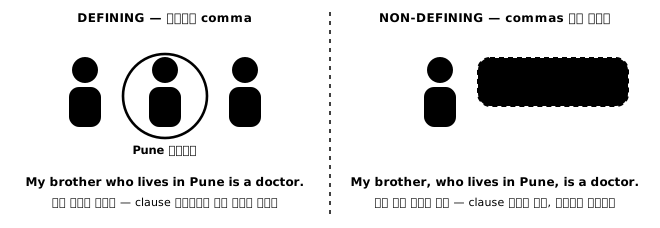
दो commas वाक्य का मतलब बदल सकते हैं। सवाल यह है: क्या clause बताता है कि कौन सा noun, या सिर्फ़ एक extra जानकारी जोड़ता है जो हटा भी दो तो फ़र्क़ नहीं पड़ता?
Defining vs non-defining
Defining clause बताता है कौन सा noun — बिना comma, who/which/that तीनों चलते हैं। Non-defining सिर्फ़ extra जानकारी देता है — commas के साथ, और इसमें "that" नहीं लगता।
- The Taj Mahal, which is in Agra, attracts millions of visitors. Taj Mahal एक ही है — "which is in Agra" extra जानकारी है, इसलिए commas।
- Students who finish early can leave. सिर्फ़ वो students जो जल्दी ख़त्म करो — clause ज़रूरी है, comma नहीं।
20.7 छोटे वाक्यों को जोड़कर बेहतर वाक्य
अब सब साथ लाते हैं। लिखते वक़्त पहले छोटे वाक्य लिख लो, फिर देखो कौन से जोड़ सकते हो। ये तीन सवाल पूछो: क्या ये बराबर हैं (FANBOYS)? क्या एक कारण/समय है (because, when)? क्या एक noun के बारे में है (who, which)?
| पहले (छोटे वाक्य) | बाद में (जोड़े हुए) |
|---|---|
| I have a cousin. She lives in Canada. She is a nurse. | I have a cousin who lives in Canada and works as a nurse. |
| The train was late. We missed the meeting. | The train was late, so we missed the meeting. |
| It was raining. The match continued. | Although it was raining, the match continued. |
| This is the school. My father studied here. | This is the school where my father studied. |
| I met a writer. Her books are famous. | I met a writer whose books are famous. |
सब कुछ एक वाक्य में मत ठूँसो
जोड़ने का मतलब यह नहीं कि पूरा paragraph एक वाक्य बन जाए। एक वाक्य में दो-तीन clause काफ़ी हैं। लंबा हो जाए तो वापस तोड़ दो — साफ़ बात हमेशा लंबी बात से बेहतर है।
20.8 वो गलतियाँ जो हम सच में करते हैं
Clauses की सबसे आम Indian-English गलतियाँ
- गलत: Although I studied hard, but I failed.
- सही: Although I studied hard, I failed.
-
क्यों: "हालाँकि… लेकिन" का सीधा अनुवाद। English में एक जोड़ के लिए एक ही शब्द — although या but।
-
गलत: This is the man who I told you about him.
- सही: This is the man (who) I told you about.
-
क्यों: "who" पहले ही "the man" की जगह ले चुका है। "him" लगाने से वही आदमी दो बार आ गया। इसी तरह: the book which I bought it।
-
गलत: I was very tired, I went to bed early.
- सही: I was very tired, so I went to bed early.
-
क्यों: दो independent clause सिर्फ़ comma से नहीं जुड़ते। बीच में FANBOYS लगाओ, या full stop।
-
गलत: My father, that is a teacher, loves reading.
- सही: My father, who is a teacher, loves reading.
-
क्यों: Commas वाले (non-defining) clause में "that" नहीं लगता। इंसान के लिए "who", चीज़ के लिए "which"।
-
गलत: Because the shop was closed.
- सही: We came back because the shop was closed.
- क्यों: "Because" वाला clause dependent है — अकेला वाक्य नहीं बन सकता। जवाब में बोलना ठीक है, पर लिखते वक़्त उसे मुख्य clause से जोड़ो।
20.9 Practice — Clauses
अभ्यास 1
'I called her, but she didn't answer.' — यह कौन सा वाक्य है?
- Compound
- Simple
- Complex
- Compound-complex
संकेत: कितने independent clause हैं?
उत्तर
Compound
दो independent clause हैं — 'I called her' और 'she didn't answer' — जो 'but' (FANBOYS) से जुड़े हैं। Dependent clause कोई नहीं, इसलिए compound।
अभ्यास 2
'When the power went off, we lit candles.' — यह कौन सा वाक्य है?
- Complex
- Compound
- Simple
- Compound-complex
उत्तर
Complex
'When the power went off' dependent clause है, 'we lit candles' independent। Independent + dependent = complex।
अभ्यास 3
This is the girl ___ father is a pilot.
- whose
- who
- which
- where
संकेत: 'जिसके पिता'
उत्तर
whose
मालिकाना बताना है — 'जिसके पिता'। इसके लिए 'whose'। 'who father' गलत है।
अभ्यास 4
कौन सा वाक्य सही है?
- Although it was late, we kept talking.
- Although it was late, but we kept talking.
- Although it was late, so we kept talking.
- It was late, although but we kept talking.
उत्तर
Although it was late, we kept talking.
एक जोड़ के लिए एक ही शब्द। 'Although' लग गया तो 'but' की ज़रूरत नहीं — हिंदी का 'हालाँकि… लेकिन' English में नहीं चलता।
अभ्यास 5
Mumbai, ___ is India's financial capital, is very crowded.
- which
- that
- who
- where
संकेत: Commas के बीच — non-defining।
उत्तर
which
Commas वाले clause में 'that' नहीं लगता, और Mumbai चीज़/जगह है (यहाँ subject), इंसान नहीं — इसलिए 'which'। 'where' तब आता जब clause में अपना subject होता: where my uncle lives।
अभ्यास 6
This is the village ___ my grandmother was born.
संकेत: जगह की बात।
उत्तर
where / in which
जगह के लिए 'where' — the village where she was born। 'in which' भी सही है, पर थोड़ा formal।
अभ्यास 7
एक extra शब्द है — उस पर tap करो।
This is the laptop which I bought it last week.
उत्तर
गलत शब्द: it.
सही रूप: This is the laptop which I bought last week.
'which' पहले ही 'the laptop' की जगह ले चुका है। 'it' लगाने से वही चीज़ दो बार आ जाती है।
अभ्यास 8
गलत शब्द ढूँढो।
Although the hotel was expensive, but the food was terrible.
उत्तर
गलत शब्द: but.
सही रूप: Although the hotel was expensive, the food was terrible.
'Although' और 'but' एक साथ नहीं आते। एक हटा दो — यहाँ 'but'।
अभ्यास 9
Relative शब्द को उसके काम से जोड़ो।
| A | B |
|---|---|
| who | जिसका / मालिकाना |
| which | जगह |
| whose | इंसान |
| where | चीज़ |
उत्तर
who — इंसान; which — चीज़; whose — जिसका / मालिकाना; where — जगह
who लोगों के लिए, which चीज़ों के लिए, whose मालिकाना के लिए, where जगह के लिए। 'that' defining clause में लोग और चीज़ दोनों के लिए चलता है।
अभ्यास 10
दो वाक्य एक बनाओ: 'I have a friend. He speaks Japanese.'
शब्द: friend / Japanese / I / who / speaks / a / have
उत्तर
I have a friend who speaks Japanese
'who' ने 'He' की जगह ले ली और clause सीधा 'a friend' के बाद बैठ गया। दो छोटे वाक्य एक साफ़ वाक्य बन गए।
अभ्यास 11
Complex sentence बनाओ।
शब्द: inside / stayed / We / raining / because / was / heavily / it
उत्तर
We stayed inside because it was raining heavily
मुख्य बात पहले (we stayed inside), कारण बाद में (because…)। Dependent clause बाद में आया, इसलिए comma की ज़रूरत नहीं।
अभ्यास 12
यह वाक्य बोलो — commas पर हल्का सा रुको।
My brother, who lives in Pune, is a doctor
उत्तर
बोलो: My brother, who lives in Pune, is a doctor
बोलते वक़्त commas का मतलब है छोटा सा ठहराव। इस ठहराव से सुनने वाला समझ जाता है कि 'who lives in Pune' सिर्फ़ extra जानकारी है।
आगे क्या करो
अपना पिछला कोई email या message खोलो। जहाँ तीन छोटे वाक्य लगातार हों, उनमें से दो को who, because या so से जोड़ो। हर रोज़ एक paragraph — एक महीने में आपकी लिखाई बदल जाएगी।