अध्याय 14: Interjection — भाव वाले शब्द
Interjection (विस्मयादिबोधक) — भाव वाले शब्द
Interjection वो शब्द है जो अचानक कोई भाव बाहर निकाल देता है — ख़ुशी, दर्द, हैरानी, अफ़सोस। ये वाक्य का हिस्सा नहीं होता; बाक़ी वाक्य से अलग खड़ा रहता है, और हटा दो तो वाक्य का मतलब बिल्कुल नहीं बदलता — सिर्फ़ उसकी आवाज़ चली जाती है। आठ parts of speech में ये सबसे छोटा हिस्सा है, पर बोलचाल में सबसे ज़्यादा काम आता है।
- 1Interjection वाक्य में कहाँ बैठता है
- 2प्रकार — भाव के हिसाब से
- 3Punctuation — तीन पक्के नियम
- 4Interjection या कुछ और — एक शब्द के दो काम
- 5हिंदी से English — असली बोलचाल के जोड़े
- 6Office और formal जगह — कहाँ रुकना है
- 7वो ग़लतियाँ जो हम सच में करते हैं
- 8छोटा नक्शा
एक लाइन में
An interjection is a word or short phrase that expresses sudden feeling and stands apart from the rest of the sentence. हिंदी में "अरे, वाह, हाय, अच्छा, ओहो" — बिल्कुल वही काम।
- Wow! That was a brilliant catch. वाह! क्या शानदार catch थी।
- Ouch! That hurt. आह! दर्द हुआ। (हिंदी में हम "सीं" या "आई" बोलते हैं।)
- Oh, I forgot my wallet at home. हल्का भाव है, इसलिए comma — exclamation mark नहीं।
14.1 Interjection वाक्य में कहाँ बैठता है
Interjection का बाक़ी वाक्य से कोई grammar का रिश्ता नहीं होता। वो न subject है, न verb, न object। इसलिए उसे हटा दो, वाक्य टूटता नहीं।
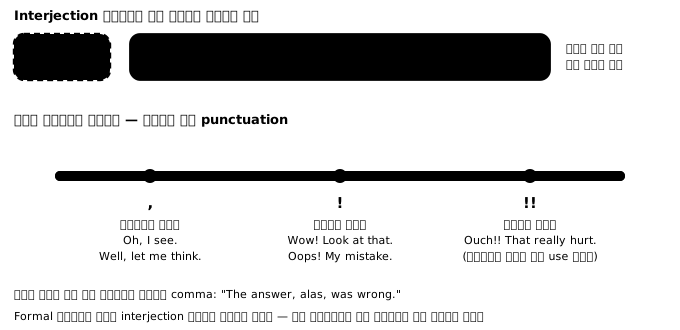
Interjection की पाँच पहचान (Features)
1. Strong / sudden emotion — अचानक, तेज़ भाव बताता है: ख़ुशी, दर्द, डर, हैरानी।
2. Stands apart — बाक़ी वाक्य से अलग खड़ा रहता है, अक्सर शुरू में।
3. Usually "!" — अक्सर इसके बाद exclamation mark लगता है (हल्का भाव हो तो comma)।
4. No grammatical link — subject, verb या object से कोई grammar का रिश्ता नहीं; हटा दो, वाक्य ठीक रहता है।
5. Same word, different feelings — एक ही शब्द अलग मौक़े पर अलग भाव देता है।
- Oh! What a lovely surprise. "Oh" = हैरानी / ख़ुशी (Surprise)।
- Oh! My knee hurts. वही "Oh" = दर्द (Pain)।
- Oh! I am so sorry to hear that. वही "Oh" = अफ़सोस (Sorrow)। भाव शब्द से नहीं, मौक़े और आवाज़ से पता चलता है।
14.2 प्रकार — भाव के हिसाब से
School की किताबों में interjection के दस (10) प्रकार पढ़ाए जाते हैं। हर प्रकार का English नाम भी साथ में है, ताकि textbook से सीधा मिलान हो सके।
| Type (भाव) | Typical शब्द | Example | हिंदी में |
|---|---|---|---|
| 1. Joy (ख़ुशी) | Hurrah! Hurray! Yippee! | Hurray! We won the match. | वाह! जीत गए! |
| 2. Sorrow (दुख / अफ़सोस) | Alas! Oh! Ah! | Alas! He could not make it. | हाय! अफ़सोस! |
| 3. Surprise (हैरानी) | Oh! Wow! What! Ah! | What! You passed already? | अरे! सच में? |
| 4. Pain (दर्द) | Ouch! Ah! Oh! | Ouch! The tea is hot. | आई! सीं! |
| 5. Approval / Appreciation (तारीफ़) | Bravo! Well done! Excellent! | Bravo! What a performance. | शाबाश! क्या बात है! |
| 6. Anger / Irritation (ग़ुस्सा, झुँझलाहट) | Pooh! Bah! | Bah! Another traffic jam. | उफ़! हद है! |
| 7. Greeting (अभिवादन) | Hello! Hi! Hey! | Hello! How are you? | नमस्ते! कैसे हो? |
| 8. Attention (ध्यान खींचना) | Hey! Look! Listen! | Look! The train is coming. | अरे! देखो! |
| 9. Calling (बुलाना) | O! Ho! Hey! | Hey, Ravi! Come here. | ऐ रवि! इधर आओ। |
| 10. Fear (डर) | Help! Oh! Ah! | Help! There is a snake! | बचाओ! |
- Yippee! School is closed tomorrow. Joy — बच्चों वाली उछलती ख़ुशी।
- Well done! You topped the class. Approval — दो शब्द, पर काम एक interjection का।
- O God, please help us! Calling — "O" आज प्रार्थना और कविता में ही बचा है; हमेशा capital, और तुरंत नाम के साथ।
'Damn!' — ग़ुस्से का शब्द, पर rude
फ़िल्मों में "Damn!" बहुत सुनाई देता है, पर ये rude / असभ्य माना जाता है। Class, office, बड़े लोगों के सामने कभी मत बोलो। झुँझलाहट बतानी हो तो "Oh no!", "Ugh!" या "Come on!" काफ़ी है।
बोलचाल के और भी भाव
| भाव | शब्द | Example | हिंदी में |
|---|---|---|---|
| सहमति | Yes! Sure! Indeed! Right! | Indeed, that was clever. | बिल्कुल! सही! |
| नफ़रत / घिन | Ugh! Yuck! Eww! | Yuck! This milk has gone bad. | छी! थू! |
| रुकना / सोचना | Well… Um… Hmm… Er… | Hmm, let me check. | हम्म… अच्छा… |
| ग़लती | Oops! Whoops! My bad! | Oops! I sent the wrong file. | ओहो! ग़लती हो गई। |
| राहत | Phew! Thank goodness! | Phew! That was close. | उफ़! बच गए। |
Common interjections और उनका use
| Interjection | कब बोलते हैं | Example |
|---|---|---|
| Oh! | हैरानी, दर्द, अफ़सोस — तीनों | Oh! I didn't know that. |
| Ah! | समझ आना, सुकून, हल्का दर्द | Ah, now I understand. |
| Wow! | हैरानी + तारीफ़ | Wow! What a view. |
| Ouch! | अचानक अपना दर्द | Ouch! I cut my finger. |
| Hurray! | जीत की ख़ुशी | Hurray! We are on holiday. |
| Bravo! | किसी के काम की तारीफ़ | Bravo! Great speech. |
| Hello! / Hi! | मिलना, फ़ोन उठाना | Hi! Good to see you. |
| Hey! | ध्यान खींचना, बुलाना (बराबर वालों को) | Hey! Wait for me. |
| Help! | डर, मुसीबत | Help! I can't swim. |
| Oops! | छोटी ग़लती | Oops! I dropped it. |
| Phew! | राहत | Phew! We made it. |
| Alas! | गहरा दुख (किताबी) | Alas! The king was dead. |
14.3 Punctuation — तीन पक्के नियम
कहाँ comma, कहाँ exclamation mark
1. तेज़ भाव → exclamation mark, और अगला शब्द capital से: Wow! That is amazing.
2. हल्का भाव → comma, और अगला शब्द small से: Oh, it's you.
3. बीच में आए तो दोनों तरफ़ comma: The result, alas, was disappointing.
एक ही शब्द, दो punctuation — मतलब बदल जाता है
Oh! You came. — हैरानी, लगता है उम्मीद नहीं थी।
Oh, you came. — हल्की पहचान, लगता है पता था। Punctuation यहाँ भाव का volume control है।
Exclamation mark एक से ज़्यादा नहीं
Chat में "Wow!!!" चलता है। Email, exam या किसी भी लिखे काम में एक ही exclamation mark लगाओ। तीन लगाने से बात ज़्यादा नहीं, कम गंभीर लगती है।
14.4 Interjection या कुछ और — एक शब्द के दो काम
कई शब्द interjection के रूप में भी आते हैं और normal part of speech के रूप में भी। फ़ैसला ये देखकर होता है कि वो वाक्य के अंदर है या बाहर।
| शब्द | Interjection के रूप में | Normal रूप में |
|---|---|---|
| well | Well, I am not sure. | She sings well. (adverb) |
| what | What! You are leaving? | What is your name? (pronoun) |
| right | Right, let's begin. | Your answer is right. (adjective) |
| indeed | Indeed! I never expected that. | It was indeed difficult. (adverb) |
| my | My! How you have grown. | This is my bag. (possessive) |
पहचानने का test
शब्द हटा के बाक़ी वाक्य पढ़ो। अगर वाक्य पूरा और ठीक है → वो interjection था। अगर वाक्य अधूरा हो गया → वो वाक्य का हिस्सा था। "Well, I am not sure" → "I am not sure" पूरा है। ✓ interjection।
"She sings well" → "She sings" का मतलब बदल गया। ✗ interjection नहीं।
14.5 हिंदी से English — असली बोलचाल के जोड़े
हम लोग हिंदी interjections को सीधा English में ले जाते हैं — "Arre, where were you?" ये समझ आ जाता है पर English नहीं लगता। नीचे काम के जोड़े हैं:
| हम बोलते हैं | English में | कब |
|---|---|---|
| अरे! | Hey! / Oh! / Come on! | ध्यान खींचना या हल्की हैरानी |
| अच्छा? | Really? / Is that so? | नई बात सुनकर |
| अच्छा, ठीक है | Right. / Okay then. | बात मान लेना |
| वाह! | Wow! / Brilliant! | तारीफ़ |
| हाय! | Oh no! / Alas! (पुराना) | दुख |
| उफ़ / चलो बच गए | Phew! | राहत |
| छी! | Yuck! / Ugh! | घिन |
| हम्म… देखते हैं | Well… let me see. | सोचते वक़्त |
| ओहो, ग़लती हो गई | Oops! My bad. | छोटी ग़लती |
| अरे नहीं! | Oh no! / No way! | बुरी ख़बर सुनकर |
'Alas', 'Hurrah', 'Pooh' का सच — पुराने शब्द
School की किताबों में Alas!, Hurrah! और Pooh! बहुत आते हैं, पर आज की बोलचाल में ये लगभग नहीं बोले जाते — old-fashioned और नाटकीय लगते हैं। Exam और कहानी में लिखना ठीक है; बातचीत में नीचे वाले आज के शब्द बोलो।
| पुराना (किताबी) | आज बोलो | भाव |
|---|---|---|
| Alas! | Oh no! / That's so sad. | दुख |
| Hurrah! | Yay! / Yes! / Woo-hoo! | ख़ुशी |
| Pooh! / Bah! | Ugh! / Come on! / Seriously? | झुँझलाहट |
| O! / Ho! | Hey! / Excuse me! | बुलाना |
14.6 Office और formal जगह — कहाँ रुकना है
| जगह | चलता है | नहीं चलता |
|---|---|---|
| दोस्त के साथ chat | Wow! Oops! Yay! Ugh! | — |
| Office email | Well, Right, Indeed (comma के साथ) | Yay! Yuck! Oops! |
| Interview | Well, … (सोचने का वक़्त लेने के लिए) | Hmm… बहुत बार |
| Exam की writing | कहानी / dialogue में | essay या report में |
Interview की एक काम की बात
सवाल सुनकर तुरंत बोलने की जगह "Well, that's an interesting question…" बोलना बिल्कुल ठीक है — इससे दो सेकंड सोचने का वक़्त मिल जाता है और आप तैयार लगते हैं। पर एक ही interview में तीन बार ये न बोलो।
14.7 वो ग़लतियाँ जो हम सच में करते हैं
Interjection के साथ होने वाली ग़लतियाँ
- गलत: Myself Ravi. Wow, nice to meet you!
- सही: Hello! I am Ravi. Nice to meet you.
-
क्यों: दो बातें: "Myself Ravi" ग़लत है — subject के लिए "I" चाहिए। और मिलते वक़्त "Wow" अजीब लगता है; वो तारीफ़ के लिए है। Greeting में "Hello" या "Hi" बोलो।
-
गलत: Oh! i forgot to call her.
- सही: Oh! I forgot to call her.
-
क्यों: Exclamation mark के बाद नया वाक्य शुरू होता है, इसलिए अगला शब्द capital से। Comma लगाते तो small letter चलता: Oh, I forgot…
-
गलत: Dear Sir, Wow!!! Thank you for the offer.
- सही: Dear Sir, Thank you very much for the offer.
-
क्यों: Formal email में interjection और तीन exclamation mark दोनों भारी पड़ते हैं। ख़ुशी बतानी हो तो शब्दों से बताओ: I am delighted to accept.
-
गलत: Alas the news was bad.
- सही: Alas, the news was bad.
-
क्यों: Interjection के बाद punctuation ज़रूरी है — comma या exclamation mark। बिना कुछ लगाए वो वाक्य में घुल जाता है और पढ़ने में अटकता है।
-
गलत: Ouch, she don't know the answer.
- सही: Oh no, she doesn't know the answer.
-
क्यों: "Ouch" सिर्फ़ अपने दर्द के लिए है, किसी और की मुसीबत के लिए नहीं — उसके लिए "Oh no"। और "she" के साथ "doesn't" लगता है, "don't" नहीं।
-
गलत: Hey! Sir, can you discuss about my marks?
- सही: Excuse me, Sir, could we discuss my marks?
-
क्यों: "Hey!" बराबर वालों के लिए है; किसी बड़े या teacher के लिए "Excuse me" बोलो। और "discuss" के बाद "about" नहीं लगता।
-
गलत: Yuck! This is my cousin brother's cooking.
- सही: Hmm, this is my cousin's cooking — not my favourite.
- क्यों: "Yuck" काफ़ी कठोर है, किसी के सामने उसके खाने पर बोलना रूखापन है। और "cousin" अपने आप में पूरा शब्द है — brother जोड़ने की ज़रूरत नहीं।
14.8 छोटा नक्शा
चार चीज़ें याद रखो
1. Interjection वाक्य के बाहर होता है — हटा दो, वाक्य टूटता नहीं।
2. तेज़ भाव → ! और अगला शब्द capital। हल्का भाव → , और अगला शब्द small।
3. Formal लिखने में use मत करो — वहाँ शब्दों से भाव बताओ।
4. एक exclamation mark काफ़ी है।
14.9 Practice — Interjections
अभ्यास 1
___! We finally won the trophy.
- Hurray
- Alas
- Ouch
- Yuck
संकेत: ख़ुशी का भाव चाहिए।
उत्तर
Hurray
जीत पर ख़ुशी है, और ख़ुशी के लिए Hurray / Yay / Wow आते हैं। Alas दुख के लिए, ouch दर्द के लिए, और yuck घिन के लिए है।
अभ्यास 2
कौन सा वाक्य punctuation के हिसाब से सही है?
- Oh! I forgot my keys.
- Oh! i forgot my keys.
- Oh i forgot my keys.
- Oh. i forgot my keys!
संकेत: Exclamation mark के बाद क्या होता है?
उत्तर
Oh! I forgot my keys.
Exclamation mark के बाद नया वाक्य शुरू होता है, इसलिए अगला शब्द capital से। Comma लगाते तो small letter चलता — 'Oh, I forgot'।
अभ्यास 3
'Well, I am not sure about that.' — यहाँ 'Well' क्या है?
- interjection
- adverb
- adjective
- conjunction
संकेत: शब्द हटा के वाक्य पढ़ो।
उत्तर
interjection
'Well' हटाने के बाद भी 'I am not sure about that' पूरा वाक्य है, इसलिए वो बाहर खड़ा था — interjection। 'She sings well' में हटाओ तो मतलब बदल जाता, वहाँ वो adverb है।
अभ्यास 4
Office email में कौन सा रूप सबसे ठीक है?
- I am delighted to accept the offer.
- Wow!!! Thanks for the offer.
- Yay! I accept.
- Oops, I accept.
संकेत: Formal जगह में भाव शब्दों से बताते हैं।
उत्तर
I am delighted to accept the offer.
Formal लिखने में interjection और multiple exclamation marks भारी लगते हैं। ख़ुशी शब्दों से बताना ज़्यादा professional लगता है।
अभ्यास 5
___! That water is boiling hot. (दर्द का शब्द)
संकेत: अपने दर्द पर क्या बोलते हैं?
उत्तर
Ouch
अचानक दर्द के लिए Ouch / Ow आता है। ध्यान रखो — ये सिर्फ़ अपने दर्द के लिए है; किसी और की मुसीबत पर 'Oh no' बोलते हैं।
अभ्यास 6
___, that was a close call. (राहत का शब्द)
संकेत: बच जाने पर एक साँस छोड़ते हैं।
उत्तर
Phew
राहत के लिए 'Phew' आता है — हिंदी का 'उफ़' या 'चलो बच गए'। ये साँस छोड़ने की आवाज़ से बना है।
अभ्यास 7
इस वाक्य में एक ग़लती है — ग़लत शब्द पर tap करो।
Hey Sir can you discuss about my result?
उत्तर
गलत शब्द: about.
सही रूप: Excuse me, Sir, could we discuss my result?
'Discuss' के बाद 'about' नहीं लगता। और 'Hey' बराबर वालों के लिए है — teacher या किसी बड़े के लिए 'Excuse me' बोलो।
अभ्यास 8
ग़लत शब्द ढूँढो।
Oh no she don't know about the meeting.
उत्तर
गलत शब्द: don't.
सही रूप: Oh no, she doesn't know about the meeting.
'she' third person singular है, इसलिए 'doesn't' लगता है। और interjection के बाद comma भी चाहिए था।
अभ्यास 9
एक ग़लती है — ढूँढो।
Myself Ravi and wow I am happy to be here.
उत्तर
गलत शब्द: Myself.
सही रूप: Hello! I am Ravi, and I am happy to be here.
Reflexive pronoun 'myself' subject नहीं बन सकता — 'I am' चाहिए। और मिलते वक़्त 'wow' अजीब लगता है; greeting में 'Hello' बोलो।
अभ्यास 10
'Bravo! That was a brilliant speech.' — 'Bravo' किस type का interjection है?
- Approval / Appreciation
- Joy
- Surprise
- Calling
संकेत: किसी के काम की तारीफ़ हो रही है।
उत्तर
Approval / Appreciation
Bravo!, Well done!, Excellent! — ये किसी के काम की तारीफ़ (Approval / Appreciation) के शब्द हैं। अपनी ख़ुशी के लिए Hurray! या Yippee! (Joy) आता है।
अभ्यास 11
___! There is a snake under the bed! (डर का शब्द)
संकेत: मुसीबत में मदद माँगते हैं।
उत्तर
Help
Fear (डर) के लिए 'Help!' सबसे साफ़ interjection है। 'Oh!' और 'Ah!' भी डर में आते हैं, पर 'Help!' तुरंत मुसीबत बता देता है।
अभ्यास 12
दोस्त के साथ बातचीत में 'Hurrah!' की जगह आज क्या बोलना ज़्यादा natural है?
- Yay!
- Alas!
- Pooh!
- Damn!
संकेत: Hurrah पुराना, किताबी शब्द है।
उत्तर
Yay!
'Hurrah!', 'Alas!', 'Pooh!' आज old-fashioned लगते हैं। ख़ुशी के लिए आज 'Yay!' या 'Yes!' बोलते हैं। 'Damn!' rude है — उसे मत करो।
अभ्यास 13
Interjection की पहचान में कौन सी बात ग़लत है?
- ये वाक्य का subject बनता है
- ये अचानक भाव बताता है
- इसके बाद अक्सर '!' लगता है
- एक ही शब्द अलग भाव दे सकता है
संकेत: पाँच features याद करो।
उत्तर
ये वाक्य का subject बनता है
Interjection का वाक्य से कोई grammatical रिश्ता नहीं होता — न subject, न object। बाक़ी तीनों बातें उसके features हैं।
अभ्यास 14
Interjection को उसके भाव से जोड़ो।
| A | B |
|---|---|
| Hurray! | दर्द |
| Alas! | राहत |
| Ouch! | घिन |
| Phew! | ख़ुशी |
| Yuck! | दुख |
उत्तर
Hurray! — ख़ुशी; Alas! — दुख; Ouch! — दर्द; Phew! — राहत; Yuck! — घिन
Interjection का चुनाव भाव से होता है, grammar से नहीं। ग़लत भाव का शब्द चुनने से बात अजीब लगती है — जैसे तारीफ़ में 'Alas' बोल देना।
अभ्यास 15
सही क्रम में वाक्य बनाओ — interjection पहले आएगा।
शब्द: painting / is / beautiful / this / Wow
उत्तर
Wow this painting is beautiful
Interjection लगभग हमेशा वाक्य के शुरू में आता है, क्योंकि भाव पहले निकलता है और बात बाद में। लिखते वक़्त उसके बाद comma या exclamation mark लगता है।
अभ्यास 16
ये लाइन बोल के देखो — 'Oh no' को थोड़ा खींच कर बोलना है, जैसे सच में अफ़सोस हो।
Oh no I have missed the train
उत्तर
बोलो: Oh no I have missed the train
Interjection का असर शब्द से ज़्यादा आवाज़ से आता है। Flat बोल दो तो नाटक लगता है; भाव के साथ बोलने पर natural लगता है।
आगे क्या करो
Interjection रटने की चीज़ नहीं, सुनने की चीज़ है। कोई English show देखते वक़्त ध्यान दो कि लोग हैरानी और राहत में क्या बोलते हैं — और अगले दिन एक नया शब्द try करो। इसी के साथ आठ parts of speech पूरे हुए; आगे वाक्य बनाने का हिस्सा शुरू होता है।