Chapter 33: Phone & video calls
Phone and video calls — talking without seeing a face
In a face-to-face talk, your hands, eyes and smile help you. On the phone there is only your voice — that is why English feels hardest there. The good news is that phone English is very fixed: the same few sentences come up again and again. Memorise those sentences and half the nervousness is gone. This chapter covers everything from answering a call to "You're on mute" — with a 🔊 on every line.
- 1Answering and making a call
- 2Who is calling — asking, holding, taking a message
- 3Could not hear, did not understand
- 4Spelling names and numbers
- 5Leaving a voicemail
- 6Video call — "You're on mute"
- 7Ending the call
- 8The mistakes we really make
33.1 Answering and making a call
The first ten seconds of a call decide how the rest will go. The other person needs three things at once: who you are, where you are from, and why you called.
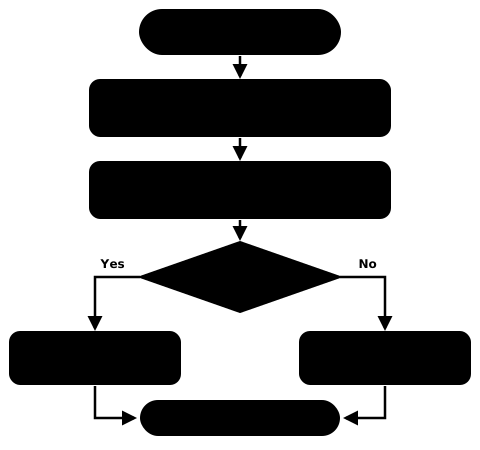
- Hello, Priya speaking. Saying your name when you pick up — the clearest way at the office.
- Good morning, Sharma Traders. How can I help you? When you answer a company phone.
- Hi, this is Arjun from BlueLeaf Design. On the phone, your name = "This is…", not "I am…".
- Could I speak to Ms Rao, please? When you want to talk to one particular person.
- I'm calling about the invoice you sent last week. "I'm calling about…" = the topic you are calling for.
- Is this a good time to talk? = Can you talk now? A polite question, especially on a mobile.
The first ten seconds
Greeting + name + purpose: "Hi, this is Arjun from BlueLeaf. I'm calling about the invoice." On the phone, always give your name with "This is…" — not "I am Arjun this side".
33.2 Who is calling — asking, holding, taking a message
If you answer the office or home phone and the call is for someone else, you have three jobs: ask the caller's name, ask them to hold, or take a message. For all three there are soft lines in place of a blunt "Who are you?".
| You want to | English line | Listen |
|---|---|---|
| Ask who is calling | May I ask who's calling? | |
| Ask them to wait a minute | Could you hold on a moment, please? | |
| Connect the call | I'll put you through. | |
| Say the person is not available | I'm afraid she's in a meeting right now. | |
| Offer to take a message | Can I take a message? | |
| Ask them to call you back | Could you ask her to call me back? | |
| Wrong number | Sorry, I think you have the wrong number. |
A soft question, a clear job
Say "May I ask who's calling?" in place of "Who are you?". And before giving bad news, add "I'm afraid…" — "I'm afraid he's not in today." "I'm afraid" does not mean fear here; it means "I'm sorry to say, but…".
Mini-dialogue — the office reception
Situation: you are at reception. A call comes in for your manager, Ms Rao, but she is in a meeting.
- You: Good afternoon, Zenith Travels. How can I help you? Greeting + company + an offer to help.
- Caller: Hi, could I speak to Ms Rao, please? The caller did not give a name — now you have to ask.
- You: Of course. May I ask who's calling? Not "Who are you?" — this is the soft way.
- Caller: It's Karan Mehta from Skyline Hotels. On the phone, "It's…" and "This is…" are both correct.
- You: Thank you, Mr Mehta. I'm afraid she's in a meeting right now. Can I take a message? Bad news with "I'm afraid", and a solution straight away.
- Caller: Yes, could you ask her to call me back before five? The message: call back before five o'clock.
- You: Sure. I'll make sure she gets the message. A line that gives reassurance.
33.3 Could not hear, did not understand
Half the problems on the phone are not about English — they are about the network. The fear is that asking again will seem rude — but saying "yes, yes" while guessing costs far more. Spot the problem, and say its line.
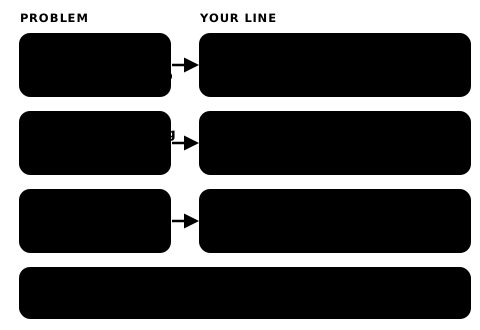
- Sorry, could you repeat that? The most useful line. Even "Sorry?" alone works — let your voice rise.
- Sorry, I didn't catch your name. "catch" = to hear and take in — I could not hear the name.
- Sorry, you're breaking up. Can I call you back? = Your voice is cutting out — I will call you again.
- Could you speak a little more slowly, please? = A little slower, please. Nobody minds.
- Just to confirm, you said Thursday at three? = Let me make sure: Thursday, 3 o'clock? Misunderstandings stop here.
Ask, do not guess
When you do not understand, do not say "What?" or "Haan?" — say "Sorry, could you repeat that?" And repeat every important date, time and number with "Just to confirm…". A "yes, yes" said while guessing is the most expensive mistake.
33.4 Spelling names and numbers
On the phone B, D, P, V and T sound alike; so do M and N, and F and S. So, with each letter, add a word that is easy to recognise. This list is used all over the world — memorise it, or at least the letters of your own name.
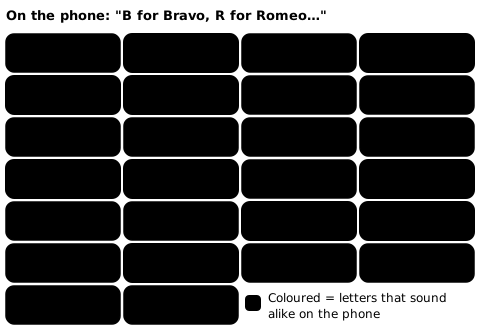
- My surname is Rawat. That's R for Romeo, A for Alpha, W for Whiskey, A for Alpha, T for Tango. Start the spelling with "That's…" and pause a little after each letter.
- My number is nine eight two zero one, four five six seven eight. Say the number in groups of 5 + 5, with a pause in between. Nobody can write ten digits in one breath.
- That's double seven, not one seven. "77" = double seven. Common in India and the UK; Americans say "seven seven".
- My email is priya dot sharma at gmail dot com. . = dot, @ = at, _ = underscore, - = hyphen or dash, / = slash.
How to spell
Letter + for + word: "S for Sierra, H for Hotel." Say numbers in groups (98201 · 45678), and in an email say dot, at, underscore. Practise the spelling of your own name, surname and email aloud once today.
33.5 Leaving a voicemail
After the beep, many people panic and hang up, or say anything without a pause. A voicemail is a short script — thirty seconds, five parts. If you have planned it, it is easy.
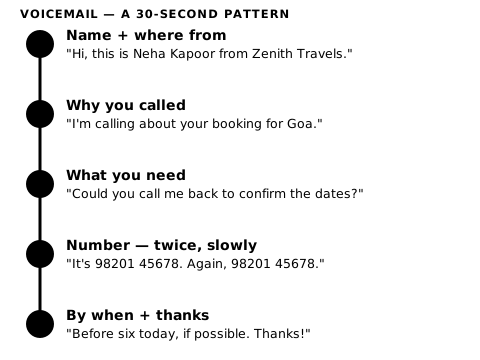
- Hi, this is Neha Kapoor from Zenith Travels. Name + company.
- I'm calling about your booking for Goa next month. The reason for the call — in one line.
- Could you call me back to confirm the dates? What you want them to do — in clear words.
- My number is nine eight two zero one, four five six seven eight. Again, nine eight two zero one, four five six seven eight. The number twice, and slowly on purpose.
- Before six today would be great. Thanks, bye! By when + thanks. That is all — the thirty seconds are up.
The voicemail pattern
Name → reason → what you need → number (twice, slowly) → by when + thanks. No more than thirty seconds. Have the first line ready in your mind before the beep — "Hi, this is…"
33.6 Video call — "You're on mute"
A video call brings three new troubles — mute, camera and screen share. And English has completely ready lines for each, which come up in every meeting. Learn to recognise them as soon as you hear them.
| Situation | English line | Listen |
|---|---|---|
| At the start | Can everyone hear me OK? | |
| Someone's mic is off | Sorry, I think you're on mute. | |
| Your own mic was off | Sorry, I was on mute. | |
| You want to show your screen | Let me share my screen. | |
| Checking they can see it | Can you see my screen? | |
| The video froze | You froze for a second there. | |
| Two people spoke at once | Sorry, go ahead. | |
| Weak internet | I'll turn my camera off. My connection is a bit weak. |
Four rules for video calls
Mute when you are not speaking. Keep the camera at eye level. Join two minutes early. In a big meeting, say your name before you speak: "This is Ravi — quick question." And if two people start together: "Sorry, go ahead." — let the other person go first.
33.7 Ending the call
If "bye" comes suddenly on the phone, it feels like you hung up on them. Close with three things: what was agreed, the next step, and thanks. Then bye — and wait a moment after bye before you put the phone down.
- So, just to sum up, you'll send the report by Friday. What was agreed — repeat it in one line.
- I'll send you an email with the details. The next step — from your side.
- Is there anything else I can help you with? = Anything more? Use it when you are the one helping.
- Thanks for your time. Talk to you soon. Bye! Thanks + we'll talk soon + bye.
Mini-dialogue — the end of a call with a vendor
Situation: you talked to the printer company about an order. Now you are wrapping up the call.
- You: Great. So, just to confirm, the delivery is on Tuesday morning? What was agreed — make sure of it.
- Vendor: That's right, between nine and eleven. "That's right" = yes, correct.
- You: Perfect. Could you send me the invoice by email? The next step, from their side.
- Vendor: Sure, I'll send it this afternoon. Anything else? "Anything else?" — now the signal that the call is ending.
- You: No, that's everything. Thanks for your help. = That is all. Clear and polite.
- Vendor: You're welcome. Have a good day! A warm ending.
- You: You too. Bye! Wait one second after bye, then put the phone down.
33.8 The mistakes we really make
You hear these lines every day in India, and people in the country understand them. But on a call with a client, an interview or someone abroad, the same lines sound "translated" at once.
Common phone mistakes
- Wrong: Hello, I am Rahul this side.
- Right: Hi, this is Rahul from Infotech.
-
Why: A translation of the Hindi "is taraf se Rahul". On the phone, your name = "This is…" or "It's…"
-
Wrong: Who is speaking? / Who are you?
- Right: May I ask who's calling?
-
Why: A blunt "Who are you?" sounds very rude. At the office, always use the soft question.
-
Wrong: Am I audible?
- Right: Can you hear me OK?
-
Why: "Audible" is a correct word, but only Indian English uses it in this question. Everywhere else it is "Can you hear me?"
-
Wrong: Your voice is cutting.
- Right: You're breaking up. / The line is bad.
-
Why: A translation of "awaaz kat rahi hai". In English a voice "breaks up".
-
Wrong: (Picking up the phone) Tell me.
- Right: Hi Rahul! How can I help? / Hi, what's up?
- Why: A translation of "haan, bolo" — in English it sounds like an order. Greeting first, then the question.
33.9 Practice — Phone and video calls
Exercise 1
You are at reception and need to know the caller's name. Which is the most polite line?
- May I ask who's calling?
- Who are you?
- Who is speaking there?
- Tell your name first.
Answer
May I ask who's calling?
'May I ask…' is a soft question. 'Who are you?' sounds rude and suspicious on the phone.
Exercise 2
The network is bad and the other person's voice keeps breaking. What do you say?
- Sorry, you're breaking up.
- Your voice is cutting.
- Am I audible?
- What? What?
Answer
Sorry, you're breaking up.
In English a phone voice 'breaks up'. 'Your voice is cutting' is a word-for-word translation from Hindi.
Exercise 3
How do you say '_' in an email address over the phone?
- underscore
- dash
- slash
- dot
Answer
underscore
_ = underscore, - = hyphen or dash, / = slash, . = dot. If the email goes wrong, the whole job gets stuck.
Exercise 4
Hi, ___ is Arjun from BlueLeaf Design.
Hint: The word for giving your name on the phone — not 'I am'.
Answer
this
On the phone: 'This is Arjun' or 'It's Arjun'. The other person cannot see you, so 'this'.
Exercise 5
Sorry, could you ___ that, please? The line is bad.
Hint: Say it again.
Answer
repeat / say
'Could you repeat that?' — the most useful line when you cannot hear. Better than guessing.
Exercise 6
One word in this video-call line is Indian English — tap it.
Hi everyone, am I audible?
Answer
Wrong word: audible.
Corrected: Hi everyone, can you hear me?
'Am I audible?' is only said in India. Everywhere else: 'Can you hear me?'
Exercise 7
Put the words in the right order — you want to speak to one particular person.
Words: to / Could / speak / Ms / I / Rao / please
Answer
Could I speak to Ms Rao please
Could I + verb… — the most polite pattern for a request.
Exercise 8
Match each line to its meaning.
| A | B |
|---|---|
| You're on mute. | she is not here, do you want to leave a message? |
| I'll put you through. | your video got stuck |
| Can I take a message? | your mic is off |
| You froze. | I am connecting your call |
Answer
You're on mute. — your mic is off; I'll put you through. — I am connecting your call; Can I take a message? — she is not here, do you want to leave a message?; You froze. — your video got stuck
These four lines are so common that you should understand them the moment you hear them — without translating.
Exercise 9
You could not hear the other person. Say this line.
Sorry, could you repeat that
Answer
Say: Sorry, could you repeat that
Join 'could you' together — 'kud-ju'. Starting with 'Sorry' makes the line softer.
Exercise 10
A colleague is talking in a meeting but there is no sound. Tell them.
You're on mute
Answer
Say: You're on mute
'You're' = 'yor'. Three words, one breath — and smile as you say it.
Exercise 11
You have shared your screen. Now ask.
Can you see my screen
Answer
Say: Can you see my screen
A yes/no question — the voice rises on 'screen'.
What next?
Today say the spelling of your name, surname and email, with the "for" words, aloud three times. The next time you call customer care, use at least one line from this chapter.