Chapter 35: Presenting & storytelling
Giving a presentation — beginning, middle, end
A college seminar, a Monday office meeting or a client pitch — standing up and speaking English in front of everyone is the biggest fear. But a good presenter's English is not the most fancy; their structure is the clearest. The listener knows at every moment where we are and where we are going. This chapter gives you that structure — ready-made lines, a story pattern, a way to handle questions, and tips for managing nerves.
- 1The structure of a presentation — open, signpost, body, close
- 2The opening — the first thirty seconds
- 3Signposting — showing the listeners the way
- 4Telling a story — a short arc
- 5The ending — what stays in the mind
- 6Questions and answers — when you know, and when you do not
- 7Nerves, voice and pace
- 8The mistakes we really make
35.1 The structure of a presentation — open, signpost, body, close
A listener cannot turn the page back — whatever has gone by is gone. That is why structure in spoken English matters even more than in writing. The old rule is still the most useful: tell them what you will tell them, tell them, then tell them what you told them.
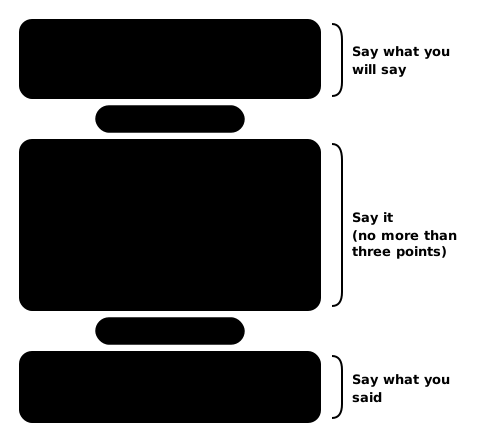
The structure
Open → Signpost → Body → Close. Say what you will say, say it, then say what you said. In the Body, no more than three points, and one example with each point. People remember three points; with seven points everyone forgets.
35.2 The opening — the first thirty seconds
In the first thirty seconds the listeners decide whether to look at their phones or at you. Do not waste that time on a "mic check" and "sorry" — go straight to a hook, then introduce yourself.
- Good morning, everyone. Thanks for being here. Greeting + thanks — a clear, warm start.
- Let me start with a quick question. How many of you checked your phone in the last ten minutes? Hook: a question. People raise their hands — and wake up.
- Here's a number that surprised me: we lose three customers every single day. Hook: a surprising number.
- I'm Neha, and I lead the design team at Brightline. Introduction — one line, that is all. Not your whole resume.
- Today, I'm going to talk about how we can fix that. Today's topic — "talk about", not "talk on the topic of".
- I'll take about fifteen minutes, and there'll be time for questions at the end. How long it will take and when questions come — the listener feels relieved.
Hook first, introduction later
Begin with a question, a number, or a one-line story. Never with "Sorry, I'm not a good speaker" or "Am I audible?". If you apologise, the listener thinks you are weak — before you have even spoken.
35.3 Signposting — showing the listeners the way
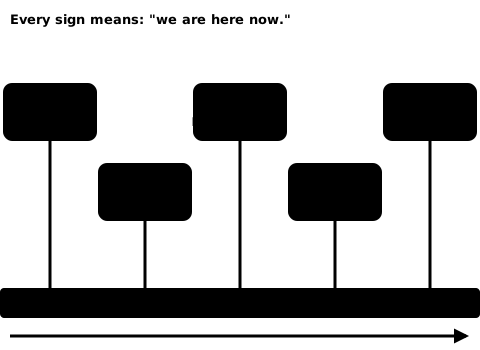
The listeners are following your voice, not your slides. Signposts are short phrases that work like road signs: now we are here, now we are turning here.
| Purpose | Signpost | Listen |
|---|---|---|
| Giving the map | I've divided this talk into three parts. | |
| The first point | Let's start with the problem. | |
| Moving on | That brings me to my second point. | |
| An example | Let me give you an example. | |
| Linking back | As I mentioned earlier, cost is the big issue. | |
| Stressing a point | The key point here is this. | |
| Wrapping up | So, to sum up, we need three things. |
A sign at every turn
A signpost before every new part: "Moving on…", "That brings me to…", "Let me give you an example.", "To sum up…" Pause for a moment after a signpost — the listener turns with you, then you move on.
35.4 Telling a story — a short arc
People forget numbers and bullet points by evening; a story is remembered for weeks. Every good short story climbs one hill — a calm start, a problem, an attempt, a turn, a result and a lesson.
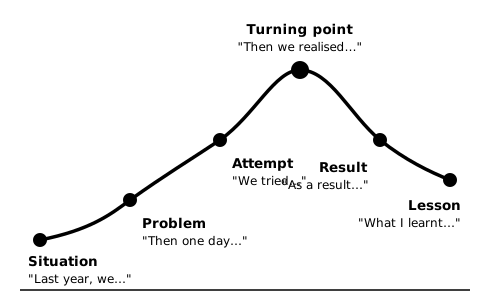
- Last year, our app had about ten thousand users. Situation — everything was going well.
- Then, in March, half of them suddenly stopped using it. Problem — this is where the story comes alive.
- We tried discounts, new features, even a new logo. Nothing worked. Attempt — pause after "Nothing worked".
- Then we called twenty users, and we realised the login was too slow. Turning point — "we realised" = we understood it.
- We fixed the login in two weeks, and people started coming back. Result.
- What I learnt was simple: ask your users before you guess. Lesson — this is the line people take home.
The story pattern
Situation → Problem → Attempt → Turning point → Result → Lesson. Under a minute, in the past tense, and always with a lesson at the end. A story without a lesson is just an anecdote; the lesson makes it proof of your point.
35.5 The ending — what stays in the mind
We are often weakest at the end — we get tired and say "that's all" and run. But the listener remembers the last line best. Write it out in advance.
- So, to sum up, we covered three things: the problem, the plan, and the cost. Summary — the three points again, in one line.
- If you remember just one thing from today, remember this: speed matters more than features. One takeaway — pause after "remember this".
- So my request is simple: let's run a two-week trial. If you need something — ask for it clearly.
- Thank you. I'm happy to take any questions. Use this line in place of "That's all from my side".
The ending formula
Summary + one takeaway + thanks. In place of "That's all from my side": "Thank you. I'm happy to take questions." Write the last line in advance and learn it by heart — it will come out even when you are nervous.
35.6 Questions and answers — when you know, and when you do not
People are most afraid of Q&A, because there is no script. But an answer also has a pattern — and the most important thing: if you do not know, do not make it up.
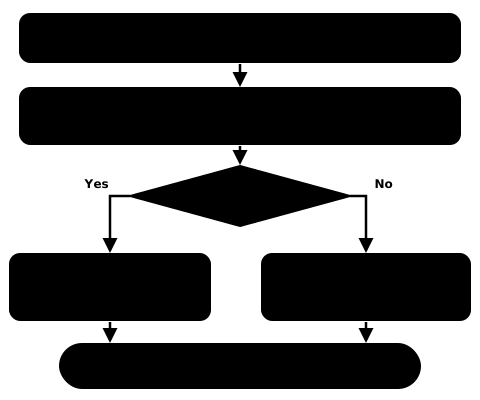
- That's a really good question. Only sometimes — if you say it for every question, it will sound hollow.
- If I understand correctly, you're asking about the timeline. Repeating the question — "if I have understood you right…"
- I don't have that number with me, but I'll email it to you today. When you do not know — honesty + a promise.
- Can I come back to that at the end? For when a question comes in the middle and answering now would break your flow.
- Does that answer your question? A check after the answer — a polite way to close the door.
If you do not know, do not make it up
A bare "I don't know" sounds weak, and a made-up answer is worse. "I don't have that right now, but I'll get back to you by Friday" — honest and strong at once. And if you made the promise, do send the email by Friday.
Mini-dialogue — questions after a presentation
Situation: you proposed a trial of new software. Your manager has two questions — you know the answer to one, and not the other.
- Manager: How long will the trial take? = How long will the trial run?
- You: So you're asking about the timeline. It'll take about two weeks. Repeat + a short answer.
- Manager: And what will it cost us? Now the hard question — you do not have the exact number.
- You: I don't have the exact figure with me, but I'll email it to you this afternoon. Honesty + a promise, with a time.
- Manager: That's fine. Thanks, Neha. A far better effect than a made-up number.
- You: Thank you. Does anyone else have a question? Open the door for the next question.
35.7 Nerves, voice and pace
Everyone gets nervous — even great speakers. The only difference is that prepared people handle it. And the first effect of nerves is on your pace: we start to speak fast.
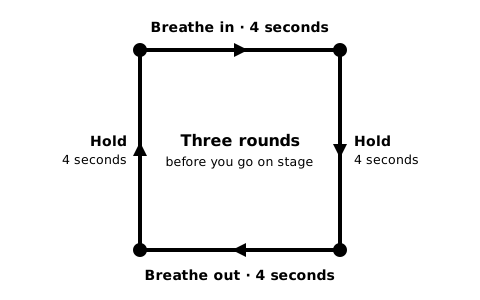
Five things for nerves
1. Learn the first three lines by heart — if the start goes well, the rest follows.
2. Practise at least three times standing up, aloud — reading in your head is not practice.
3. Three rounds of box breathing before you go.
4. Find two or three smiling faces in the audience and talk to them.
5. If you get stuck on a word, do not fill with "umm" — stay silent for a moment. Silence feels much longer to you than it is.
Pace and stress: whatever feels "slow" to you is exactly right for the listener. A short pause at each comma, a full breath at each full stop, and stress on the important word. Listen:
- Last year / we lost / our biggest client. // Today / I'll show you / how we won them back. / = a short pause, // = a full breath. Stress the bold words. The voice falls at the end of a statement.
35.8 The mistakes we really make
Most of these mistakes have come down from the college seminar — everyone heard them, everyone repeated them. Catch them once, and your presentation will sound more professional at once.
Common presentation mistakes
- Wrong: Myself Neha and today I will be presenting on the topic of sales.
- Right: Hi, I'm Neha. Today I'll talk about our sales.
-
Why: "Myself…" is not how you introduce yourself, and "presenting on the topic of" is heavy. Short and direct.
-
Wrong: I will explain about the new process.
- Right: I'll explain the new process.
-
Why: "Explain" and "discuss" do not take "about". "Talk about" does.
-
Wrong: Any doubts?
- Right: Any questions?
-
Why: In Indian English "doubt" = question. In the rest of the world "doubt" = disbelief — "Any doubts?" sounds like "does anyone doubt me?"
-
Wrong: That's all from my side.
- Right: Thank you. I'm happy to take questions.
-
Why: A translation of "meri taraf se itna hi" — it makes the ending flat. End with a summary and a warm thank-you.
-
Wrong: As you can see in this slide…
- Right: As you can see on this slide…
- Why: A slide, a screen and a page are all surfaces — on the slide, on the screen, on page 5.
35.9 Practice — Presentations
Exercise 1
Which is the best way to start a presentation?
- Let me start with a quick question.
- Sorry, I am not a good speaker.
- Am I audible to all?
- Myself Neha, I will present.
Answer
Let me start with a quick question.
Hook first — a question, a number or a story. Starting with an apology or a mic check wastes the first thirty seconds.
Exercise 2
The first point is over and you move to the second. Which is the right signpost?
- That brings me to my second point.
- Now second point is coming.
- Next is the next point.
- Please see second.
Answer
That brings me to my second point.
'That brings me to…' tells the listener clearly that one part has ended and a new one has begun.
Exercise 3
In Q&A you get a question you do not know the answer to. What is the best reply?
- I don't have that figure now, but I'll email it to you today.
- (Guess any number)
- That question is not relevant.
- (Stay silent and move to the next slide)
Answer
I don't have that figure now, but I'll email it to you today.
Honesty + a promise. If a made-up answer is caught, trust in the whole presentation is lost.
Exercise 4
So, to sum ___, we need more time and a bigger team.
Hint: The signpost for the ending — 'to wrap up'.
Answer
up
'To sum up' = in short. The most common signpost for an ending.
Exercise 5
Let me give you an ___. Last month, two clients left.
Hint: A sample case.
Answer
example
'Let me give you an example' — an example after a point, so the idea lands on the ground.
Exercise 6
One preposition in this line is wrong — tap it.
As you can see in this slide, sales went up.
Answer
Wrong word: in.
Corrected: As you can see on this slide, sales went up.
A slide is a surface — on the slide, on the screen, on page 5.
Exercise 7
Put the words in order — give the audience the map.
Words: have / I / talk / parts / divided / three / into / this
Answer
I have divided this talk into three parts
Present perfect (have divided) + 'into three parts' — the line for giving a roadmap at the start.
Exercise 8
Match each story line to its part of the arc.
| A | B |
|---|---|
| Last year, we had ten thousand users. | Turning point |
| Then half of them suddenly left. | Lesson |
| Then we realised the login was slow. | Situation |
| What I learnt was simple: ask first. | Problem |
Answer
Last year, we had ten thousand users. — Situation; Then half of them suddenly left. — Problem; Then we realised the login was slow. — Turning point; What I learnt was simple: ask first. — Lesson
It starts with the situation, the problem brings tension, the turning point is the turn, and the lesson is the end — this is the arc.
Exercise 9
Say the first line of a presentation — with a smile.
Good morning, everyone. Thanks for being here
Answer
Say: Good morning, everyone. Thanks for being here
A short pause after 'everyone'. Join 'Thanks for' together — 'thanks-fer'.
Exercise 10
Now say a signpost.
That brings me to my second point
Answer
Say: That brings me to my second point
Stress 'second' — so the listener knows a new part has begun.
Exercise 11
The end of a presentation — in place of 'That's all from my side'.
Thank you. I'm happy to take questions
Answer
Say: Thank you. I'm happy to take questions
A full breath after 'Thank you'. Let your voice fall at the end, and keep your eyes on the audience.
What next?
Make a two-minute presentation on your work or studies — one hook, three points, one short story, one ending. Record it on your phone, listen once, and fix just one thing: pace.