Chapter 56: Real-world listening
Real-world English — from announcements to interviews
A station announcement is made only once. A newsreader doesn't stop. In a lecture the professor talks for 40 minutes, and in an ad the most important thing is said the fastest. In real-world listening you cannot catch everything — and you don't need to. What you need is a strategy: predict first, then key words, signposts, numbers, and good notes. This chapter has six real formats (all invented, but just like the real thing) — each with its own rules.
- 1Four listening strategies
- 2How to take notes
- 3Railway and airport announcements
- 4The weather forecast
- 5A news bulletin
- 6Part of a lecture — the story of the PIN code
- 7An interview — questions and answers
- 8An advertisement — the language of selling
56.1 Four listening strategies
An advanced listener doesn't hear faster — they listen smart. They know what to wait for. This cycle works for every format:
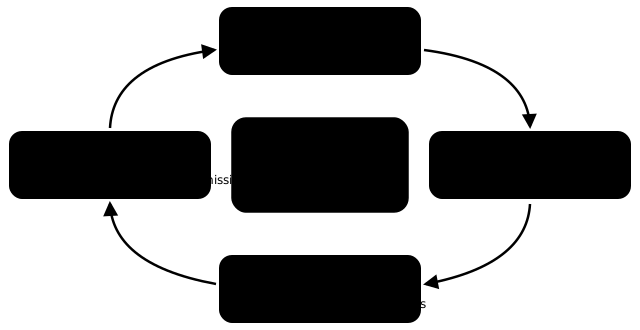
Predict first, then listen
Before you listen, spend 10 seconds thinking: who is speaking, why, and which words are likely? Announcement = train, platform, minutes. Forecast = degrees, rain, wind. A brain that is already waiting can catch even fast English.
Signposts — words that show where the talk is going
| Signpost | What it tells you |
|---|---|
| However / But | the opposite is coming — pay attention! |
| On the other hand | the other side, a comparison |
| For example | an example — the main point has already been made |
| In other words | the same point, in simpler words |
| So / As a result | a result |
| Finally / To sum up | the last point / a summary |
Numbers and names
- Gate thirteen, not gate thirty. thir-TEEN (stress at the back, long "n") vs THIR-ty (stress at the front). The wrong gate = a missed flight.
- That's Varghese, V-A-R-G-H-E-S-E. Names are often spelt out. Be sure of the letter sounds: G (jee) vs J (jay), E (ee) vs I (eye).
- The fourteen thirty train — that's 2:30 p.m. At stations and airports the 24-hour clock is used: fourteen thirty = 2:30 in the afternoon. (See: Number, date, time, paise.)
56.2 How to take notes
For a lecture, interview or news item, never write full sentences in your notes. Only key words, numbers and symbols. Divide the page into three parts:

| Symbol | Meaning |
|---|---|
| ↑ / ↓ | rise / fall (prices ↑, temp ↓) |
| → | result, leads to, changes into |
| = / ≠ | means / is different from |
| b/c · w/ · w/o | because · with · without |
| ~ · approx. | about, roughly |
Notes = words + numbers + symbols
If you write full sentences, you'll miss the next one. Write nouns and numbers, and use ↑ ↓ → in place of verbs. "Fuel costs will be cut by nearly 40%" → fuel cost ↓ ~40%.
56.3 Railway and airport announcements
Announcements always follow the same structure: get your attention → which train/flight → what has changed → what you have to do. The language is very formal (passengers are requested to…), and echoes make words blurry. So predict: the number, the platform/gate, the time.
| Phrase | Meaning |
|---|---|
| scheduled to depart | the planned time of leaving |
| running late by | is delayed by this much |
| foot overbridge | a bridge for walking over the tracks (FOB) |
| final boarding call | the last call to get on the flight |
| proceed to | (formal) go to |
🎧 Listen to two announcements
- Railway station — Pune Junction There are two changes — catch both.
- Airport — final boarding call "immediately" twice — time is running out.
Transcript
Railway: Attention, please. Train number 12794, the Deccan Pearl Express from Pune to Hyderabad, scheduled to depart at 14:30, is running late by approximately 45 minutes. This train will now depart from platform number 6, instead of platform number 2. Passengers are requested to use the foot overbridge to reach platform 6. Please do not cross the railway tracks. We regret the inconvenience caused.
Airport: Good evening, ladies and gentlemen. This is the final boarding call for SkyIndus flight SI 712 to Kochi. Passengers on this flight are requested to proceed immediately to gate number 23, where boarding is about to close. Passenger Shalini Varghese, travelling to Kochi, please report to gate 23 immediately. Thank you.
- This train will now depart from platform number six, instead of platform number two. The train will now leave from platform 6, not 2. The old information comes after "instead of" — the new number comes first.
- We regret the inconvenience caused. We are sorry for the trouble. When you hear this line, the announcement is over — no new information is coming.
A common mistake with announcements
- Wrong: "…platform six, instead of platform two" → I go to platform 2 (I remembered the last number).
- Right: The new platform = 6. The number after "instead of" is the old one.
- Why: The ear remembers the last word. So stop and think at words like "instead of / not / no longer": which is the new one and which is the old one?
56.4 The weather forecast
A forecast always has three things: what will happen (rain, sun, wind), when (tonight, by tomorrow morning, the weekend) and how much (degrees, km per hour). At the end there is often a piece of advice. Listen: how much will the temperature fall, and what were the fishermen told?
| Phrase | Meaning |
|---|---|
| humid | damp and sticky air (HYOO-mid) |
| relief is on the way | something better is coming soon |
| showers | light rain that lasts a short time |
| are advised not to | advice: please don't (a warning) |
🎧 Listen to the forecast
- Weather — Mumbai and the Konkan coast For your notes: today → tomorrow → weekend. One or two words for each.
Transcript
Here's the weather for Mumbai and the Konkan coast. After two very hot and humid days, relief is finally on the way. Light showers are expected in the city tonight, and by tomorrow morning the rain will become heavier, especially in the northern suburbs. Temperatures will drop from 34 degrees to around 29. Winds from the south-west may reach 50 km per hour along the coast, so fishermen are advised not to go out to sea until Thursday. However, the weekend looks brighter, with sunshine returning on Saturday. If you're commuting tomorrow, leave a little early and carry an umbrella.
- Winds may reach fifty kilometres per hour, so fishermen are advised not to go out to sea. The wind could be as fast as 50 km/h, so fishermen are told to stay out of the sea. The reason (strong wind) → "so" → the advice.
- However, the weekend looks brighter. But the weekend looks better. "However" = the forecast turns the other way — sunshine after the rain.
56.5 A news bulletin
In news, the most important point is in the first sentence (who, what, when) — the other sentences add detail. Each new item starts with "In other news…" or "And finally…". This bulletin is invented — the city and events are made up. Listen: what is the first story about, and what are people unhappy about?
| Phrase | Meaning |
|---|---|
| announced | made something public officially |
| officials say | the information comes from authorities (the source) |
| commuter groups | organisations of people who travel to work daily |
| rice husk | the outer covering of rice grains |
| represent | to speak or compete on behalf of a country or group |
🎧 Listen to the bulletin (2 stories)
- Story 1 — electric buses After "However" comes the other side — the criticism.
- Story 2 — science prize "proud, but not surprised" — the teacher already believed in the children.
Transcript
Good evening, and here are tonight's main stories. The city of Ambarpur will get 200 new electric buses by the end of this year, the transport department announced today. Officials say the buses will cut fuel costs by nearly 40% and reduce air pollution on the busiest routes. However, some commuter groups have asked why ticket prices are not coming down as well. The first 50 buses are expected on the roads in August.
In other news, four students from a government school in Ranchi have won first prize at a national science fair. Their project, a low-cost water filter made from clay and rice husk, costs less than ₹300 to build. The students will now represent India at an international competition next spring. Speaking to reporters, their teacher said she was proud, but not surprised.
- The buses will cut fuel costs by nearly forty percent. The buses will reduce fuel costs by almost 40%. "nearly" = a little less (38–39%); "over" would mean more. In notes: fuel ↓ ~40%.
- Some commuter groups have asked why ticket prices are not coming down as well. Some passenger groups are asking why tickets aren't getting cheaper too. News often reports a "complaint" in the form of a question like this.
The first sentence of a news item = the whole story
For the gist, listen carefully to the first sentence of each item — the who, what and when are all there. The other sentences add numbers and opinions. "In other news" = a new topic, a new block in your notes.
56.6 Part of a lecture — the story of the PIN code
A lecture is long, so the lecturer (here the invented Dr Meenakshi Rao) gives the map herself: Today I want to talk about… So, how does it work? For example… Finally… In other words…. These signposts become the headings in your notes (see the template above). Listen: why was the PIN code introduced, and what does the first digit show?
| Phrase | Meaning |
|---|---|
| stands for | is the short form of (an abbreviation) |
| digit | a single number symbol (0–9) |
| narrows it down | makes the choice smaller and more exact |
| sorting district | the area where the post is sorted |
| I'd argue that | my opinion, with reasons, is that |
🎧 Listen to the lecture (2 parts)
- Part 1 — why? "Why? Well, …" — the lecturer asks a question and answers it herself. The answer = a key point.
- Part 2 — how? The last question is a trailer for the next part — write "GPS? → next" in your notes.
Transcript
Good morning, everyone. Today I want to talk about something you write almost every week, but probably never think about: the PIN code. PIN stands for Postal Index Number, and it was introduced in India in 1972. Before that, letters were often delayed or lost. Why? Well, many towns had similar names, and letters were addressed in many different languages. So the postal department needed a system that worked in numbers, not words.
So, how does it work? A PIN code has six digits, and each part has a job. The first digit tells you the region. For example, 1 covers Delhi and much of the north, while 6 covers Tamil Nadu and Kerala. The second digit narrows it down to a sub-region, and the third shows the sorting district. Finally, the last three digits point to the individual post office. In other words, the number moves from big to small, just like an address. Now, you might ask: do we still need PIN codes in the age of GPS? I'd argue that we do, and here's why.
- One covers Delhi and much of the north, while six covers Tamil Nadu and Kerala. 1 is for Delhi and much of the north, whereas 6 is for Tamil Nadu and Kerala. Here "while" is not about time; it shows a contrast (whereas).
- In other words, the number moves from big to small, just like an address. That is, the number goes from large areas to small ones, like an address. "In other words" = a summary — this line should go into your summary.
A mistake in lecture notes
- Wrong: Notes: "For example, one covers Delhi and much of the north…" (kept writing the full sentence, missed the next point)
- Right: Notes: "1st = region (eg 1 = N, 6 = TN/KL)"
- Why: What comes after "For example" is an example, not the main point. Write the example briefly, and make sure you get the main point (first digit = region).
56.7 An interview — questions and answers
In a radio interview the host asks a question and the guest answers with a story. The real answer often comes not at the start but at the end — "That's when I realised…", "For me, that was the moment…". This interview is invented: Kamla ji runs a mobile library in a village. Listen: how did it start, and when did she feel the work was succeeding?
| Phrase | Meaning |
|---|---|
| by accident | without planning, by chance |
| access | the ability to reach or get something |
| convincing | making someone believe or agree |
| a waste of time | time spent without any benefit |
🎧 Listen to the interview (2 parts)
- Part 1 — the beginning Questions end with a "?" — the answer starts right there.
- Part 2 — difficulties and success "But the bigger challenge…" — the first answer (money) was not the real answer.
Transcript
Host: Kamla ji, thank you for joining us. Your mobile library now visits forty villages. How did it all start?
Kamla: Thank you for having me. Honestly, it started by accident. In 2019, I gave my old books to a school near my village, and within a week, the children had read all of them. They kept asking for more. That's when I realised the problem wasn't interest. It was access.
Host: And the library is actually a bus, isn't it?
Kamla: Yes, an old school bus. We removed the seats, added shelves, and painted it bright yellow, so children can see it coming from far away.
Host: What has been the biggest challenge?
Kamla: Money, of course. Fuel is expensive, and books get damaged. But the bigger challenge was convincing some parents that story books are not a waste of time.
Host: And has that changed?
Kamla: Slowly, yes. Last year, three mothers asked if they could borrow books for themselves. For me, that was the moment I knew it was working.
- The problem wasn't interest. It was access. The problem was not a lack of interest, but a lack of access to books. Inference: the children wanted to read; they simply had no books.
- Three mothers asked if they could borrow books for themselves. Three mothers asked to borrow books for themselves. Parents who once thought books were a "waste of time" now want to read — that is the success.
56.8 An advertisement — the language of selling
Listening to an ad is a different skill: you don't just understand, you also have to judge. An ad has questions (Tired of…?), best-of words (quietest), commands (Order today), time pressure (before Sunday) and "everyone is buying" (thousands of families). And the most important part — the terms and conditions — comes last and fastest. This product is invented.
| Technique | In the ad | Effect |
|---|---|---|
| Rhetorical question | Tired of sleepless nights? | reminds you of a pain |
| Superlative | the quietest fan we have ever made | makes it seem the best |
| "up to" | save up to 50% | a maximum — not guaranteed |
| Urgency | Order before Sunday | a quick decision |
| Social proof | Thousands of families… | everyone is buying it |
🎧 Listen to the ad
- Radio ad — CoolNest Breeze fan Count them: how many commands (imperatives) and how many questions?
Transcript
Tired of sleepless summer nights? Meet the new CoolNest Breeze, the quietest ceiling fan we have ever made. Its smart sensor adjusts the speed automatically, so you sleep better and save up to 50% on electricity. Imagine coming home to a cool, calm room every single night. And that's not all! Order before Sunday and get free installation, plus a five-year warranty. Thousands of families have already made the switch. Why wait? Visit your nearest store or order online today. CoolNest Breeze. Feel the difference. Terms and conditions apply. Savings compared with a standard 75-watt fan.
Spot the ad's tricks
- Wrong: "Save up to 50%" = your bill will be cut in half.
- Right: "up to 50%" = at most 50% — you might save only 10%.
- Why: And the fine print says the comparison is with an old 75-watt fan. In a home that already has a new fan, the saving will be even smaller.
Ad = promise + pressure + fine print
In every ad, listen for three things: what is promised (up to?), what pressure is applied (before Sunday), and what is hidden in the last, fastest line. The slowest line sells; the fastest line tells the truth.
56.9 Practice — Real-world English
Exercise 1
What is the best strategy before listening to an announcement?
- Predict — wait for the number, platform, time
- Try to write every word
- Listen only to the last line
- Close your eyes and think of nothing
Hint: The first step of the cycle.
Answer
Predict — wait for the number, platform, time
Predict → Gist → Detail → Check. A brain that is waiting catches numbers faster.
Exercise 2
Match each signpost to its job.
| A | B |
|---|---|
| However | the same point, in simpler words |
| For example | the last point |
| In other words | the opposite point |
| Finally | an example |
Answer
However — the opposite point; For example — an example; In other words — the same point, in simpler words; Finally — the last point
Signposts are the map of the talk — start a new block in your notes as soon as you hear them.
Exercise 3
What has changed for the Deccan Pearl Express? (gist)
Read this aloud or have someone read it to you:
Attention, please. Train number one two seven nine four, the Deccan Pearl Express from Pune to Hyderabad, scheduled to depart at fourteen thirty, is running late by approximately forty-five minutes. This train will now depart from platform number six, instead of platform number two.
- It is late and the platform has changed.
- It has been cancelled.
- It will leave early.
- It now goes to Mumbai.
Answer
It is late and the platform has changed.
Transcript: “Attention, please. Train number one two seven nine four, the Deccan Pearl Express from Pune to Hyderabad, scheduled to depart at fourteen thirty, is running late by approximately forty-five minutes. This train will now depart from platform number six, instead of platform number two.”
Two changes: 'running late by approximately forty-five minutes' and 'platform number six, instead of platform number two'.
Exercise 4
Which platform should passengers go to?
Read this aloud or have someone read it to you:
This train will now depart from platform number six, instead of platform number two. Passengers are requested to use the foot overbridge to reach platform six. Please do not cross the railway tracks.
- platform 6
- platform 2
- platform 4
- platform 12
Answer
platform 6
Transcript: “This train will now depart from platform number six, instead of platform number two. Passengers are requested to use the foot overbridge to reach platform six. Please do not cross the railway tracks.”
After 'instead of' comes the old platform (2). The new one = 6.
Exercise 5
What should Shalini Varghese do?
Read this aloud or have someone read it to you:
This is the final boarding call for SkyIndus flight S I seven one two to Kochi. Passengers on this flight are requested to proceed immediately to gate number twenty-three, where boarding is about to close. Passenger Shalini Varghese, travelling to Kochi, please report to gate twenty-three immediately.
- Go to gate 23 immediately.
- Go to gate 33 after dinner.
- Collect her bag at gate 13.
- Wait for the next flight.
Answer
Go to gate 23 immediately.
Transcript: “This is the final boarding call for SkyIndus flight S I seven one two to Kochi. Passengers on this flight are requested to proceed immediately to gate number twenty-three, where boarding is about to close. Passenger Shalini Varghese, travelling to Kochi, please report to gate twenty-three immediately.”
'please report to gate twenty-three immediately' — final boarding call = the last chance.
Exercise 6
What will the temperature drop to?
Read this aloud or have someone read it to you:
Light showers are expected in the city tonight, and by tomorrow morning the rain will become heavier, especially in the northern suburbs. Temperatures will drop from thirty-four degrees to around twenty-nine.
- around 29 degrees
- 34 degrees
- around 24 degrees
- 39 degrees
Answer
around 29 degrees
Transcript: “Light showers are expected in the city tonight, and by tomorrow morning the rain will become heavier, especially in the northern suburbs. Temperatures will drop from thirty-four degrees to around twenty-nine.”
'from thirty-four … to around twenty-nine' — from = now, to = the new value.
Exercise 7
Why are fishermen told not to go out to sea?
Read this aloud or have someone read it to you:
Winds from the south-west may reach fifty kilometres per hour along the coast, so fishermen are advised not to go out to sea until Thursday. However, the weekend looks brighter, with sunshine returning on Saturday.
- because of strong winds
- because of very hot weather
- because it is a holiday
- because of fog
Answer
because of strong winds
Transcript: “Winds from the south-west may reach fifty kilometres per hour along the coast, so fishermen are advised not to go out to sea until Thursday. However, the weekend looks brighter, with sunshine returning on Saturday.”
The reason comes before 'so': winds up to 50 km/h. 'are advised not to' = a warning.
Exercise 8
What is the first news story mainly about?
Read this aloud or have someone read it to you:
Good evening, and here are tonight's main stories. The city of Ambarpur will get two hundred new electric buses by the end of this year, the transport department announced today. Officials say the buses will cut fuel costs by nearly forty percent.
- new electric buses for a city
- higher bus ticket prices
- a new metro line
- a fuel shortage
Answer
new electric buses for a city
Transcript: “Good evening, and here are tonight's main stories. The city of Ambarpur will get two hundred new electric buses by the end of this year, the transport department announced today. Officials say the buses will cut fuel costs by nearly forty percent.”
The first sentence of a news item = the whole story: 200 electric buses for Ambarpur.
Exercise 9
What are some commuter groups unhappy about?
Read this aloud or have someone read it to you:
Officials say the buses will cut fuel costs by nearly forty percent and reduce air pollution on the busiest routes. However, some commuter groups have asked why ticket prices are not coming down as well.
- Ticket prices are not going down.
- The buses are too noisy.
- There are too few routes.
- The buses are arriving late.
Answer
Ticket prices are not going down.
Transcript: “Officials say the buses will cut fuel costs by nearly forty percent and reduce air pollution on the busiest routes. However, some commuter groups have asked why ticket prices are not coming down as well.”
The criticism after 'However': the government's fuel costs fall, but tickets don't get cheaper.
Exercise 10
How much does the students' water filter cost to build?
Read this aloud or have someone read it to you:
Their project, a low-cost water filter made from clay and rice husk, costs less than three hundred rupees to build.
- less than 300 rupees
- about 3,000 rupees
- exactly 30 rupees
- more than 300 rupees
Answer
less than 300 rupees
Transcript: “Their project, a low-cost water filter made from clay and rice husk, costs less than three hundred rupees to build.”
'less than three hundred rupees' — 'less than' is part of the answer too.
Exercise 11
Why were letters often delayed before 1972?
Read this aloud or have someone read it to you:
Before that, letters were often delayed or lost. Why? Well, many towns had similar names, and letters were addressed in many different languages.
- Towns had similar names and addresses were in many languages.
- There were not enough postmen.
- Trains were very slow.
- Stamps were too expensive.
Answer
Towns had similar names and addresses were in many languages.
Transcript: “Before that, letters were often delayed or lost. Why? Well, many towns had similar names, and letters were addressed in many different languages.”
The lecturer asked 'Why? Well, …' herself and gave two reasons.
Exercise 12
What does the first digit of a PIN code show?
Read this aloud or have someone read it to you:
A PIN code has six digits, and each part has a job. The first digit tells you the region. For example, one covers Delhi and much of the north, while six covers Tamil Nadu and Kerala.
- the region
- the post office
- the sorting district
- the state capital
Answer
the region
Transcript: “A PIN code has six digits, and each part has a job. The first digit tells you the region. For example, one covers Delhi and much of the north, while six covers Tamil Nadu and Kerala.”
'The first digit tells you the region.' What follows 'For example' is only an example.
Exercise 13
What does the lecturer do after saying 'In other words'?
Read this aloud or have someone read it to you:
Finally, the last three digits point to the individual post office. In other words, the number moves from big to small, just like an address.
- She repeats the idea in a simpler way.
- She gives the opposite view.
- She starts a new topic.
- She asks the students a question.
Answer
She repeats the idea in a simpler way.
Transcript: “Finally, the last three digits point to the individual post office. In other words, the number moves from big to small, just like an address.”
'In other words' = the same point in simpler words — the best line for a summary.
Exercise 14
What does Kamla mean by 'the problem wasn't interest, it was access'?
Read this aloud or have someone read it to you:
I gave my old books to a school near my village, and within a week, the children had read all of them. They kept asking for more. That's when I realised the problem wasn't interest. It was access.
- The children wanted to read but had no books.
- The children were not interested in books.
- The school did not allow books.
- The books were too difficult.
Answer
The children wanted to read but had no books.
Transcript: “I gave my old books to a school near my village, and within a week, the children had read all of them. They kept asking for more. That's when I realised the problem wasn't interest. It was access.”
They read all the books in a week and asked for more — there was interest; there were no books.
Exercise 15
Why did they paint the bus bright yellow?
Read this aloud or have someone read it to you:
Yes, an old school bus. We removed the seats, added shelves, and painted it bright yellow, so children can see it coming from far away.
- so children can see it from far away
- because yellow paint is cheap
- because it was a school bus
- to protect the books from the sun
Answer
so children can see it from far away
Transcript: “Yes, an old school bus. We removed the seats, added shelves, and painted it bright yellow, so children can see it coming from far away.”
'so children can see it coming from far away' — the purpose comes after 'so'.
Exercise 16
What does 'save up to fifty percent' really promise?
Read this aloud or have someone read it to you:
Its smart sensor adjusts the speed automatically, so you sleep better and save up to fifty percent on electricity.
- You may save less than 50%.
- You will always save exactly 50%.
- You will save more than 50%.
- The fan costs 50% less.
Answer
You may save less than 50%.
Transcript: “Its smart sensor adjusts the speed automatically, so you sleep better and save up to fifty percent on electricity.”
'up to' = a maximum. The real saving may be less — the oldest trick in advertising.
Exercise 17
Listen and write.
Dictation. Have someone read the sentence aloud, then write it down.
Passengers are requested to use the foot overbridge.
Answer
Passengers are requested to use the foot overbridge.
'are requested to' = a formal 'please'. 'overbridge' is one word.
Exercise 18
Listen and write (you may write the numbers in digits).
Dictation. Have someone read the sentence aloud, then write it down.
Temperatures will drop from thirty-four degrees to around twenty-nine.
Answer
Temperatures will drop from thirty-four degrees to around twenty-nine.
thir-ty-FOUR and twen-ty-NINE — the -ty numbers; and the 'from … to' pattern.
Exercise 19
Listen and write.
Dictation. Have someone read the sentence aloud, then write it down.
The problem wasn't interest. It was access.
Answer
The problem wasn't interest. It was access.
The 't' in 'wasn't' is soft — but it reverses the whole meaning.
Exercise 20
Speak slowly and clearly, like a station announcer.
Please do not cross the railway tracks
Answer
Say: Please do not cross the railway tracks
In announcements 'do not' is said in full (not don't) for emphasis. Say the -s of 'tracks' clearly.
Next step
This week, listen to one real recording every day — a station announcement, a radio weather report, or a short podcast — and make five lines of notes using the template above. If you are preparing for an exam, see IELTS, TOEFL and your level.